How Understanding Gender Can Improve Atrocity Prevention and Response
Using gendered and intersectional analyses allows for a more holistic understanding of how unequal power structures impact individuals and communities, which can help policymakers create more human-centered laws, be better informed about a situation, and be more effective and creative in their solutions in addressing the existing power structures.
The views expressed in this article are those of the authors and not an official policy or position of New Lines Institute.
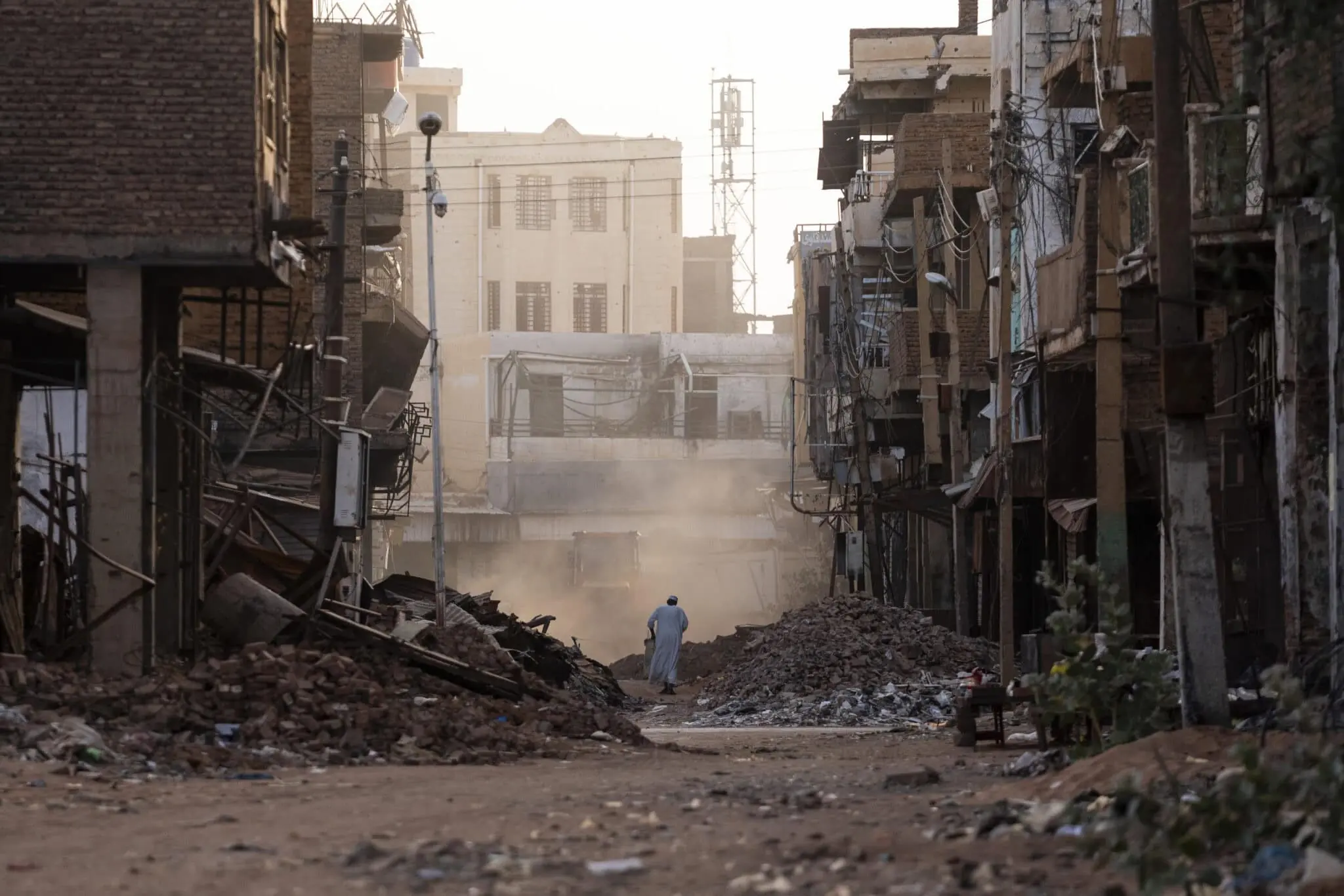
Photo: People pass through a destroyed section of Omdurman, Sudan on May 25, 2025. Ravaged by civil war for more than two years, pockets of famine are spreading across Sudan, 25 million people need aid, and more than 12 million have fled their homes. While President Donald Trump’s cuts to U.S. foreign aid are the most significant in American history, testimonies and estimates show the cuts have likely killed hundreds of thousands. (Photo by Carolyn Van Houten/The Washington Post via Getty Images)
555