Reparations for Syria for Injuries Suffered in Consequence of Illegal Armed Actions by Iran, 2011-2024
Introduction
There is no doubt, on the facts, that Syria and its people in the period 2011 to 2024 were subject to some of the worst violations of international humanitarian law (IHL) ever witnessed in the modern era of international law. The Government of Syria today is right to ask whether international law and international legal procedures provide an avenue for Syria to obtain reparations from Iran, a State that was intensively involved in the armed conflict in Syria during that period. International law has long been clear that “the breach of an [international legal obligation] involves an obligation to make reparation in an adequate form.”
However, though the facts are clear as to the horrific results of the armed conflict, the interplay between the facts and the rules of international legal responsibility – in particular the subset of those rules concerned with the attribution of conduct to a State – introduce complications that today’s Government of Syria must address if a search for reparations is to have a reasonable chance of success.
The Government, moreover, should keep in mind that international law contains no obvious international legal procedure available to Syria that is compulsory on Iran and entails binding judgment against Iran for Iran’s illegal armed actions. International law has no overarching court of general jurisdiction for claims such as those that Syria’s Government might wish to bring.
Syria’s Government and its legal advisers must keep these challenges in view if Syria’s Government today is to reach a realistic appreciation of the arguments it might make and actions it might pursue under international law for reparations from Iran.
The views expressed in this article are those of the author and not an official policy or position of New Lines Institute.
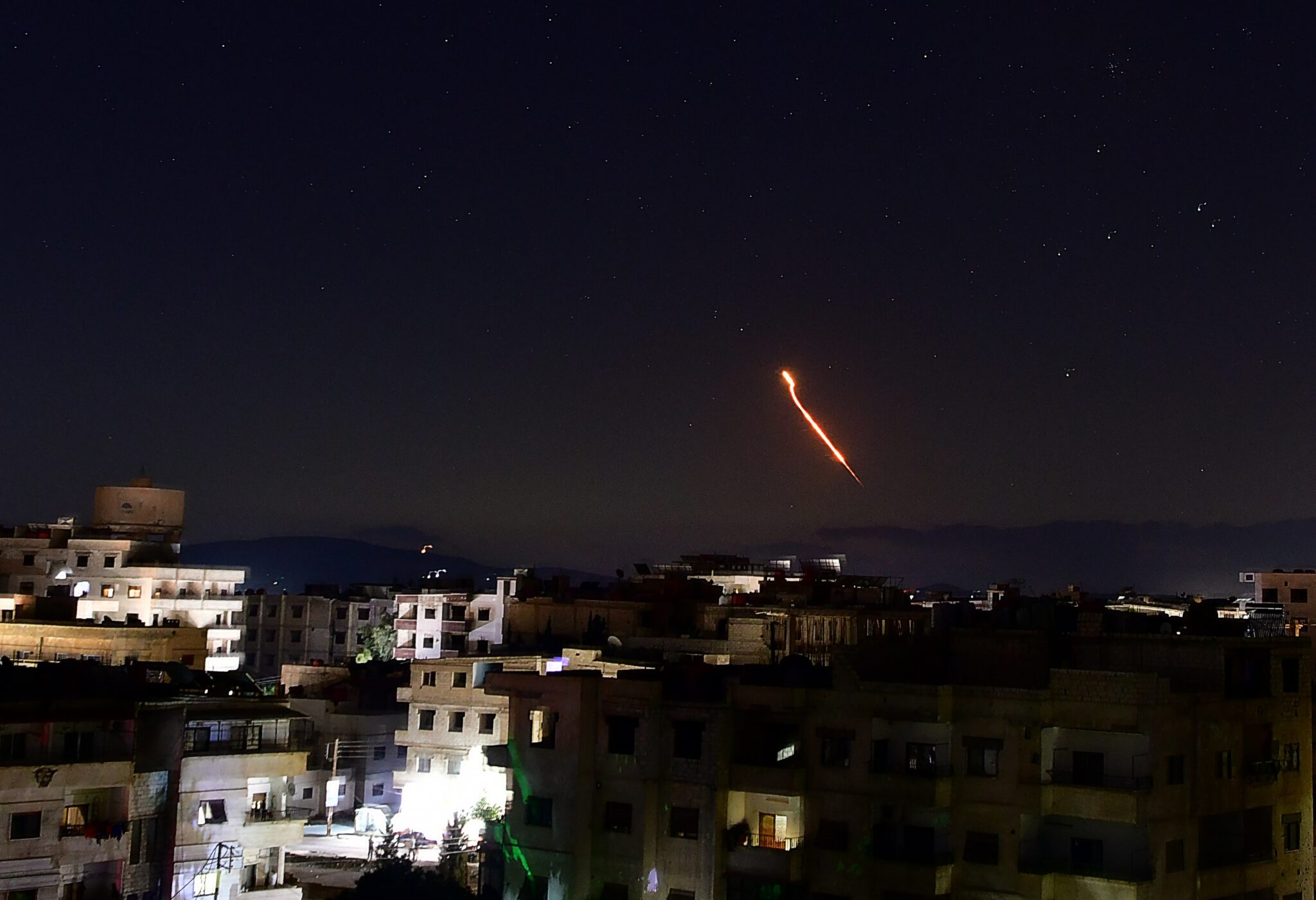
Photo: Projectiles believed to be Iranian missiles above Damascus, Syria, on Oct. 1, 2024. (Ammar Safarjalani / Xinhua via Getty Images)