The Legal Implications of Targeting a Girls’ Elementary School in Iran
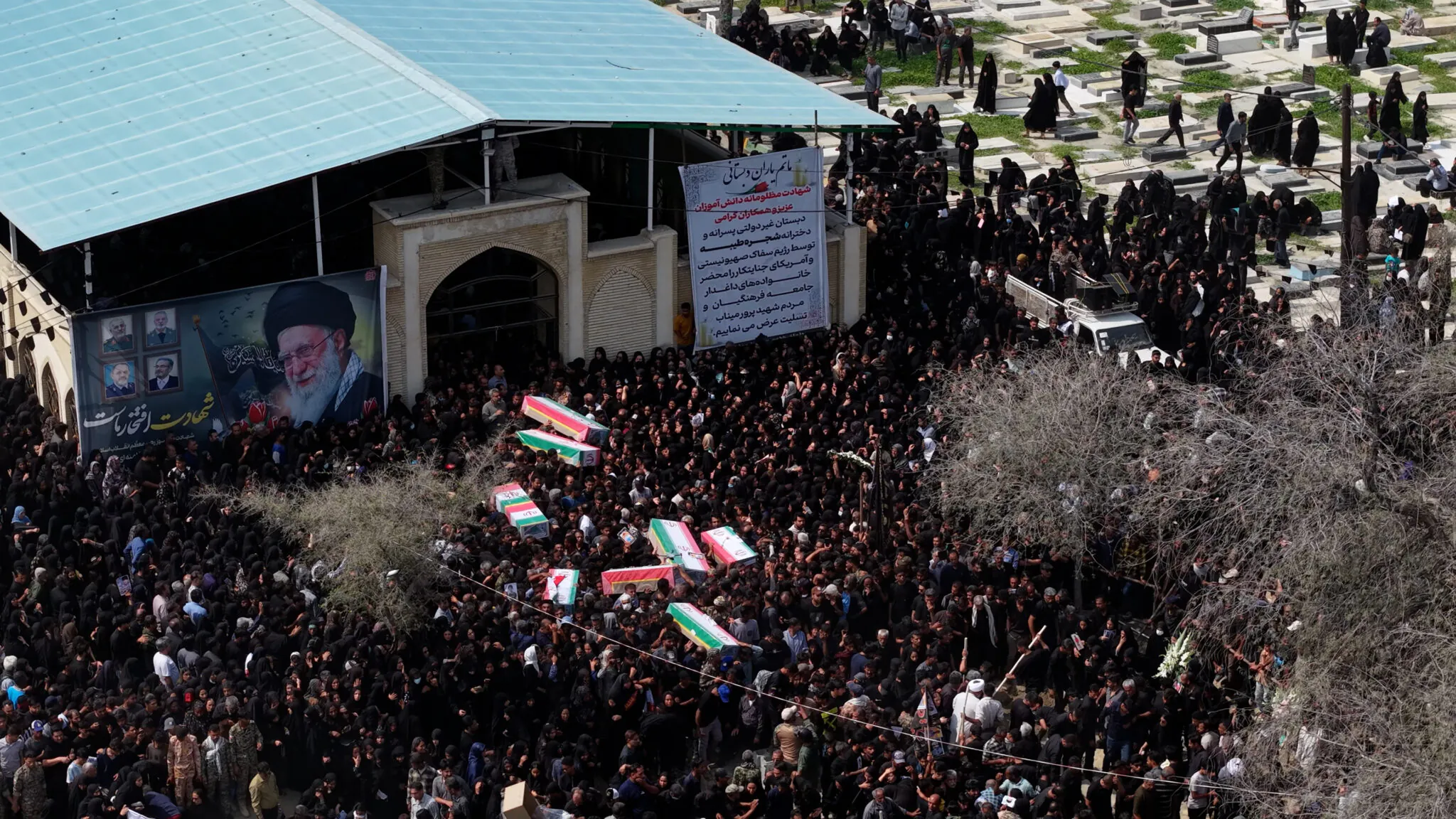
The joint military operation by the United States and Israel against Iran, launched Feb. 28, has rapidly escalated. The strikes reportedly resulted in the death of Iranian Supreme Leader Ayatollah Ali Khamenei and dozens of senior government officials. One confirmed strike hit the Shajarah Tayyebeh School, a girls’ primary school in Minab, killing at least 175 civilians and wounding many more, most of whom were girls between the ages of 7 and 12.
Iran responded with coordinated drone attacks across the region, targeting U.S. military installations, the Royal Air Force base in Cyprus, allied Gulf states, and Israel, including Qatar, United Arab Emirates, Bahrain, and Kuwait. Officials in Jordan and Saudi Arabia reported intercepting incoming Iranian drones.
A number of questions have arisen since this joint military operation and Iran’s subsequent retaliation: To what extent are these actions lawful under the laws of armed conflict? Which operations, if any, fall within permissible self-defense, and which constitute unlawful use of force? What international treaties govern what may come next? How does the bombing of a girl’s primary school showcase the violations of international humanitarian law, central to how this conflict is being waged?
School Bombing
U.S. and Israeli officials have denied knowledge of the attack on the school and have said the school itself is located near the Sayyid al-Shuhada military complex, which was targeted. However, publicly accessible satellite images and open source information analysis conducted by Al Jazeera’s Digital Investigations Unit confirmed that the Shajareh Tayyebeh school, despite its close proximity to the military compound, has functioned as an independent civilian faculty with no access from military checkpoints since 2016. Satellite imagery from 2018 onward shows playground equipment, sports fields, and brightly colored murals, further indicating its civilian character. A newly opened clinic, the Martyr Absalan Specialized Clinic, was also located on the same block as the military complex and the school, likewise confirmed by satellite imagery. Yet when U.S. and Israeli forces hit the school and the military complex, the strikes bypassed the clinic, showcasing their ability to discern targeting to a precise degree.
Laws of Armed Conflict
Since the strike on the school, critics have been calling the strikes unlawful under international humanitarian law. But what specific parts of these actions are unlawful?
International humanitarian law (IHL) is a set of limits on the possible externalities of armed conflict, formed by the Hague Conventions of 1899 and 1907 and the four Geneva Conventions of 1949, and supplemented the Additional Protocols of 1979. IHL covers the protection of non-combatants (for example, civilians, including aid workers, journalists, doctors, students, teachers) and restrictions on how war is waged – specifically, failing to discriminate between combatants and non-combatants in fighting, causing unnecessary civilian suffering, and causing long-term damage to the environment. Jurisdiction of IHL lies with the U.N. and its governing bodies including the ICC, the ICJ, and international tribunals. Under the Geneva Conventions, their Additional Protocols, the Rome Statute of the International Criminal Court, and customary international humanitarian law, the following acts are prohibited:
- Intentionally attacking civilians, including students and teachers.
- Targeting civilian objects, such as schools not used for military purposes.
- Failing to take feasible precautions to protect civilians, including by locating military operations near functioning schools.
These facts indicate a clear violation of international humanitarian law. The strike failed to distinguish between combatants and non-combatants and directly targeted a civilian population. Publicly available information regarding the attack on the school confirms that those present were civilians, primarily children – information that was clearly accessible with or without intelligence intel.
War crimes are serious violations of international humanitarian law that give rise to individual criminal responsibility for acts committed during armed conflict and that cannot be justified by military necessity. Such violations include the intentional killing of civilians, the unnecessary destruction of civilian property, and breaches of the core principles of distinction (requiring parties to differentiate between combatants and non-combatants), proportionality (prohibiting attacks that are excessive in relation to the anticipated military advantage), and military necessity.
Children are civilians by definition and therefore entitled to special protection under international humanitarian law – in fact, the recruitment or use of child soldiers is itself a war crime. Even if military objectives were claimed, the strike on the primary school violated the principles of distinction, proportionality, and military necessity. The school had been physically and administratively separated from the nearby military base for over a decade, and publicly available information was sufficient to establish its civilian character. The attackers failed to exercise due diligence to distinguish civilians from combatants. Moreover, the attack was manifestly disproportionate, as it caused extensive civilian casualties without yielding any concrete or direct military advantage, and it could not be justified by military necessity because the school did not constitute a military objective.
During an emergency meeting of the United Nations Security Council on Saturday, U.N. Secretary-General António Guterres stated that the U.S.-Israeli airstrikes violated international law. The U.S. and Israeli ambassadors to the United Nations argued that the operation was intended to prevent Iran from acquiring nuclear capabilities and was therefore justified on global security grounds, but under international law, such preemptive strikes are generally unlawful. The United Nations Charter limits the right of self-defense to situations involving an actual armed attack, as set out in Article 51. Consequently, regardless of claims of “global security,” the operation may constitute an act of aggression under international law.
While states subjected to aggression retain the right to self-defense and territorial integrity, Guterres also condemned Iran’s retaliatory strikes for violating the sovereignty of third states, breaching the territorial integrity of Bahrain, Iraq, Jordan, Kuwait, Qatar, Saudi Arabia, and the United Arab Emirates.
International law has been shunted in the war in Iran. The attacks and retaliation themselves clearly violate just war standards, and the airstrikes themselves have not adhered to the basic minimum principles of distinction, proportionality, and military necessity. International law was established to prevent and account for situations like this one, so the continued adherence to an international world system that protects those who cannot protect themselves is crucial. Strong condemnations against military actions cannot be the future of international law – the law itself must be enforced.
The views expressed in this article are those of the author and not an official policy or position of New Lines Institute.
Photo: Mourners carry caskets during funerals on March 3 for students and staff from a girls’ school, who Iranian authorities said were killed in a U.S.-Israeli strike on Feb. 28, 2026, in Minab, Iran. (Photo by Handout/Getty Images)andout/Getty Images)