Federal Attacks on Gender: Harmful Implications of Trump’s Expansion of the Mexico City Policy
On April 29, 2026, Democratic congress members introduced the Protecting Human Rights and Public Health in Foreign Assistance Act in an effort to overturn the Trump administration’s Protecting Human Flourishing in Foreign Assistance (PHFFA) executive policy. Having entered effect in February 2026, the PHFFA expands the controversial Mexico City Policy (MCP), which was instated to prevent the use of American foreign assistance to fund abortion provision abroad. The PHFFA restricts the disbursement of an estimated $39.8 billion of U.S. foreign assistance to U.S.-based and foreign organizations considered to be conducting aid programs related to “gender ideology” and “discriminatory equity ideology” abroad.
In addition to the localized human security risks that likely will result from the new guidelines, the implications range far wider, including jeopardizing U.S. national security. The revocation of foreign assistance and the erosion of U.S. relations with international partners will weaken the U.S. capacity to use humanitarian aid as diplomatic leverage and expose it to a wide range of security, economic, and global health threats.
A hallmark of the second Trump administration has been drastically reducing American foreign aid contributions. In its view, the U.S. has long done too much for the world and received too little in return. As such, the new MCP’s threats of withholding foreign aid fit comfortably into the America First policy platform, in which coercive measures are increasingly favored over cooperative ones. While the Trump administration’s short-term goals of cost-cutting and increasing constraints on international engagement may be accomplished through the MCP, long-term threats are being inadvertently created in equal measure. To avoid increased risk vulnerability, the U.S. must reconsider the risks of exporting anti-gender ideology and act to maintain the few soft power levers it has left at its disposal.
Ineffective Policy and Increased Harm
The Mexico City Policy has existed since 1984, first entering into effect under the Ronald Reagan administration. Prior to President Ronald Reagan’s announcement of the MCP at the Second International Conference on Population, organizations that engaged in abortion-related activities, women’s healthcare provisions, or family planning were eligible for U.S. funding, though the funds could not be used to support such activities. The original MCP expanded restrictions on the use of any funds – U.S. or otherwise – for any abortion-related services. As such, it was subsequently repealed by every Democratic administration and reinstated by every Republican administration since the 1980s in accordance with political whims and polarization.
The revamped MCP, rebranded as the PHFFA executive policy, encompasses much more than its predecessor. An estimated 2,500 organizations are impacted by the new funding restrictions, a significant increase from the 389 organizations impacted by the original family planning-focused policy. The extended reach of the new policy means that critical service provisions will be even more drastically limited for an exponentially larger population.
Such organizations are already facing a crucial inflection point for funding prospects in the wake of the dissolution of the U.S. Agency for International Development (USAID). Despite the PHFFA’s stated focus on protecting human flourishing, over 75% of the foreign assistance funds impacted by the policy were allocated to economic development, humanitarian assistance, and health-related activities, essentially harming effective populations. These sectors have already been decimated by the dismantling of USAID, and many organizations within them had been struggling to remain operational prior to the PHFFA’s restrictions. As the PHFFA takes effect, organizations must adapt to yet another crippling logistical burden as they are forced to seek alternative funding pathways to avoid gaps in critical service provision or risk shuttering entirely.
Moreover, the PHFFA expands the MCP’s scope without addressing any of its previously identified logistical issues. Even when the MCP’s jurisdiction was limited to reproductive healthcare, organizations struggled to adhere to the policy’s ambiguous regulations. While certain conditions for exception from the MCP existed (e.g., cases of organizations that provided “medically necessary” abortions), expectations for what information needed to be provided to receive an exemption were unclear. Subsequently, the MCP was known to cause a chilling effect, with organizations engaging in overcompliance as they took an overly broad interpretation of the policy’s restrictions, often eliminating adjacent but unimpacted programs out of fear of being defunded. This overly blunt application of the MCP is likely to persist under the PHFFA, given that State Department-issued guidance contains similarly convoluted waiver processes and vague language surrounding which programs are acceptable under the new policy.
Exacerbating this issue of clarity is the fact that the newly targeted “gender ideology” and “discriminatory equity ideology” are far more abstract concepts than the MCP’s original focus on family planning. Given that family planning itself has long been a visible issue in both foreign and domestic U.S. policy, familiarity with family planning in foreign assistance spaces allowed for a more straightforward understanding of which organizations fell under the scope of the MCP – namely, those that specialized in maternal and reproductive healthcare. Conversely, the ambiguity of the relatively new and largely theoretical definitions of “gender ideology” and “discriminatory equity ideology” leave much to be desired in application. The nebulous language of the PHFFA lacks specificity in delineating what kinds of programming are considered proponents of such ideologies. As a result, what little focus the MCP had has become increasingly obscure.
Organizations that provide legal services to women and LGBTQ+ individuals, run sexual education programs, train medical professionals, conduct women’s economic empowerment programs, or simply provide technical support in related fields are now unsure if their services are permissible under the PHFFA. It even remains unclear whether organizational practices of ensuring diversity and inclusion in internal staffing renders an organization susceptible to the PHFFA’s restrictions. Indeed, the overall failure to provide clarity of focus in the PHFFA exacerbates the implementation issues that resulted from the original MCP and will contribute to a recurrence of the chilling effect previously observed. The unabated ambiguity calls to question whether the lack of clarity in language is incidental or by design. The chilling effect entails over-cautious commitment to the PHFFA’s policies, a benefit for the Trump administration.
Regardless of intent, these logistical pitfalls render women, the LGBTQ+ community, and people living with HIV/AIDS disproportionately predisposed to harm. Already, these populations, especially those in active conflict environments, often have limited or no access to physical and mental healthcare, reproductive care, specialized medicine, educational programming, and social services. The PHFFA will compound this lack of access as organizations are forced to choose between continuing programming and maintaining funding.
Evidence gathered from 134 countries shows that reinstatement of the MCP between 2017-2021 is associated with approximately 108,000 child and maternal deaths, as well as 360,000 new HIV infections as women and LGBTQ+ individuals faced reduced access to family-planning programs and services like contraceptives, STD testing, and pre- and antenatal care. These detrimental consequences of the MCPs previous iterations suggest that mandating the choice between sustaining organizational existence and providing certain services has negatively impacted the overall quality of healthcare for vulnerable populations in several countries, constituting a broad human security threat that needs to be addressed by American lawmakers. Action is pertinent, especially when considering the ripple effects human insecurity has on national security and American interests.
Security, Public Health, and Economic Threats
As Secretary of State Marco Rubio said before the Senate Foreign Relations Committee in January 2025, “Preventing crises is a lot cheaper and a lot better than dealing with crises after the fact.” Despite this acknowledgement, the implementation of the PHFFA will undermine such efforts, as increasing human insecurity serves to effectively stunt crisis prevention, yielding repercussions that are costly in terms of security vulnerability, public health risks, and economic losses alike.
Security Threats
Following the poor rate of efficacy of the MCP in achieving its aims, it is unlikely that the PHFFA will successfully reduce the number of abortions performed. Indeed, research shows the MCP only increased the rate of unsafe abortions performed without adequate medical care. Thus, it appears that the MCP, and by association, the PHFFA, are only successful in creating ideological conformity in theory, not in practice.
Moreover, human insecurity caused by the PHFFA poses a long-term security problem for the United States. The MCP has a history of perpetuating human insecurity in conflict settings; impacts on women and girls in Colombia, and Rohingya refugees in Bangladesh serve as testaments to the MCP’s destabilizing power. Protecting human security is a key tenet of conflict prevention. By disregarding it with measures like the PHFFA, the U.S. reduces its own capacity to address the myriad social, structural, and material conditions that drive and exacerbate conflicts, which in turn may require military intervention, diplomatic effort, or eventual humanitarian aid on the part of the U.S. in defense of its interests in the years to come.
Such consequences are directly antithetical to the current U.S. desire to relieve itself of the burden of global conflicts, highlighting a strategic inconsistency in the implementation of the PHFFA. Even in the case that the U.S. opts not to intervene in future conflict mitigation, the consequences of the PHFFA combined with the overall pivot away from humanitarian aid, ultimately weaken the U.S.’s influence on the global stage. Since the Marshall Plan era, the U.S. held a positive reputation as a prominent foreign aid donor. With the PHFFA and other cuts to foreign aid, alongside harsher policies like heavy trade tariffs, the U.S.’s reputation has shifted: Rather than a facilitator of global development, the U.S. has poised itself as a more antagonistic, isolationist actor.
As global dynamics are increasingly defined by great-power competition, a decision on the part of the United States to withdraw from previously held spheres of influence presents the opportunity for competitor states to fill the vacuum. China has adjusted its approach to foreign assistance, scaling back its investment in some infrastructure projects in an attempt to position itself as a leading contributor to global health and development initiatives. With the current U.S. volatility as a global partner, especially as it relates to foreign assistance and economic cooperation, it is in the best interest of states to create new funding networks and capitalize on existing alternatives, whether they be aid from China, U.N. regional funds, or non-U.S.-based public health grants. Such action safeguards general human security but diminishes U.S. influence in these arenas.
As the U.S. prevalence in foreign aid fades, its options for exerting influence over conflicts and foreign interests alike are narrowed exponentially. With the steady decline in humanitarian aid for the U.S. to use as leverage, combined with increased defense spending and increasingly masculinized military culture, the U.S. risks becoming overly dependent on aggressive, coercive, and kinetic methods of engagement such as the ongoing war against Iran or threats on the part of the Trump administration to invade Greenland.
Public Health Threats
Decreased American influence is not only relevant to physical security. As the U.S. withdraws funding through the PHFFA, the U.S. will become more distant from global public health networks. This is compounded by the U.S. departure from the World Health Organization (WHO), a prominent force in global health spaces. Partner organizations that interface directly with local populations are a large part of how these networks and multinational organizations obtain public health information that allows governments to make informed decisions and mitigate potential crises, as evidenced by the composition of the Center for Disease Control’s (CDC) partnerships for global health protection. As the PHFFA sours relationships with these organizations, it effectively limits access to crucial health data and developments on infectious diseases for the U.S. and other states at all levels of government.
This effect is amplified by the fact that organizations may cease to operate if they choose to forego U.S. funding. Such an outcome has been common under the MCP, with several organizations and organizational subdivisions shutting down completely under MCP restrictions. A decrease in the number of operating organizations creates gaps in knowledge and decreased disease mitigation capacity for the U.S. and other states. Civil society and its organizations are the bearers of institutional knowledge; administrations come and go, but civil society is much more consistent and familiar with conditions on the ground. Without the knowledge these organizations glean from working with local populations, the U.S. will be forced to operate with incomplete information. It will thus be unprepared to face global health threats, posing a national security risk.
Only a few years after the COVID-19 pandemic, this outcome is particularly salient. As climate change worsens, global health threats will continue to emerge, emphasizing the long-term need for preparedness against infectious diseases and public health crises. American cooperation with localized health organizations – many of which are now impacted by the PHFFA’s funding restrictions – has a strong track record for identifying and ameliorating disease before it becomes widespread. This is in part how Ebola was prevented from spreading when it broke out in 2014. As such, the overall trend of American disengagement with global health systems cultivated by both the PHFFA and the U.S. withdrawal from the WHO raises questions about how combating emerging health threats without U.S. government involvement will transpire. With the most recent outbreak of Ebola in Uganda and the Democratic Republic of Congo in May 2026, states will have to learn to navigate mitigation without the U.S., which in turn will be far removed from the process despite the WHO’s designation of the outbreak as a global health emergency. Reducing U.S. connections to health networks at the locus of disease outbreak will expose the U.S., and the world, to health insecurity and subsequent collateral damage: stunted supply chains, increased poverty, steep costs of living, and slumped economic markets.
The PHFFA’s threats to public health also directly impact efforts toward U.S. national security objectives, including immigration reform. A study by the Guttmacher Institute, which advocates for sexual and reproductive health rights, found that in fiscal year 2024, every $10 million decrease in U.S. funding for international family planning assistance resulted in 161,000 additional unplanned births in recipient countries. In most Global South nations, such rapid population growth is not matched by increased economic opportunities or socioeconomic security. The expansion of the MCP thus is likely to negatively affect economic development efforts in former recipient countries and, consequently, exacerbate the “push factors” that compel individuals to migrate, such as economic insecurity and poor labor markets.
In the case of migration within the Western Hemisphere, an area of primary concern for the second Trump administration as it seeks to secure the southern U.S. border, economic precarity and low employment rates in many Latin and South American states are significant drivers of immigration – both legal and illegal – into the United States. Therefore, expansion of the MCP serves to endanger, rather than advance, the administration’s most important national security objectives.
Economic Impacts
Even disregarding the direct impact on public health, the distance the PHFFA and other cuts to foreign assistance create between the U.S. and public health networks poses new threats to American economic prospects and major industries. The Trump administration has framed humanitarian aid as a blank check that drains American funds, but this perspective neglects the economic benefits to American markets that foreign aid has.
Of the U.S. funds dedicated to global health research and development, much of which is conducted by organizations on the ground in impacted communities, 86% was reinvested in U.S. companies and industries between 2007 and 2022, supporting the U.S. economy in both the short and long term. Immediate yields included the creation of 600,000 jobs and the total contribution of $104 billion to the American economy. Longer-term benefits include the addition of $255 billion to the economy, and proactive global cost savings of $740 million a year. Like the closure of USAID, the PHFFA will curtail these economic benefits of foreign aid, especially as it directly limits the amount the U.S. invests in global health. This comes even as the Trump administration posits economic prosperity as one of the core goals of its America First Global Health Strategy.
Pharmaceutical and medical technology companies like Johnson and Johnson, Merck, and Novartis will likely see a direct decrease in profits as funding cuts reduce the amount of money organizations have at their disposal and the number of organizations that need their products abroad in general. Such impact will add insult to the injury that these industries are already experiencing at the hands of domestic health insurance and medical research funding cuts, which hinder private companies’ profits and the American economy alike. These private actors thus have an interest in the continuance of foreign aid. As such, creating a privately funded grant for organizations impacted by the PHFFA would benefit donors and recipients, securing the market for major biotechnology and pharmaceutical economic players while also ensuring that organizations can continue providing critical services.
How to Adapt
The PHFFA was announced by Vice President JD Vance at the January 2026 March for Life Rally in Washington, D.C. The announcement came ahead of midterm elections that have the potential to flip the Republican legislative majorities in both chambers of Congress. Moreover, it coincided with President Donald Trump’s approval ratings on immigration dropping after the Immigration and Customs Enforcement’s (ICE) killings of two American citizens in Minneapolis.
As midterms approach, the Trump administration seeks to strengthen its ideological foundations by signaling to its voter base. Aggressive counter-immigration practices constitute a significant part of Trump’s ideological platform, alongside anti-“gender ideology” and anti-DEI rhetoric. It is reasonable to conclude that Trump sought to bolster his ideological fortitude after his immigration policies elicited backlash from supporters and opponents alike. The introduction of the PHFFA served that purpose, as well as the purpose of offering President Trump the ability to reemphasize his commitment to ensuring that the United States does not carry disproportionate burdens in foreign affairs. Trump’s voter base supports cutting foreign assistance under the auspices that it is a substantial use of taxpayer dollars, despite the fact that foreign aid constitutes under 1% of the federal budget.
Exporting ideology via the PHFFA, therefore, is not derived from a place of seeking ideological uniformity in American partners. Rather, it is a move intended to better Trump’s and Republicans’ domestic standing ahead of a critical election period.
Policy Recommendations
Regardless of intent, the PHFFA holds harmful ramifications for vulnerable populations, global actors, and the U.S. To mitigate these threats, it is recommended that:
- Congress must take action against the PHFFA. This can be done by passing the Protecting Human Rights and Public Health in Foreign Assistance Act, which would repeal the PHFFA and prevent the MCP or PHFFA from ever being enacted again by another administration. It could also use its powers via the Congressional Review Act to repeal the PHFFA. This policy is unlikely to make it far in the legislative process in the short term, but advocacy for such measures is still important. Exposing the underpinnings of the PHFFA and emphasizing the harmful implications for the U.S. can assist in building opposition for the policy. Further, current legislative endeavors and momentum should be maintained to more easily facilitate the repeal of the PHFFA in the medium to long term, especially if the Democratic Party takes control of Congress after the midterms.
- Recipient organizations should act pre-emptively to diversify their funding sources, and other states and multilateral bodies should fill the funding gaps left behind by the United States. Plausible options for redistributing funding sources include U.N.-based regional or state funds. In due course, states should bolster their funding to these sources and other relevant grants to fill the void left by rescinded U.S. funding. States, especially those located near or with interests in impacted areas, would benefit from the security stabilization offered by funding, and recipients would benefit from the continued provision of services. Existing funds to contribute to include the previously mentioned U.N. regional or emergency humanitarian funds.
- Private entities with interests impacted by the PHFFA should establish a specialized fund or grant for organizations impacted by the PHFFA. Industries that have been disadvantaged by market shrinkage caused by the PHFFA could avoid long-term loss by making an investment in the continued existence of PHFFA-affected organizations.
The views expressed in this article are those of the author and not an official policy or position of New Lines Institute.
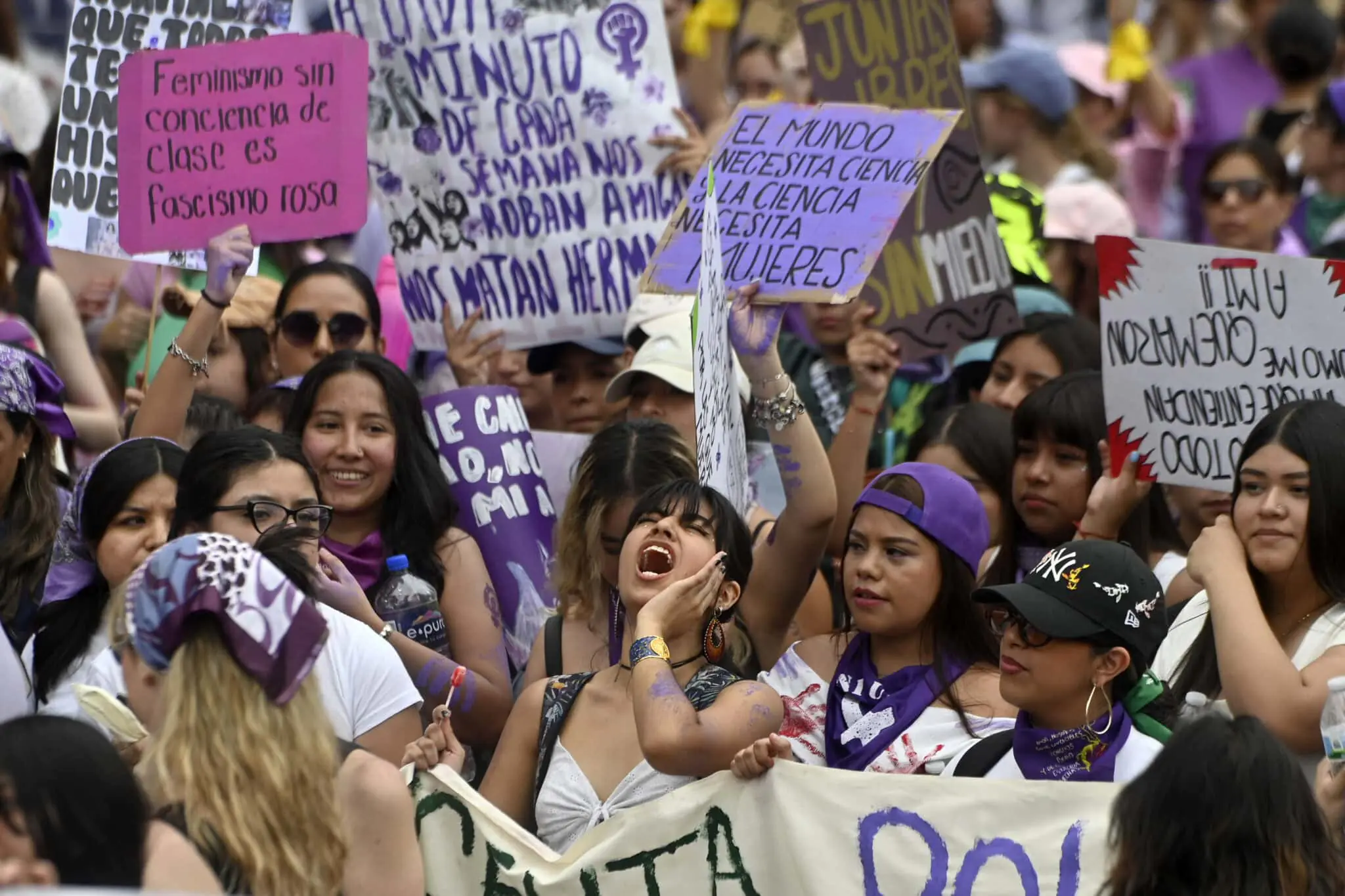
MEXICO CITY, MEXICO – MARCH 08: A woman screams while marching during a protest as part of the International Women’s Day on March 08, 2026 in Mexico City, Mexico. (Photo by Lucía Flores/ObturadorMX/Getty Images)