Unlocking the Potential of Eurasia’s East-West Economic Corridor
Central Asia (Kazakhstan, Uzbekistan, Kyrgyzstan, Tajikistan, and Turkmenistan – the “C5”) is reemerging as a critical Eurasian transit hub, reviving its historic role as a Silk Road connector between Asia, Europe, and global markets. With Azerbaijan’s recent alignment with the group – effectively creating a C6 – Central Asia’s access to the Caspian Sea has been strengthened, enabling the development of a viable east-west trade and transport corridor that mitigates the region’s landlocked constraints.
Led by Kazakhstan, this corridor is more politically viable than alternative north-south routes and offers a realistic complement to maritime and Russia-dependent land corridors. Its momentum reflects converging policy initiatives, including new South Caucasus connectivity arrangements, Kazakhstan’s expanded engagement with Western and Middle Eastern partners, and sustained state-led investments in infrastructure, logistics digitalization, and port-and-rail capacity since the 2010s. Other Central Asian states are increasingly investing to enhance regional integration.
With coordinated investment, regulatory harmonization, and diplomatic support, the corridor can become a profitable, strategic alternative – boosting regional growth while supplying Western markets with critical minerals, energy, and goods and balancing both China’s BRI and Russia-centric routes.
The views expressed in this article are those of the authors and not an official policy or position of New Lines Institute.
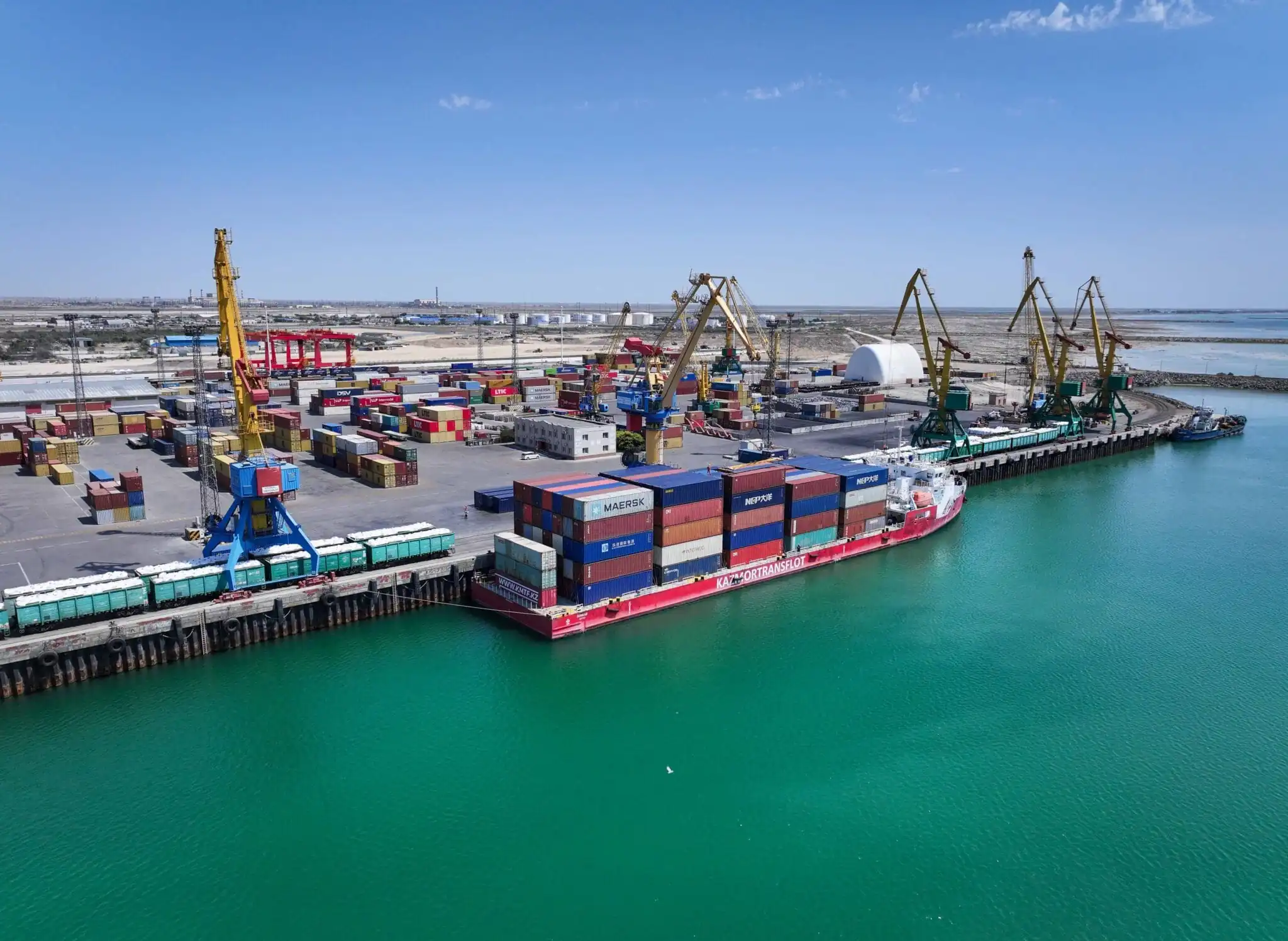
Photo: A drone photo taken on Aug. 6, 2025 shows a cargo ship docked at Aktau port, Kazakhstan. Aktau is Kazakhstan’s main port on the Caspian Sea. (Photo by Li Renzi/Xinhua via Getty Images)
555