Central Asia Roundup: April 2026
Kazakhstan
On April 6, Ukrainian fixed-wing drones struck the Caspian Pipeline Consortium’s (CPC) terminal at Novorossiysk, hitting a single-point mooring and loading berth and setting oil storage tanks on fire. CPC handles roughly 80% of Kazakh oil exports, and each attack highlights the strategic vulnerability of Kazakhstan’s primary export route, which runs through Russian territory and depends on Russian security guarantees. In late March, Astana formally cut Shell and Eni out of the Karachaganak gas processing plant project, and on April 13 it appointed state company QazaqGaz as operator and China’s CITIC Construction as construction partner.
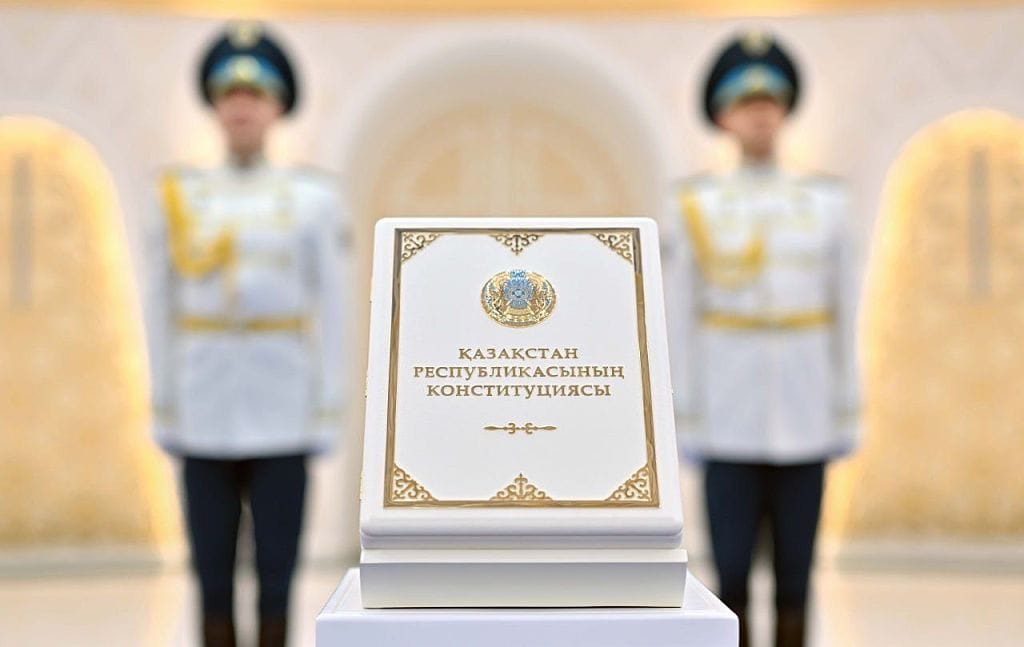
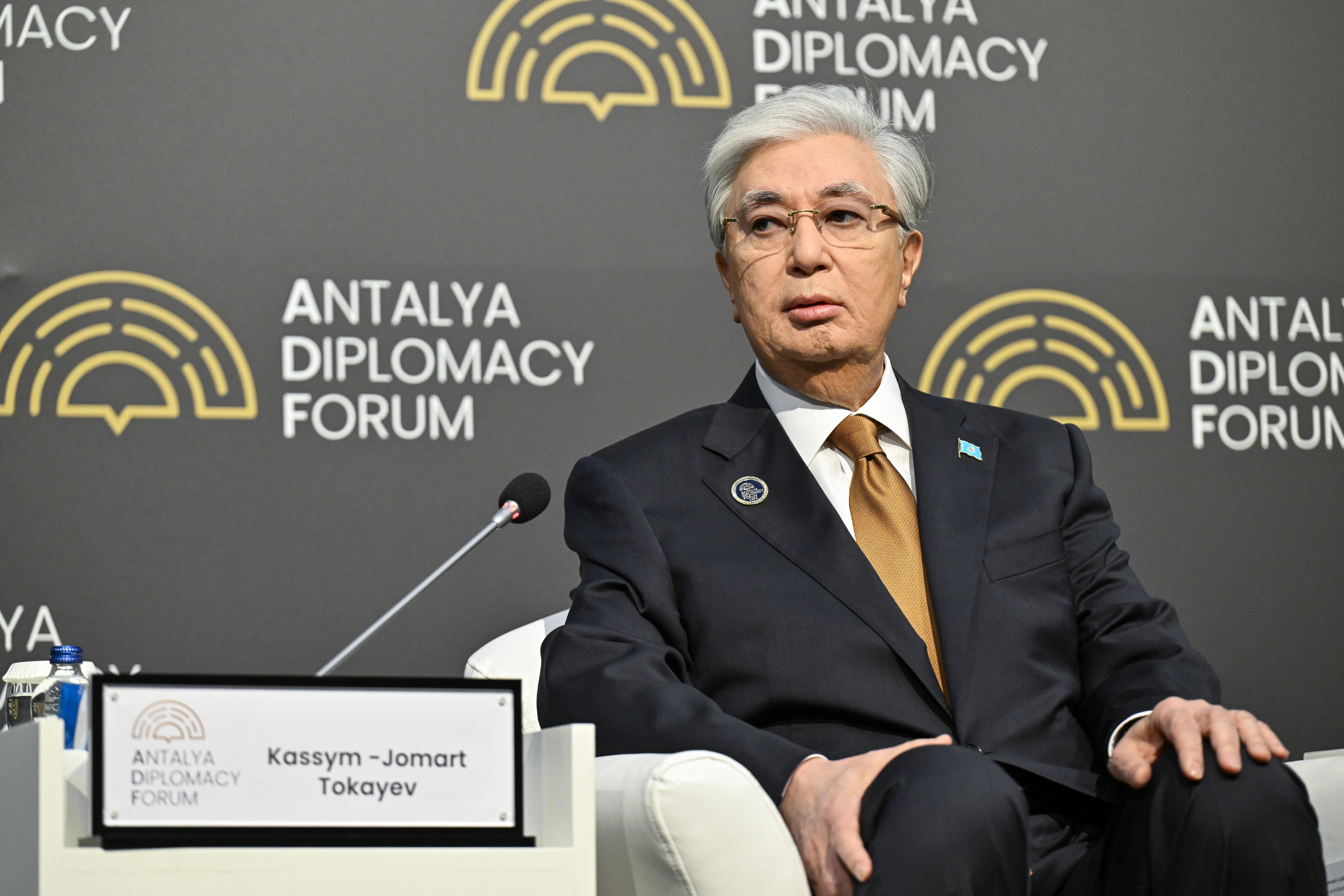
President Kassym-Jomart Tokayev’s April 11 working visit to Bukhara in Uzbekistan provided a counterweight to these different pressures. During an informal meeting with Uzbek President Shavkat Mirziyoyev, the two leaders set a target of doubling bilateral trade to $10 billion and agreed to a joint clean air initiative covering Kazakh cities such as Tashkent, Almaty, Turkistan, and Shymkent. The leaders tasked their governments with developing a new economic roadmap covering rare earths, transport, water, energy, and IT. Together with the Kazakh constitutional reforms set to take effect on July 1, Tokayev is using domestic and regional initiatives to project stability even as external pressures, such as the Russia-Ukraine war and China’s expanding influence in the region, pull the country in different directions.
Uzbekistan
Uzbekistan’s bid to conclude WTO accession at the organization’s 14th Ministerial Conference slipped past the March deadline. Presidential envoy Azizbek Urunov confirmed in early May that Tashkent remains committed to completing the process in 2026, attributing the delay to slow document review by some WTO members rather than any obstacle on the Uzbek side. The technical groundwork is well advanced: A large number of bilateral market access negotiations are complete; legislative harmonization is underway; and foreign cash reserves reached $66.3 billion as of Jan. 1, 2026.
Recent weeks have shown Uzbekistan’s emergence as Central Asia’s diplomatic and economic convening power. The country hosted the Asian Development Bank’s (ADB) 59th Annual Meeting in Samarkand from May 3-6, where ADB announced several major regional financing projects, including a $50 billion Pan-Asia Power Grid initiative and a $20 billion Asia-Pacific Digital Highway. Uzbekistan itself also signed a $12.5 billion partnership program with the ADB that will run through 2030, with much of the funding directed toward the economic modernization of Uzbekistan.
By hosting the meeting, Tashkent aims to position Samarkand as the region’s premier multilateral venue. Because the United States and Japan are the Asian Development Bank’s two largest shareholders, convening the ADB’s flagship gathering gives Uzbekistan direct access to the institutions that channel American and Japanese capital, at a moment when the Middle Corridor and rare earth supply chains have become geopolitical priorities for both Washington and Tokyo.
On April 2, Uzbekistan signed a binding $6.08 billion agreement with Allied Biofuels to build Central Asia’s first integrated biofuel refinery in Khorezm, signaling Tashkent’s ambition to develop the region’s capacity for clean energy production. These moves underline how Uzbekistan is increasingly setting the regional agenda.
Kyrgyzstan
On April 23, the European Union adopted its 20th sanctions package against Russia and, for the first time, used its “anti-circumvention tool” to impose direct country-level restrictions on Kyrgyzstan. The package banned exports to Kyrgyzstan of computer numerical control (CNC) machines and radio equipment, citing trade data showing an 800% surge in Kyrgyz imports of these goods from the EU since 2022 alongside a 1,200% rise in re-exports of similar items to Russia.
The sanctions mark a structural shift in how the West treats Central Asian sanctions circumvention, moving from targeting individual banks and shell companies to holding national governments accountable for trade flows. While the measures are unlikely to seriously impact the Kyrgyz economy, they will deter European investment and complicate the country’s banking relationships beyond the immediate restrictions.
There are clear tensions in the country as President Sadyr Japarov pursues a domestic campaign to rename all villages, streets, and sites bearing Russian or Soviet names by the end of 2027. However, he was in Moscow when the EU sanctions were announced – signaling his attempts to achieve symbolic distance from Russia while deepening Kyrgyzstan’s dependence on it.
Tajikistan
Potato imports from Kazakhstan rose 257-fold in January and February compared to the same period in 2025, reflecting both Kazakhstan’s lifting of export restrictions and Tajikistan’s growing import dependence on its larger northern neighbor.
Iran’s March 3 ban on all food and agricultural exports has hit Tajikistan particularly hard. Iran-Tajik trade reached a record $484 million in 2025, a fourfold increase from 2021, and much of that volume was built around Iranian foodstuffs that have now disappeared from Tajik markets. The diversification toward Iran that Dushanbe pursued over the past five years has, under wartime conditions, become a liability rather than an asset – a reversal that illustrates the structural risks facing the region’s smaller and less diversified economies.
The Asian Development Bank’s country partnership strategy for Tajikistan (2026-2030), unveiled in March, will be tested against this rising tide of structural needs. The strategy’s first major test came at the bank’s 59th Annual Meeting in Samarkand on May 3-6, where ADB announced a $70 billion package across two new initiatives – the Pan-Asia Power Grid and the Asia-Pacific Digital Highway – alongside expanded country-level financing. Tajikistan will need to remain competitive with its neighbors if it is to benefit from the increase in attention Central Asia is receiving from international financial institutions.
Turkmenistan
China and Turkmenistan deepened their gas partnership on April 17 with the launch of the fourth of seven phases of the Galkynysh gas field. The opening ceremony was attended by Chinese Vice Premier Ding Xuexiang. Turkmengaz and a subsidiary of China’s CNPC signed a $5.1 billion contract for the new development phase, which will add 10 billion cubic meters of annual processing capacity to a field that already underpins much of Turkmenistan’s export revenue. Although the project is financed entirely by Turkmenistan, the construction is being carried out by CNPC, leaving Beijing with both infrastructure and the offtake leverage. Approximately 90% of Turkmenistan’s gas exports already flow to China through the three operational lines of the Central Asia-China pipeline, and leader Gurbanguly Berdymukhamedov has set a goal of reaching 65 bcm in annual deliveries.
The expansion was followed April 29 by a Chinese proposal for a 300 MW solar power project announced during a Turkmen Chinese Business Forum in Ashgabat. The proposal extends Beijing’s footprint beyond gas into Turkmenistan’s emerging renewable energy sector, deepening a dependence that Ashgabat’s neutrality doctrine increasingly functions to obscure rather than balance. Each milestone in the gas sector, despite stated diversification ambitions, might be undermining independence from a single entity.
The EU’s multi-year Sustainable Energy Connectivity in Central Asia (SECCA) project concluded its work with a final mission to Ashgabat from April 22-29, capped by workshops and a high-level roundtable. On April 30, Foreign Minister Rashid Meredov met with TURKSOY Secretary General Sultan Raev. The proposed Trans-Caspian gas pipeline to Europe – long touted as the most plausible vehicle for diversifying Turkmen exports westward – remains stalled. The EU’s longstanding position is that the decision and financing rest with Turkmenistan, Azerbaijan, and interested commercial investors. The asymmetry is clear, with Beijing pouring in capital and taking the gas, while Brussels offers workshops. As long as that pattern holds, Turkmenistan’s diversification policy will not translate to reality.
Photo: Kazak President Kassym-Jomart Tokayev attends a panel at the Antalya Diplomacy Forum in Antalya, Türkiye on April 17, 2026. (Photo by Muhammed Enes Yildirim/Anadolu via Getty Images)