Central Asia Roundup: June 2026
Kazakhstan
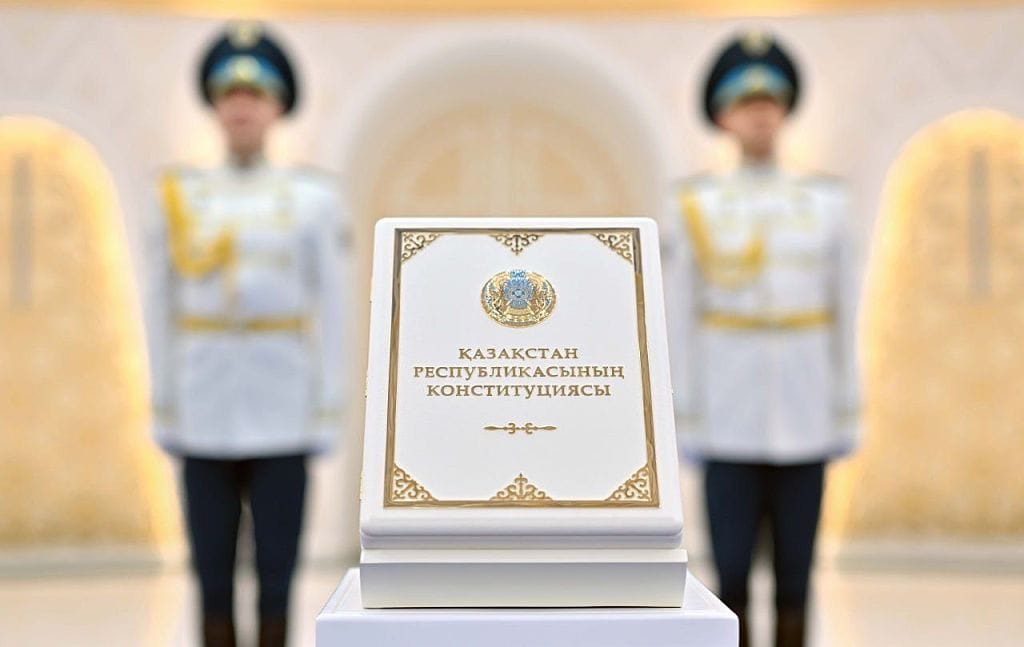
Kazakhstan spent June preparing for the transition to its new constitution and concluding major deals with the European Union. Kazakh President Kassym-Jomart Tokayev signed the enabling Constitutional Law on the Kurultai – the unicameral legislature of 145 deputies elected by proportional representation to five-year terms – on June 5. No election date for its members has been set, but analysts expect a vote in the second half of August, with eight parties now registered. Tokayev has argued that the constitution, which took effect July 1, will introduce checks and balances into the political system, but independent assessments continue to read the reform as a consolidation of presidential authority
Tokayev also visited Brussels on a trip that produced Kazakhstan’s largest package of EU agreements to date, worth more than $12 billion. The anchor deal was an order by Air Astana for 50 new Airbus A320neo/A321 aircraft worth 7.145 billion euros ($8.17 billion). Other deals included a European Investment Bank loan package of up to150 million euros ($171.6 million) for improvements to Trans-Caspian Corridor roads and four Middle Corridor agreements, the trade network moving Central Asian goods across the Caspian toward European markets, worth $462 million, focusing on digitizing logistics, infrastructure modernization projects, and supply-chain sustainability initiatives. A Horizontal Aviation Agreement was also signed, opening flights between Kazakhstan and 17 EU member states. Kazakhstan also signed a $10 billion AI deal with U.S.-based firms NVIDIA and Firebird, the centerpiece of which is a large data center project in Ekibastuz with the possibility of generating more than $3 billion in annual export value. If completed, this project would cement Kazakhstan as a regional – and global – leader in AI development at a time that other regional actors, like Uzbekistan, are looking to become regional hubs for AI to diversify their economies and attract foreign investors.
Uzbekistan
Uzbekistan continued converting reform rhetoric into physical infrastructure. On June 17, during the Tashkent International Investment Forum, Uzbekistan Airports and an international consortium signed a public-private partnership agreement for construction of the New Tashkent International Airport. The consortium – composed of Vision Invest (45%), Sojitz (30%), Incheon International Airport Corporation (15%), and Uzbekistan Airports (10%) – will operate the facility for 35 years, with construction running until 2030 across 1,310 hectares (about 3,237 acres) and a roughly $3 billion in initial investment. On World Trade Organization accession, June brought no decisive movement: The agreement with Taiwan remains the lone outstanding bilateral, with negotiators still targeting 2026 finalization.
Kyrgyzstan
In June, Kyrgyzstan won a nonpermanent seat on the U.N. Security Council, a first for the county. Kyrgyzstan took the Asia-Pacific seat after a four-round contest with the Philippines, with a final round tally of 142 to 49. It will serve a two-year term beginning Jan. 1, 2027.
The honor came as Kyrgyzstan remains under EU country-level sanctions for facilitating Russian sanctions evasion – the first Central Asian state subject to the bloc’s anticircumvention tool.
Other events during June reinforced the gap between the country’s diplomatic ascent and economic exposure. On June 9, the EU held a full-day sanctions compliance seminar in Bishkek, a direct continuation of April’s anticircumvention measures and May’s targeting of 50 companies. Kyrgyzstan also used the rotating chairmanship of the Shanghai Cooperation Organization to host a run of events ahead of the Bishkek Heads of State summit: the Energy Expo Kyrgyzstan – SCO 2026 on June 18-19 drew more than 40 companies from seven countries; the Sixth Meeting of SCO Energy Ministers convened June 19; and the SCO Investment and Business Forum followed June 24-25.
Meanwhile, the National Bank of Kyrgyzstan conducted its largest intervention of the year on June 29, selling $222.55 million on the foreign exchange market to support the som — its eighth intervention of 2026, bringing total dollar sales to $1.286 billion. By comparison, it sold $853 million for all of 2025. At a time when Kyrgyzstan’s international prestige and standing is on the rise, the country’s economic weaknesses are showing, leading the government to burn reserves in an effort to hold its currency steady.
Tajikistan
Tajikistan’s June bore its familiar contrast between an outsized ceremonial profile and a constrained economy. Ahead of the 35th anniversary of its independence on Sept. 9, President Emomali Rahmon signed an amnesty law June 16 covering 18,038 convicted individuals. Of those, 11,305 will be released and 6,733 will have their sentences reduced, with wider relief for women and minors.
Turkmenistan
Developments during June in Turkmenistan exposed the gap between its narrative of modernization and domestic control – but the more consequential story occurred in Azerbaijan.
President Serdar Berdimuhamedov’s June 22 state visit to Azerbaijan produced 13 agreements spanning energy, transport, customs, industry, and diplomacy. Berdimuhamedov and Azerbaijani President Ilham Aliyev signed package including technical conditions for the exchange of advance information on goods moving between their countries and a protocol on accelerating joint customs procedures and solving other logistical hurdles. The raft of agreements also included ones covering cooperation in the energy sector and on food security, an industrial cooperation program for 2026-2028, and a Foreign Ministry cooperation program for 2026-2029. Further memoranda covered agriculture, banking, healthcare, labor and social protection, and sports. The leaders instructed an intergovernmental commission, scheduled to meet in Ashgabat in July, to implement the Baku agreements.
Aliyev said the agreements are aimed at expanding the Middle Corridor and the two sides prioritized trans-Caspian transport integration through customs modernization, port cooperation, and east-west transit corridors. The 18th EU-Turkmenistan Human Rights Dialogue was held in Ashgabat on June 22, where the EU raised issues regarding the treatment of human rights activists, transnational repression, and detention conditions including reports of torture; the next round of dialogue is set for Brussels in 2027. A pre-dialogue briefing by the International Partnership for Human Rights and the Turkmen Initiative for Human Rights flagged expanding internet censorship, spring Starlink-terminal raids, and the April extradition of activist Maral Annayeva from the United Arab Emirates on an Interpol notice issued at Turkmen request. Turkmenistan ranks 173rd out of 180 on the 2026 World Press Freedom Index.
Photo: Kazakhstan’s new constitution, approved through a national referendum, was officially adopted during a ceremony held at the Akorda Presidential Palace in Astana on March 18, 2026. (Meiramgul Kussainova/Anadolu via Getty Images)