Central Asia Roundup: March 2026
Kazakhstan
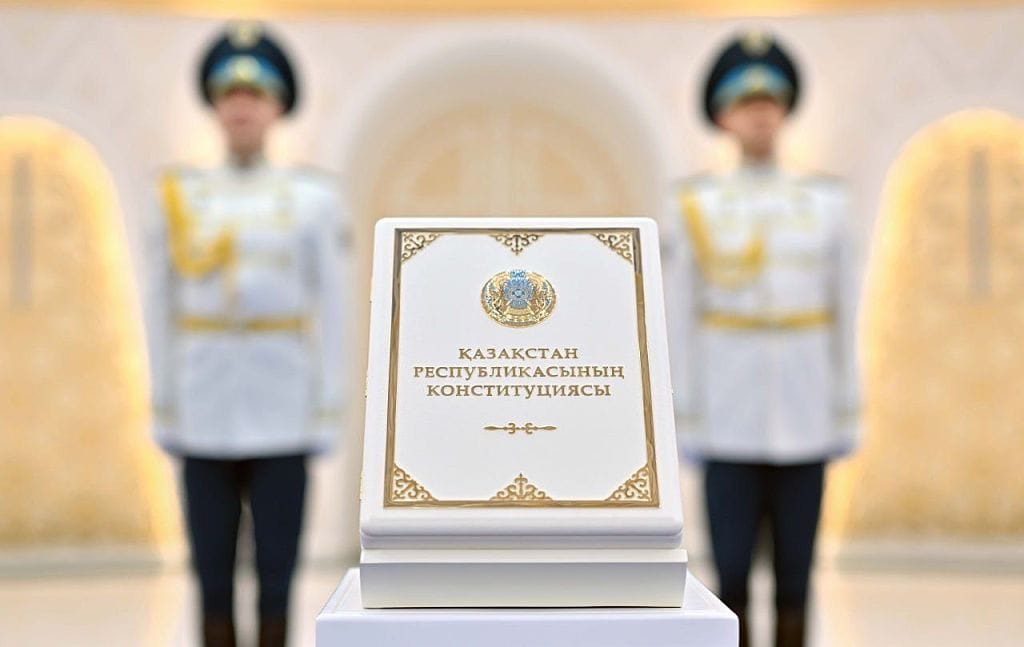
In a national referendum on March 15, Kazakh voters approved a new constitution, the third since the country’s independence.
Among the key changes in the constitution, which will take effect July 1, are a shift from a bicameral to a unicameral legislative body, the People’s Council (Halyk Kenesi), and the restoration of the position of vice president, an office abolished in 1996. The new constitution also limits the president to a single, seven-year term and introduces provisions on digital rights. It also defines marriage exclusively as a union between a man and a woman – a provision that codifies discrimination against the LGBTQ+ community, which already faces significant harassment in the country. Additionally, one provision will require nongovernmental organizations receiving funding from foreign entities to disclose all financial transactions and related assets publicly. While this provision has been framed as a transparency measure, human rights organizations have warned that it mirrors legislation adopted by Russia, Kyrgyzstan, and Georgia that could be used to stigmatize civil society organizations and chill free speech.
President Kassym-Jomart Tokayev has framed the reintroduction of the vice presidency as a measure to ensure political continuity. Critics argue, however, that the new constitutional framework could enable the president to manipulate the political process and effectively install a successor in a way that bypasses the electoral process. Similarly, while a unicameral legislature can streamline lawmaking, it removes an institutional check on hasty, ill-considered legislation – a concern particularly relevant in a political environment in which checks on executive power are already limited.
The new constitution aims to modernize the country’s political system by moving away from a personalistic authoritarian framework that has defined the country’s post-Soviet governance. In championing the revised constitution, Tokayev appears to be steering the country toward an institutional form of governance that echoes the political economy strategy of China and state-led economic policy of Persian Gulf countries.
Beyond those structural reforms, the document signals a shift in the country’s national identity, elevating Kazakh as its primary official language while designating Russian as a secondary language. This change raises questions about the political identity of ethnic Russians who represent a significant portion of the Kazakh population. Moscow is likely to navigate these institutional and constitutional changes cautiously as it attempts to exercise influence in the region, while China may see them as a shift toward a stable governance model in a region in which it is already expanding its influence.
Human rights activists and organizations have criticized the referendum process, particularly its timing, with the draft document becoming public only a month before the vote. In addition, online reports highlighted cases of police intimidation, arrests of journalists critical of the proposed changes, and social media censorship.
From a geopolitical standpoint, the results of the referendum provide Tokayev with the opportunity to extend his rule beyond the end of his current term in 2029. The Russians and Chinese will probably support this continuation of the status quo due to their recognition of Tokayev as an effective collaborator.
Uzbekistan
Uzbekistan is implementing significant policy reforms in its efforts to join the World Trade Organization this year – a serious opportunity to elevate the country’s economy and trade. For instance, the country has committed to privatizing large industrial and infrastructure enterprises with a state share of ownership, while working to strengthen the rule of law, reform its judicial system, and improve its banking and financial systems to attract investment and engage with Western markets.
On March 9, during a meeting of the WTO working party on Uzbek accession to the group, Deputy Prime Minister Jamshid Khodjaev reaffirmed Uzbekistan’s commitment to finishing the process this year. The chair of that panel, Ambassador Sung-yo Choi of South Korea, praised Uzbekistan’s progress toward reforms since 2020 and noted that 30 bilateral market access agreements have been deposited with the WTO Secretariat. Five of these were concluded since the previous Working Party meeting, including agreements with the European Union and Russia. Uzbekistan aspired to join the WTO as early as 1994 and resumed its bid in 2020 under President Shavkat Mirziyoyev. Its membership would represent a landmark for the country’s integration strategy in Western markets and signal its preference for a Western-led organization over the Russia-led Eurasian Economic Union, where Uzbekistan holds observer status.
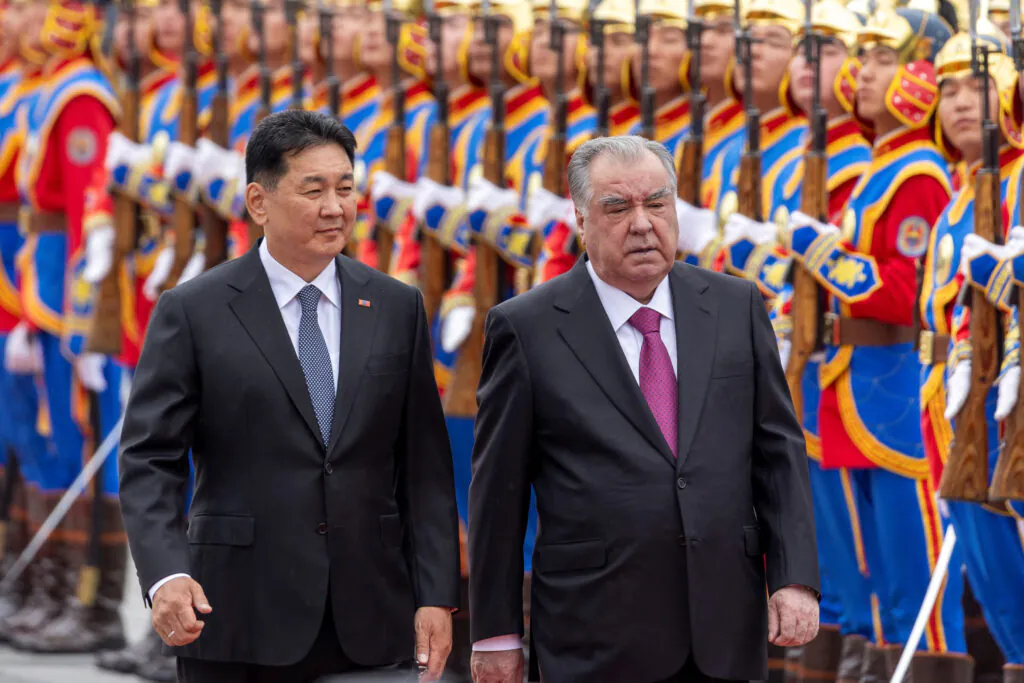
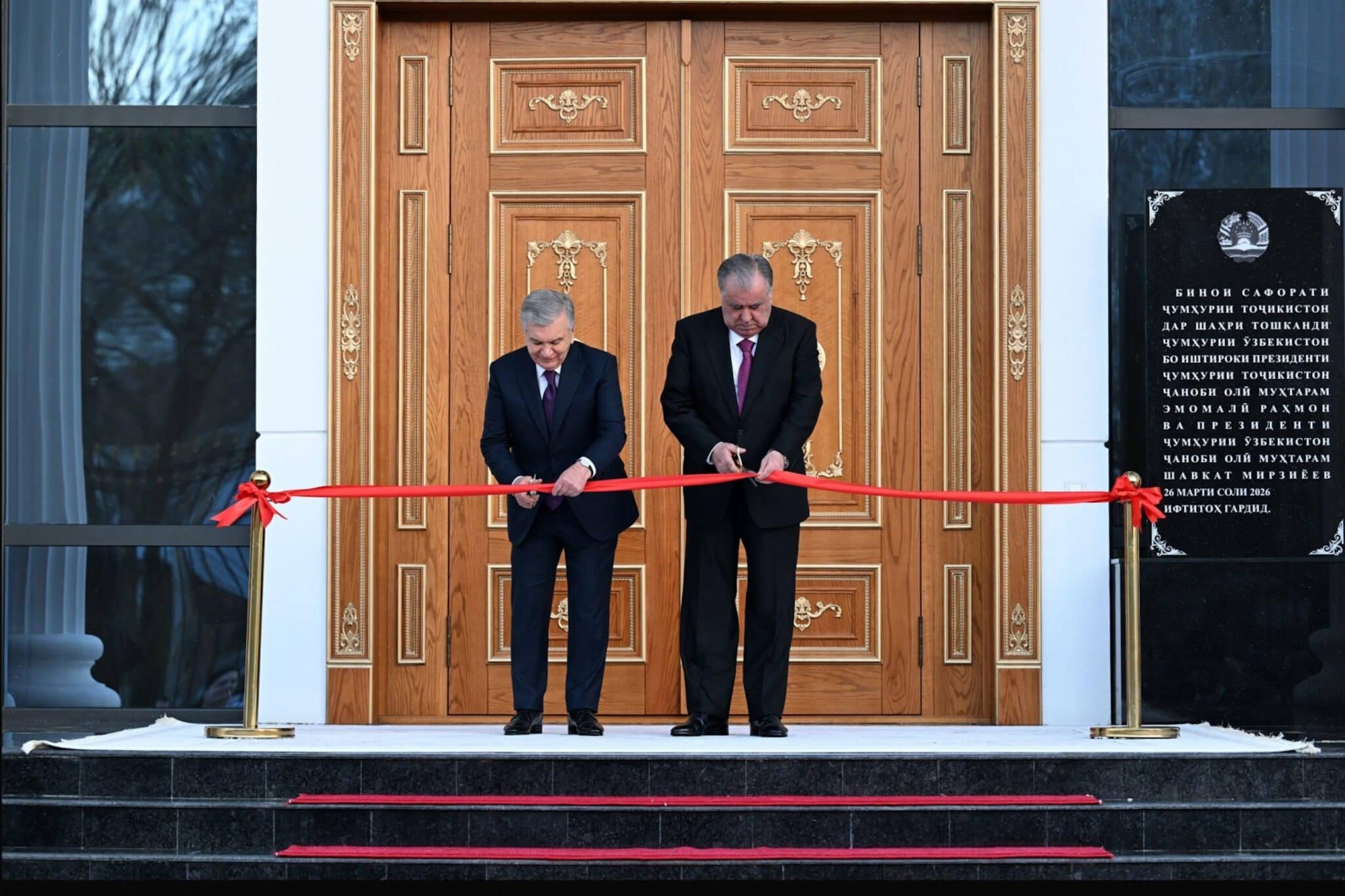
Also in March, the bilateral relationship between Tajikistan and Uzbekistan moved toward the deepening of ties. A state visit by Tajik President Emomali Rahmon to Uzbekistan on March 26-27 coincided with the first meeting of the Supreme Interstate Council, a new high-level bilateral body with the goal of strengthening and institutionalizing the relationship between the countries. During the visit, the two presidents signed a joint statement affirming closer relations and setting a target of doubling annual bilateral trade from nearly $1 billion to $2 billion by 2030. In addition, a number of bilateral agreements in various economic sectors were also signed.
The Supreme Interstate Council represents a major shift in how the countries will manage their relationship, particularly given their history of mistrust since post-Soviet independence. This continues a trend that began after Mirziyoyev came to power. In the years since, a total of 413 joint enterprises have come to operate in both countries. These signs of connectivity and integration come at a time in which the region faces many challenges, including water security.
Kyrgyzstan
Kyrgyzstan once again faces political turmoil after President Sadyr Japarov moved to sideline a major political rival. On March 16, Kyrgyz authorities accused Kamchybek Tashiev, whom Japarov removed from his position as the leader of the country’s security services in February, of involvement in a $45 million corruption scheme involving the state oil company. This comes as Tashiev’s political allies faced a similar loss of status in the scandal.
Although he has not been charged with any offenses, these accusations could end Tashiev’s political and professional career as the presidential elections approach in 2027. Meanwhile, the country continues to resist threatened EU sanctions. The EU has proposed using its anti-circumvention mechanism to restrict exports of CNC machines and radio equipment to Kyrgyzstan after data showed that Kyrgyz imports of these items from the EU increased after the Russian invasion of Ukraine while its exports of the same goods to Russia rose simultaneously. The Kyrgyz government is pushing against the restrictions, accusing the EU of unclear rules for re-export while also attributing the import surge to an increase in domestic demand.
Tajikistan
Beyond the Tajik-Uzbek presidential summit in late March, Rahmon also met with Asian Development Bank President Masato Kanda, who announced up to $1.1 billion in financing for Tajikistan over the next two years to support its efforts to build a private sector and create jobs. The commitment is part of the bank’s broader push into Central Asia. The bank also committed lending $5.4 billion to Kazakhstan and $2.5 billion to Azerbaijan over the same period, making the largest single regional investment package in the month. The scale of these commitments is significant: Since Tajikistan joined the bank in 1998, it has received close to $3 billion in total support. The development bank’s Central Asian push is linked to the development of the U.S.-backed Trans-Caspian International Transport Route (Middle Corridor) trade network, which aims to tilt regional trade westward, and comes at a time when Washington has ramped up its diplomatic and economic engagement in the region. The United States and Japan are the bank’s largest stakeholders. Further announcements may follow at the ADB’s annual meeting in Samarkand in early May.
Turkmenistan
During a meeting between former Turkmen President Gurbanguly Berdymukhamedov and Chinese President Xi Jinping in Beijing on March 17–19, the two reinforced their countries’ commitment to expanding cooperation in natural gas production and building partnerships in connectivity, agriculture, artificial intelligence, and clean energy. Berdymukhamedov signaled Turkmenistan’s willingness to align its development strategy with China’s Belt and Road Initiative and to deepen coordination in multilateral forums.
In contrast, Berdymukhamedov’s visit to the United States in mid-February included no publicly confirmed meetings with senior U.S. officials and no announced agreements. Turkmen state media said little about that trip beyond vague language about expanding cooperation, and no U.S. government agency issued any information about it. Shortly after his return, his son, President Serdar Berdymukhamedov, dismissed both Turkmenistan’s ambassador to the United States and its permanent representative to the United Nations without explanation. Notably, while Washington offered little visible engagement during his February visit, Beijing rolled out the red carpet for the elder Berdymukhamedov, reinforcing a pattern in which China positions itself as a more reliable and responsive partner for Ashgabat.
Meanwhile, Turkmenistan continued to expand its engagement with Western economies and markets with the Turkmenistan-EU Business Forum held on March 26 in Ashgabat. The focus of this forum was connectivity, transport and logistics, energy, and sustainable growth between the EU and Turkmenistan.
Turkmen Foreign Minister Rashid Meredov met with U.S. Ambassador Elizabeth Rood on March 23, indicating Turkmenistan’s continued efforts to balance ties with great powers as it pursues a neutral foreign policy. The ongoing Strait of Hormuz crisis disrupting global energy trade has pushed policymakers to look for energy suppliers outside the Gulf. Turkmenistan, which holds the world’s fourth-largest natural gas reserves, has emerged as a viable alternative, giving Ashgabat greater leverage and opening the door to deeper engagement with Western governments. However, it also carries a policy challenge: Increased international attention may pressure Turkmenistan to align with competing geopolitical blocs, testing its longstanding commitment to neutrality.
Regional Implications
March 2026 may be remembered as a turning point for Central Asia, with two developments in particular reshaping the region’s strategic landscape.
The U.S.-Israel conflict with Iran and the closure of the Strait of Hormuz have reshaped energy politics across the region almost overnight. Kazakhstan and Turkmenistan – both major oil and gas producers whose export routes do not pass through the Persian Gulf – suddenly gained significance from the global energy perspective. The crisis has also strengthened the argument for alternative trade corridors bypassing vulnerable Gulf shipping lanes like the Middle Corridor, connecting Central Asian energy to European and Asian buyers through the Caspian Sea, Azerbaijan, Georgia, and Türkiye. For countries like Kazakhstan and Uzbekistan, which have been building closer ties with Washington through the Board of Peace and Uzbekistan’s WTO accession process, the energy disruption gives them additional bargaining power when negotiating for Western investment, infrastructure support, and trade deals. But this does not mean that the Middle Corridor will be completely isolated from the conflict in Iran. The route passes through the Caspian and South Caucasus regions, which are not immune to the conflict’s effects. Israel attacked the Iranian naval base at Bandar Anzali on the Caspian Sea, and Iranian drone attacks on an airport in Nakhchivan showed that Tehran is willing to target infrastructure in neighboring countries.
Given that Azerbaijan sits on one end of the corridor and boasts some of the globe’s most significant oil and gas deposits, it is prone to infrastructure risks should the conflict with Iran escalate. Furthermore, the Middle Corridor also faces logistical challenges, including insufficient shipping traffic on the Caspian Sea, inadequate capacity at the port of Aktau, and cargo modality changes from rail to road and from road to sea at several stages in the transit journey. These issues would be magnified if trade volumes continue shifting away from Iran. All in all, the Middle Corridor’s value lies not in offering a perfectly safe alternative, but in diversifying trade across multiple routes so that no single disruption would cut the region off from global markets.
Regionally, the growing partnership between Uzbekistan and Tajikistan, as institutionalized through the Supreme Interstate Council, marks a real turning point. The $2 billion trade target and a wide range of agreements, along with their joint Khujand border agreement with Kyrgyzstan, signaled an evolution beyond old tensions over water and borders. Paired with Uzbekistan’s progress toward WTO membership and Kazakhstan’s constitutional reforms, the region demonstrates progress toward building a foundation to plug itself more fully into the global economy. The progress, although uneven, remains significant.
The unevenness, though, is becoming harder to ignore. In some ways, the gaps among Central Asia’s countries continue to grow. Kazakhstan and Uzbekistan are increasingly acting as mid-sized powers on the global stage, building diplomatic networks and attracting international attention. Kyrgyzstan, by contrast, faces sanctions pressure from the EU while its political leadership moves in a more authoritarian direction. Tajikistan and Turkmenistan both are showing up more in multilateral settings and bilateral summits, but their room to maneuver is limited by economic constraints and, in Turkmenistan’s case, the boundaries of its neutrality doctrine.
The bigger concern is what happens next. The Iran crisis and the West’s growing interest in Central Asian energy could further widen these gaps, funneling investment and diplomatic attention toward Kazakhstan and Uzbekistan while leaving the smaller economies to navigate an increasingly complicated geopolitical landscape with fewer resources and less bargaining power.
Photo: Uzbekistanâs President Shavkat Mirziyoyev (L) and Tajikistanâs President Emomali Rahmon (R) inaugurate the new building of Tajikistanâs embassy during his official visit following the welcoming ceremony at the Kuksaroy Presidential Palace in Tashkent, Uzbekistan, on March 26, 2026. Mirziyoyev and Rahmon attended the launch ceremony of joint investment projects to be implemented in areas such as industrial production, food processing, and housing construction. (Photo by Uzbekistan Presidency / Handout/Anadolu via Getty Images)