Central Asia Roundup: May 2026
Kazakhstan
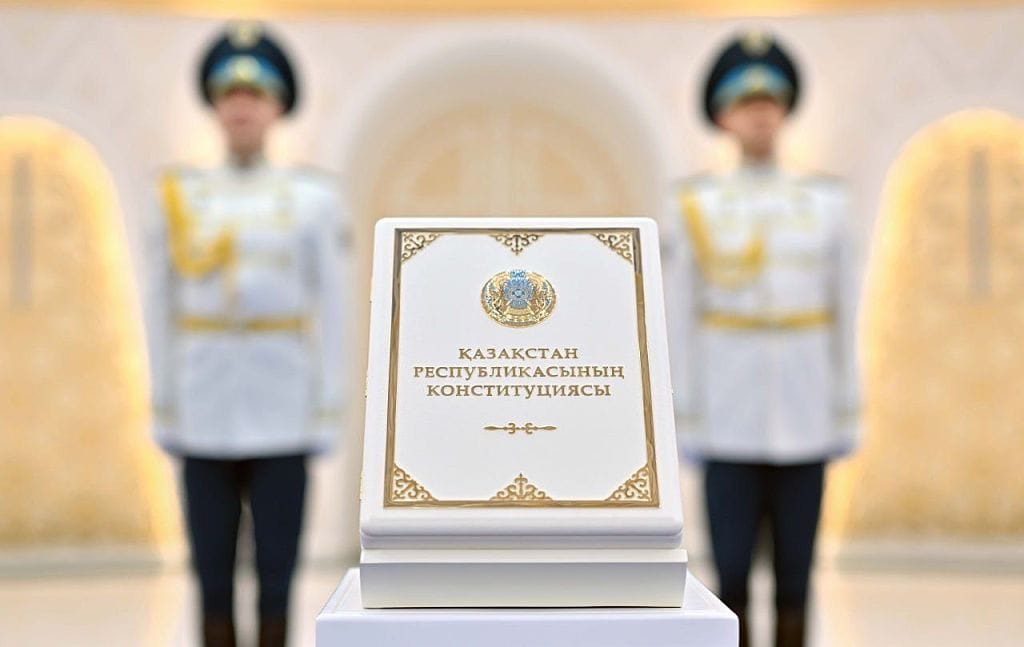
With its new constitution set to take effect July 1, Kazakhstan spent May managing the diplomatic and domestic implications of its most consequential political transition in three decades. The charter – approved by referendum March 15 with roughly 87% support and signed by two days later by President Kassym-Jomart Tokayev – replaces the 1995 text and introduces a unicameral legislature renamed the Kurultai, a vice presidency, and a new supreme advisory body, the People’s Council, whose members are appointed by the president. Human rights organizations have assessed the reforms as consolidating rather than dispersing executive authority, noting that the appointment and dismissal of Constitutional Court judges now rest entirely with the president. Parliamentary elections must be organized within two months of the constitution’s entry into force.
On climate and water, Tokayev met with World Meteorological Organization President and UAE National Center of Meteorology Director General Abdulla Al -Mandous on May 15 in Turkistan. Kazakhstan launched a cloud-seeding project in the Turkistan region on May 16, becoming the first country in Central Asia to move to the practical implementation of artificial rain technology, in partnership with the UAE. The initiative covers more than 911,000 hectares (about 3,518 square miles) of arable land and is designed to raise reservoir levels and reduce drought-related agricultural losses. During the meeting, Tokayev stressed the need for advanced early warning systems, upgraded meteorological infrastructure, and increased scientific data-sharing, confirming Kazakhstan’s readiness to deepen cooperation on water security.
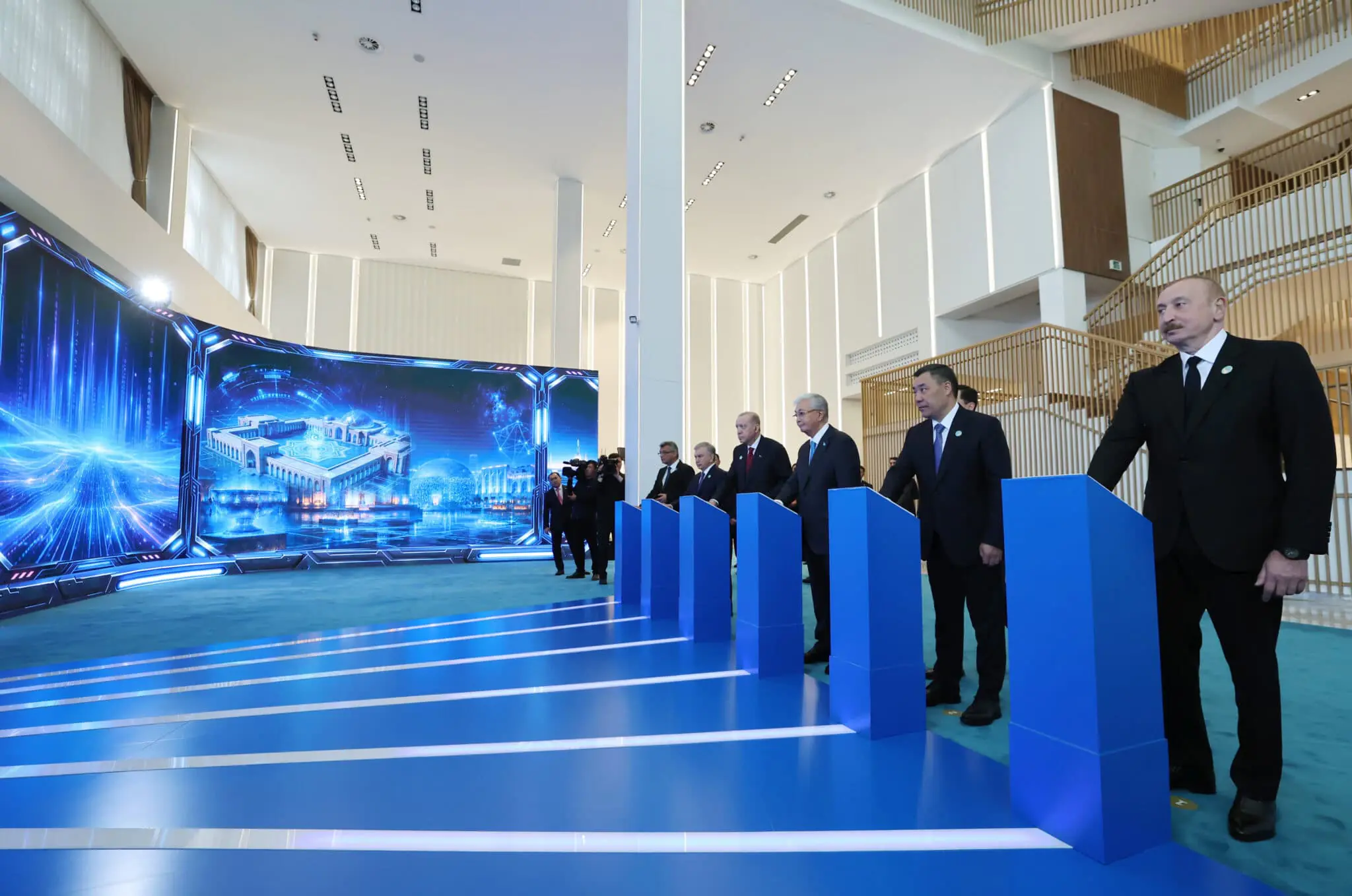
Earlier the same day, Tokayev hosted an informal summit of the Organization of Turkic States (OTS) in Turkistan under the theme “Artificial Intelligence and Digital Development,” bringing together the leaders of Kazakhstan, Türkiye, Azerbaijan, Uzbekistan, and Kyrgyzstan. Tokayev proposed joint space projects and a shared tech hub among Turkic nations, announced Kazakhstan as the first to establish a Center of Turkic Civilization in Turkistan, and explicitly rejected suggestions that the OTS could evolve into a military alliance or geopolitical bloc.
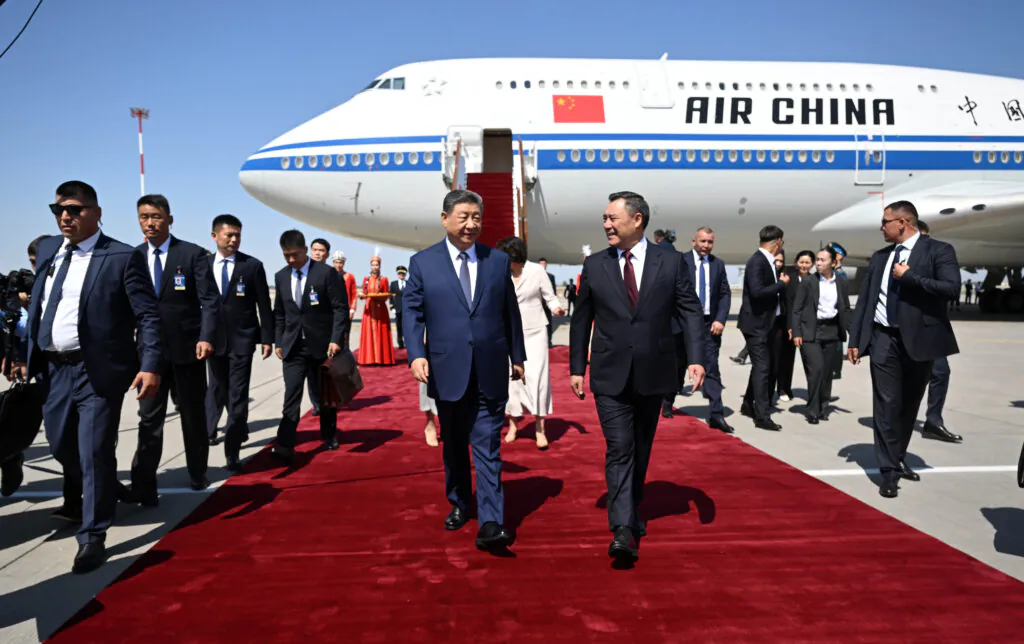
Russian President Vladimir Putin traveled to Astana for a full state visit May 27-29, his second to Kazakhstan during his presidency, underscoring Moscow’s determination to maintain visibility in Kazakhstan as Tokayev’s multivector diplomacy draws him closer to the United States and Türkiye. The two countries signed 15 bilateral documents covering nuclear energy, a tenge-ruble currency swap, expanded oil-sector cooperation, transport digitalization, and a health cooperation roadmap. Tokayev and Putin also cosigned a joint statement on seven principles of friendship and neighborly relations. Putin separately addressed the Fifth Eurasian Economic Union (EAEU), whose theme, “Eurasian Economic Union in the Global Digital Race” mirrored the OTS summit’s focus on artificial intelligence. Trade between Russia and Kazakhstan reached a record $29 billion in 2025, and the 177 joint projects currently underway between the two countries are valued at nearly $53 billion.
Uzbekistan
Uzbekistan’s World Trade Organization (WTO) accession push was the defining story of May. President Shavkat Mirziyoyev convened a government meeting to reaffirm Tashkent’s commitment to completing accession in 2026, instructing officials to press forward after the March ministerial deadline at the WTO’s 14th Ministerial Conference, during which new members are formally admitted, was missed. Uzbek chief negotiator Azizbek Urunov attributed the delay to the pace of document by some WTO members rather than obstacles on the Uzbek side. As of May, 33 of 34 bilateral market-access negotiations are complete, with only the agreement with Taiwan outstanding.
The Asian Development Bank’s 59th Annual Meeting in Samarkand from May 3-6 continued to shape Uzbekistan’s regional standing. On the sidelines, Deputy Transport Minister Jasurbek Choriyev announced that construction of the New Tashkent International Airport will begin in June. The $2.5 billion project will be implemented by an international consortium consisting of Vision Invest of Saudi Arabia (which has a 45% stake), Japan’s Sojitz Corporation (30%), South Korea’s Incheon International Airport Corporation (15%), and Uzbekistan Airports (10%). The facility, set for a 1,300-hectare site near Tashkent, is designed to handle up to 20 million passengers annually and will be the first airport in Central Asia built to green construction standards.
In another milestone for Uzbek transportation modernization, the inaugural Hyundai Rotem high-speed train completed its first journey from Tashkent to Khiva in 7.5 hours on May 5, cutting the previous journey time nearly in half. The South Korean-built train runs at up to 250 kilometers per hour (155 mph), accommodates up to 389 passengers, and serves stops in Samarkand, Bukhara, and Urgench. Uzbekistan became the first country in the region and in the Commonwealth of Independent States to purchase this model of South Korean-made train.
Kyrgyzstan
On May 19, a month after historic country-level EU sanctions brought a significant but ambiguous policy response from Bishkek, Kyrgyz Deputy Prime Minister Daniyar Amangeldiev announced that the Justice Ministry had suspended the registration of 50 companies flagged by the United States and United Kingdom as posing a high risk for trade in sanctioned goods with Russia. The affected firms, concentrated in wholesale trade, transport, and logistics, were shuttered under a newly created interagency mechanism for identifying high-risk foreign economic activity.
The action is a tactical concession, not a strategic pivot. Kyrgyz President Sadyr Japarov reaffirmed the Kyrgyz-Russian alliance in an April 27 interview with local outlet Kaktus. A cross-party group of 20 British members of parliament and peers also called in late April for the U.K. to sanction three senior Kyrgyz officials – former Central Bank Chairman Melis Turgunbaev; the head of the financial regulations authority, Marat Pirnazarov; and General Prosecutor Maksat Asanaliev – over their roles in facilitating evasion of EU sanctions placed on Russia after its invasion of Ukraine. With Keremet Bank and Capital Bank now under EU restrictions, the external squeeze on Kyrgyzstan’s financial system is tightening regardless of the company closures.
With parliamentary elections approaching in 2027, Japarov faces a structural bind: The remittances and trade revenue that underpin Kyrgyzstan’s economic stability depend heavily on Russia, while continued exposure to Western sanctions erodes European investment and complicates correspondent banking. While the suspensions are a signal that Bishkek is listening, they do not mean it has chosen a side.
Tajikistan
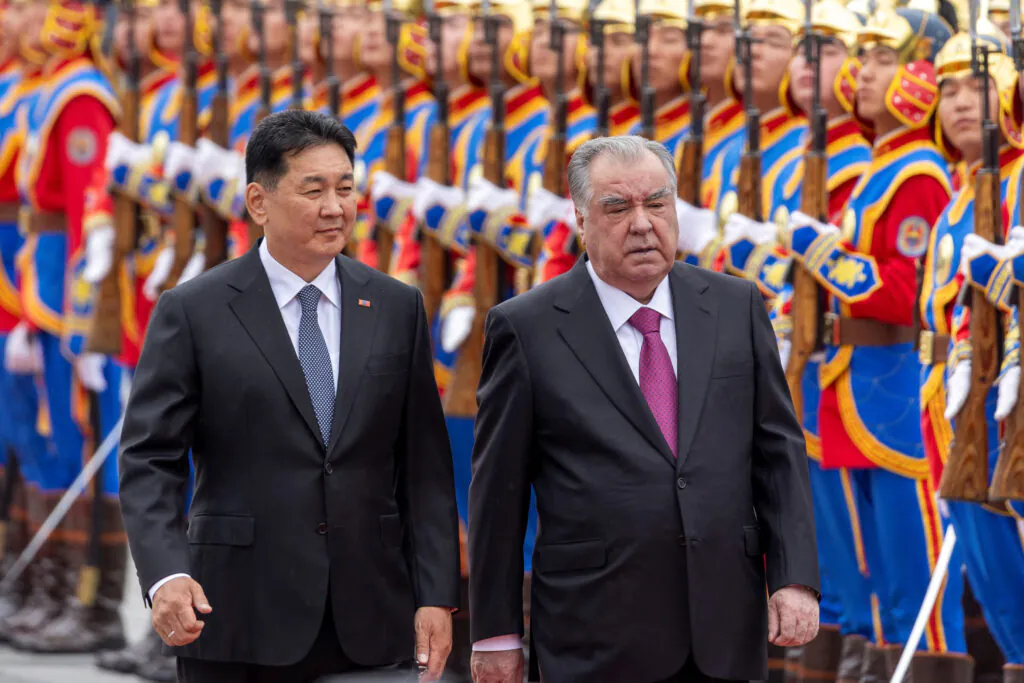
Tajikistan, which has long evinced interest in water diplomacy, played host to the International Conference on the International Decade for Action “Water for Sustainable Development, 2018-2028” in Dushanbe from May 25-28. More than 2,500 participants from 31 countries attended alongside representatives of 33 international organizations and financial institutions. Tajik President Emomali Rahmon met with U.N. Special Envoy on Water Retno Marsudi, U.N. Undersecretary-General Armida Salsiah Alisjahbana, and U.N. University Rector Tshilidzi Marwala. The Dushanbe Water Process, a platform Tajikistan has used for years to keep water and climate issues on the international agenda, has yielded several U.N. resolutions on water resources adopted at Tajikistan’s initiative.
The contrast between that diplomatic profile and the country’s economic vulnerabilities remains stark. In March, Iran implemented a nationwide ban on food and agricultural exports, a decision that continues to disrupt Tajik markets. Currently, there are no near-term replacements for the Iranian foodstuffs that have been impacted by the ongoing war in Iran. Iran-Tajik trade had reached a record $484 million in 2025 – a fourfold increase from 2021 – before the ban. Tajik potato imports from Kazakhstan had surged 257-fold in the January-February period, illustrating the depth of Dushanbe’s import dependence on its northern neighbor. Of the five Central Asian states, Tajikistan has the fewest buffers to absorb shocks to trade and foreign aid when it comes to commodities like food.
Turkmenistan
May brought fresh scrutiny of the digital controls that underpin Ashgabat’s information environment. A joint report by the International Partnership for Human Rights (IPHR), the Turkmen Initiative for Human Rights (TIHR), and CIVICUS documented intensified efforts to suppress access to uncensored information, with authorities conducting raids in April 2026 across multiple regions to identify and confiscate Starlink satellite terminals from homes and offices. Some individuals were detained on suspicion of installing the equipment. The crackdown underscores the contradiction at the heart of Ashgabat’s modernization narrative: The state promotes digital connectivity as a strategic priority while treating unsanctioned internet access as a security threat.
Reports from the end of April confirmed that Beijing declined to provide any financing for the $5.1 billion China National Petroleum Corporation Galkynysh Phase Four contract, meaning Ashgabat is bearing the full cost of construction of a natural gas processing facility that a Chinese company will execute and whose output will almost exclusively flow to China. Analysis published in The Diplomat noted that Chinese and Turkmen officials gave conflicting figures for the amount of annual gas volumes that flow to China: Chairman of the People’s Council and Paramount Leader of Turkmenistan Gurbanguly Berdymukhamedov cited approximately 40 billion cubic meters (bcm), while the Chinese ambassador in Ashgabat, Ji Shumin, put the figure closer to 30 bcm, a discrepancy that reflects how little transparency Ashgabat maintains over its single most consequential economic relationship.
The EU-Turkmenistan Human Rights Dialogue is scheduled for June 22 in Ashgabat. The structural asymmetry that defined April – Beijing financing and extracting, Brussels convening workshops – remains unchanged.
Photo: The Informal Summit of the Organization of Turkic States (OTS) at the Turkistan Congress Center in Turkistan, Kazakhstan on May 15, 2026. (Photo by TUR Presidency /Murat Cetinmuhurdar/Anadolu via Getty Images)