Geneva Convention (III) on Prisoners of War: Translating Legal Requirements Into Daily Practice,Lessons from Ukraine
Executive Summary
Russia’s full-scale invasion of Ukraine in 2022 brought war to Europe for the first time in the 21st century. On both sides of the conflict, military forces have been capturing and detaining prisoners of war (POWs). However, POWs are treated very differently in Ukraine than they are in Russia, despite international legal obligations under the Third Geneva Convention on Prisoners of War. Ukraine’s experience regarding the treatment and maintenance of POWs must be translated beyond general legal principles. Ukraine has unique experience and expertise in the concrete operational realities of POW infrastructure, including intake and classification, medical monitoring, labor, correspondence, religious accommodation, and the handling of third-country nationals that a state must address when developing its own POW detention capacity.
This report will provide a brief overview of the legal framework to which Russia and Ukraine are bound; a comparison between Russian and Ukrainian POW detention centers, including access granted to monitoring bodies, and documented alleged violations against POWs (from primary and open sources); an examination of the global implications of foreign nationals fighting on both sides of the war; a case study and lessons learned from a detention center visit in Ukraine by one of the authors; and recommendations to Ukraine and European states.
Policy Recommendations
Ukraine
Camp environments modeled on repurposed penal infrastructure risk replicating features of domestic punitive detention that are inconsistent with POW internment’s non-punitive character under international humanitarian law. POWs are interned solely to prevent further participation in hostilities, not as punishment. As Ukraine continues to develop its POW detention system, the following measures merit consideration:
1. Establish structured intake screening and classification protocols to identify vulnerable POWs, flag individuals who may pose a risk to others, and inform housing and cell assignment decisions accordingly. This gives the management of informal hierarchies a concrete operational mechanism rather than relying on administrative separation alone.
2. Extend consistent, high-access monitoring to the ICRC and other independent bodies uniformly across all POW facilities rather than concentrating access at selected sites, to sustain the transparency that underpins confidence in GC III compliance.
3. Publish periodic aggregate reporting on POW population figures, facility conditions, and disciplinary incidents, separate from and in addition to information shared privately with the ICRC. Public-facing transparency of this kind reinforces confidence in GC III.
4. Continue reducing features of the camp environment associated with ordinary penal detention where compatible with security requirements so that the operational distinction between a POW camp and a prison remains visible in daily practice, not only in formal legal status.
5. Continue actively managing the risk of informal prison hierarchies and coercive subcultures, given that a substantial share of the captured population – reportedly approximately 40% at Zakhid-1 – has a pre-existing criminal record. This requires deliberate separation of prisoner administration from ordinary penal practice in accommodation, discipline, and daily routine.
6. Continue to investigate reports of crimes like torture, ill treatment, and sexual violence being perpetrated at Ukrainian transit facilities and POW camps, and hold perpetrators accountable under the law.
Europe
Ukraine’s four years of operating a wartime POW system under GC III constitute a transferable body of practical expertise for European states now treating POW detention as a realistic contingency, illustrated by the Netherlands’ 2026 test deployment of a large-scale camp. The following measures are recommended:
7. Review domestic legal frameworks, identify suitable facilities, and develop and train personnel in advance of need, rather than in response to an active conflict.
8. Establish structured mechanisms for lesson-exchange, training, and technical cooperation with Ukrainian authorities and practitioners, drawing on accumulated Ukrainian experience in registration, accommodation, medical treatment, monitoring, and exchange of POWs.
9. Direct continued financial and technical assistance toward Ukrainian POW camp infrastructure, medical services, and living conditions, both to support Ukraine’s ongoing GC III compliance and to preserve operational expertise that may inform future European detention systems.
10. Build institutional capacity for detaining third-country nationals, specifically recognizing that foreign fighters should not be treated as a uniform category warranting a single undifferentiated approach. This capacity should include interpretation services, consular-access procedures, and mechanisms for identifying individuals recruited through deception, coercion, or trafficking.
11. Strengthen cooperation with countries of origin in Africa, South Asia, and Latin America on consular access, repatriation, and disruption of transnational recruitment networks, treating recruitment prevention as an integral component of contemporary security policy rather than a purely humanitarian concern.
The views expressed in this article are those of the authors and not an official policy or position of New Lines Institute.
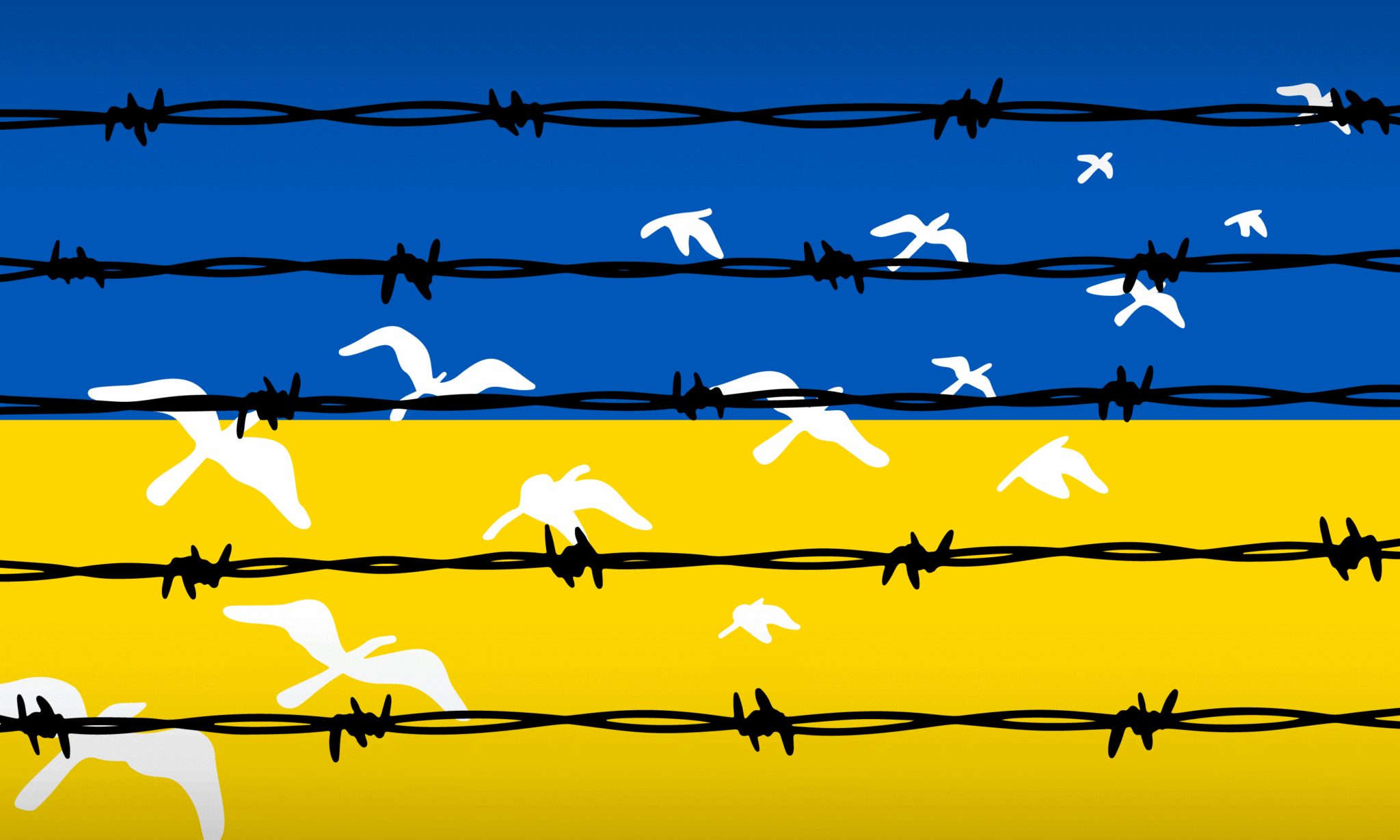
Illustration: Flying birds in Ukrainian blue and yellow flag colors escaping barbed wire fence. (Illustration by Kseniia Dizdar / Getty Images)