Levantine Captagon Smuggling Following Assad’s Downfall
Executive Summary
The downfall of the regime of deposed President Bashar al-Assad ended Syrian state sponsorship of the production of the illicit amphetamine-type stimulant captagon and dismantled the centralized industrial model that had enabled large-scale manufacturing and cross-border trafficking. Syrian authorities reported thwarting more than 20 prepared smuggling shipments in southern Syria following the regime’s collapse. In 2025, the new Syrian government reportedly seized 25 times the amount than had been seized by the Assad regime in 2024.
However, the captagon trade still persists, with questions about sustained flows through Lebanon, Jordan, and from Syria. Furthermore, the collapse of the Assad regime fragmented a decade-long monopoly over captagon production and trafficking, with both old and new actors now engaging in the trade. New questions have emerged about the identities, structure, and modus operandi of criminal actors that have filled this gap in the captagon trade.
Recommendations
As a result, the U.S. government and its regional partners should seek to undertake the following policy recommendations:
- Encourage deeper counternarcotics and border security cooperation between the new Syrian administration and Jordan and Lebanon that emphasizes intelligence exchange and tip-offs that can aid raids and seizures; joint training for border surveillance; and routine forensic testing of interdicted drug consignments.
- The U.S. and its regional partners should push for a security and political solution between the Druze leadership in southern Syria and the Syrian administration in Damascus to facilitate a greater counternarcotics presence in southern Syria. This would lead to interdiction of drug flows across the border while reducing the need for frequent direct Jordanian strikes into Syrian territory.
- The U.S. and its regional partners should support ongoing diplomatic discussions and push for continued progress in talks between the Democratic Autonomous Administration of North and East Syria and the new Syrian administration that would enable a greater governmental presence and enhance counternarcotics efforts in Syria’s northeast to stifle transnational drug flows into Iraq.
- The U.S. and its partners should encourage continued interdiction progress in Lebanon and identify pathways to invest in the interdiction capacity of Lebanese security forces. This would include identifying instruments that aid intelligence collection and sharing, the provision of equipment such as night goggles, and development of platforms enabling mapping of organized criminal networks.
- The U.S. Congress should continue work to update and adapt the counter-captagon interagency task force established in 2023 with the Captagon Act and ensure that agencies expand monitoring efforts beyond Syria to include actors in Lebanon, Türkiye, Iraq, Jordan, and other regional sites susceptible to an overflow of captagon-related activity.
The views expressed in this article are those of the author and not an official policy or position of New Lines Institute.
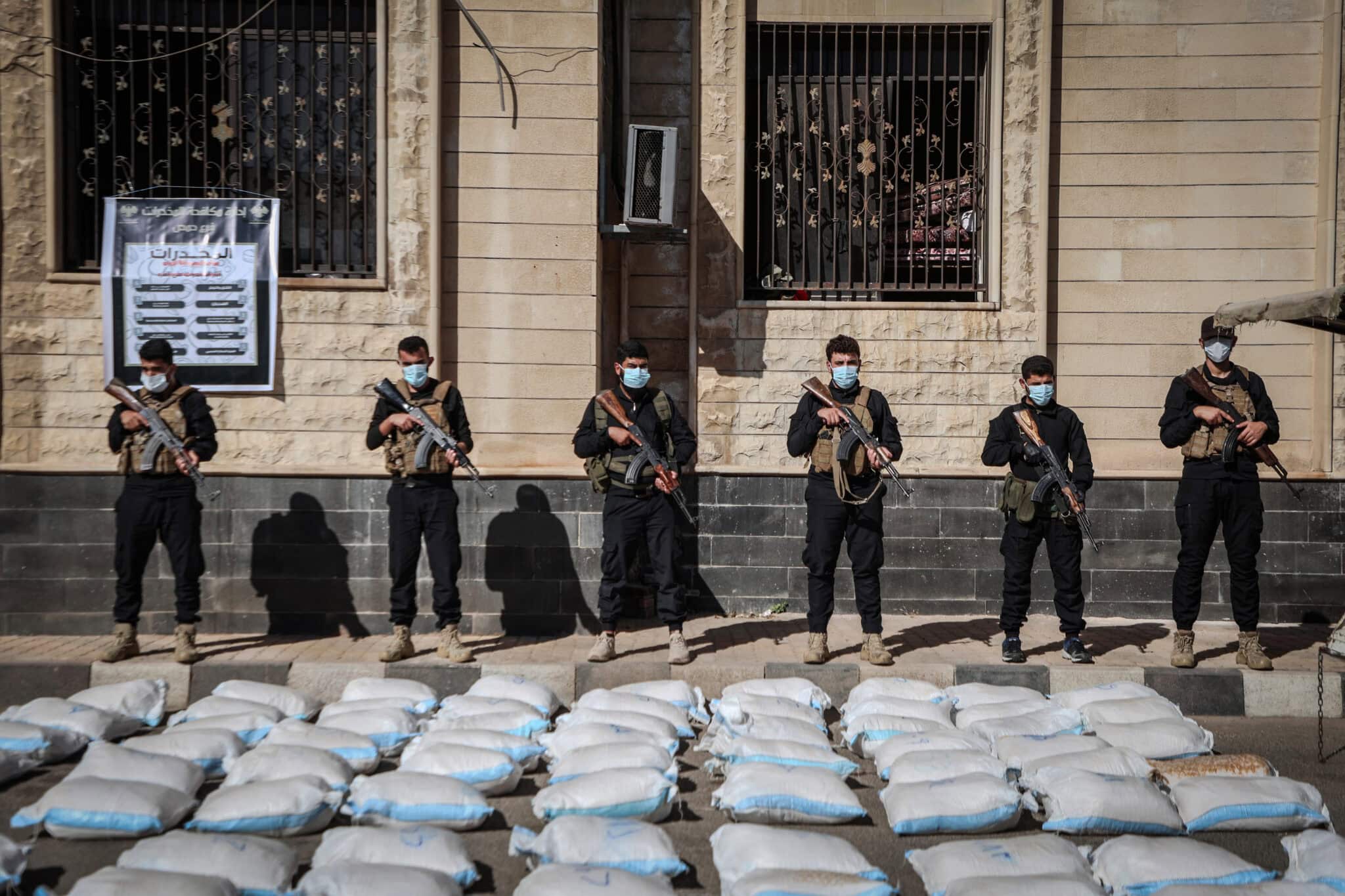
COVER: Some 11 million captagon pills, smuggled from Lebanon, are seized during an operation in the southern countryside of Homs province in Syria in October 2025. (Abobaker Alsaka/Anadolu via Getty Images)