Captagon Creeps into Syria’s Contested Areas
Executive Summary
While the new Syrian government’s efforts against drug production and trafficking have disrupted the monopoly deposed leader Bashar al-Assad’s regime once had over captagon, the trade in the illicit amphetamine-type stimulant has not been eradicated. The formerly centralized enterprise instead has fragmented into a decentralized network of small-scale producers and traffickers embedded within Syria’s postwar economy. Despite official claims that most production has been dismantled, evidence shows the trade persists, driven by high profitability, low production costs, and weak state enforcement — especially in contested regions such as Suwayda and northeastern Syria.
Low-level production and trafficking of captagon now operates through localized networks linked to militias, tribes, and cross-border smuggling routes to Iraq, Jordan, Türkiye, and Lebanon. Continued evidence of large-scale captagon trafficking through Syria has solidified the country as a transit site, though evidence of large-scale production on par with former regime-era levels – even in areas with high trafficking rates – remains scarce. These networks exploit porous borders and political instability, with some areas effectively beyond government control. The trade – although fragmented and downsized – has also become intertwined with local governance and militia financing, posing a long-term threat to state authority and security.
Enforcement alone will not eliminate the trade. Without comprehensive reforms and international cooperation, Syria’s progress toward ending its status as a regional narcotics hub will be threatened. As captagon production and sales enrich potential rivals to the new administration’s political authority and local security, it represents a possible long-term crime-conflict nexus.
A comprehensive strategy combining law enforcement reform, economic development, financial disruption, and regional cooperation is required. In its absence, captagon risks becoming a permanent feature of Syria’s post-conflict economy, undermining stabilization and fueling broader regional instability.
The views expressed in this article are those of the author and not an official policy or position of New Lines Institute.
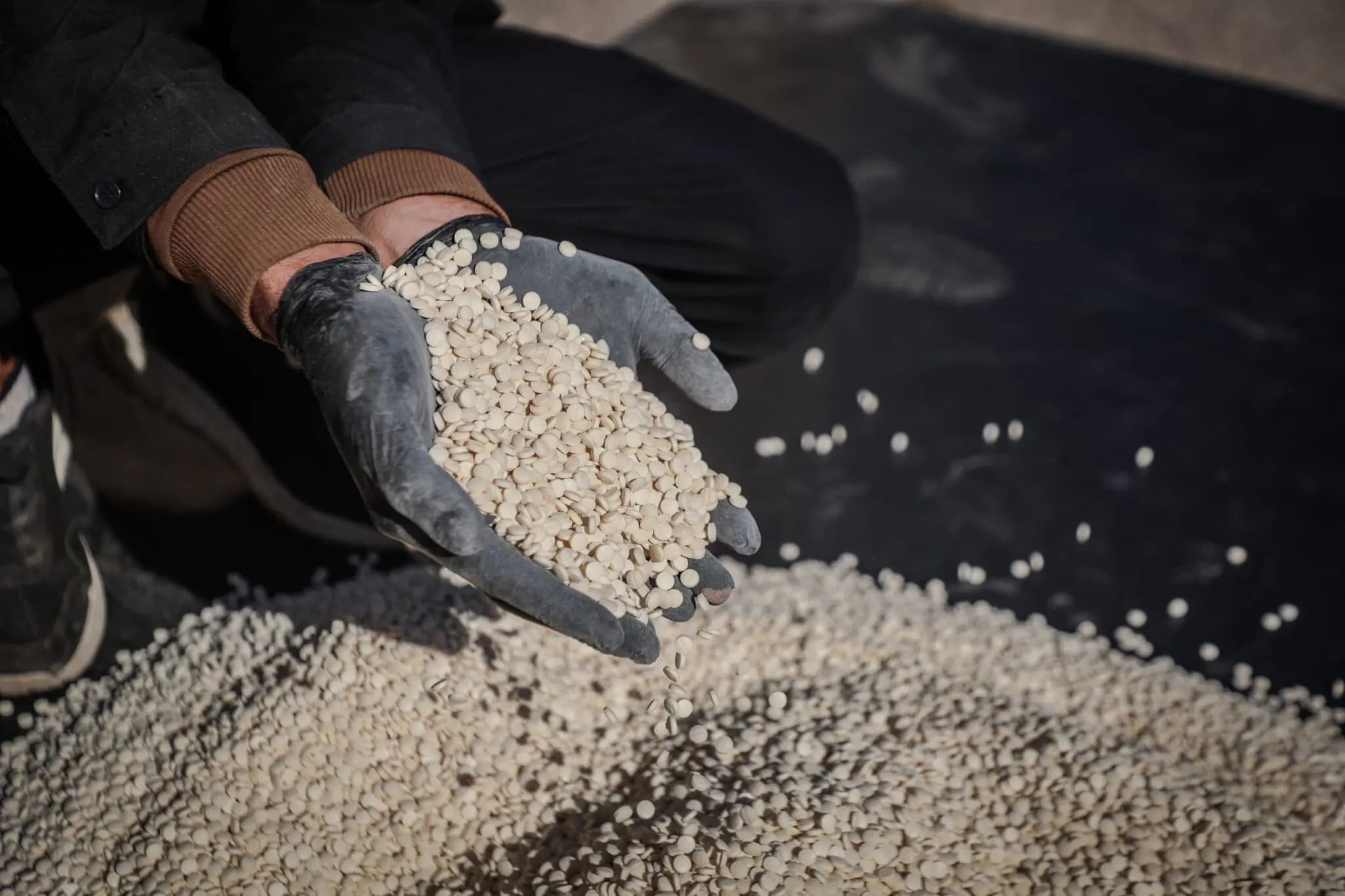
Photo: Captagon pills seized in Syria. (Abobaker Alsaka/Anadolu via Getty Images)