The U.S. is Moving Quickly to Leave Syria
Syria’s security and political landscape has experienced monumental shifts in the past two weeks. Following clashes between the Kurdish-led Syrian Democratic Forces (SDF) and the Syrian Army, the administration in Damascus has extended its control over Kurdish-held northeast Syria. The Jan. 18 ceasefire and Jan. 30 integration agreement have begun to fuse one of Syria’s most contentious fault lines together, paving the way for a singular, unified armed force.
The United States has been a central force behind this, applying pressure on both sides throughout the past year to negotiate a deal merging the northeast’s political, economic, and security sectors with those of the central government. The impetus behind Washington’s active role is simple: The U.S. perceives stability and internal cohesion among Syrian factions as a key that can unlock American disengagement from Syria, after nearly 14 years of U.S. troops stationed in the country to counter the Islamic State of Iraq and Syria (ISIS).
Yet while the agreement represents a potential breakout moment for the U.S. administration to leave Syria – one that aligns with plans that date back to U.S. President Donald Trump’s first term – there are dynamics that Washington will need to assess. Syria’s security forces now have a ceasefire and a security integration agreement; however, it is cautious, predicated on military overmatch and fragile compromise rather than on consensus between both sides, creating the risk of renewed clashes. Furthermore, the rapid shift in Syria’s security landscape has represented another opportunity for terrorist organizations like ISIS, particularly as the U.S. and Syrian partners disassemble multiple detention sites and transfer prisoners to neighboring Iraq.
A Fragile Deal
The SDF-Damascus deal is fast in motion, with a phased handover of territory and security responsibilities beginning Feb. 2, just days after the deal was signed. The plan is for SDF units to be reorganized into newly formed brigades embedded within Syrian Arab Army divisions, enabling the SDF to maintain four brigades within the structure, rather than integrating fighters on an individual basis – signaling a concession from Damascus.
Despite these measures, long‑standing mistrust between Kurdish leaders and the central government, along with recent clashes between their security forces, presents a risk. Kurdish officials have continued to stress that integration must be genuine, equitable, and backed by constitutional protections. Without such assurances, cooperation could either stall or digress, particularly if integration is perceived as coerced rather than substantive.
The United States has enthusiastically welcomed the agreement as a milestone, framing it as a foundation for strengthened institutions, transition to stability, and reduced dependence upon outside security actors. The deal also marked a significant shift in the U.S. alignment inside Syria, breaking with over a decade of precedent: Washington’s primary local partner in the fight against ISIS is no longer the SDF but the reconstituted Syrian government’s security apparatus.
The Threat of ISIS
Yet while the U.S. has signaled confidence in the new Syrian administration and its integrated army, it has not translated into total trust in their operational capacity on the ground. Immediately following the SDF-Damascus ceasefire, the U.S. brokered an agreement between Syria and Iraq, along with its own temporary CENTCOM mission, to transfer roughly 7,000 detainees from Syrian camps in the northeast to Iraq. This reflects not only the sensitive nature of the SDF-Damascus integration period, but also a lack of confidence in the new Syrian administration’s forces to manage these camps in the long term.
As the SDF and Damascus focus on stabilization and force restructure, counter‑ISIS operations risk being deprioritized. These risks are most visible in the management of detention facilities and displacement camps, as evidenced by the escape of an estimated 200 detainees from al‑Shaddadi prison on Jan. 20 during the handoff between SDF fighters and the Syrian Army. Syrian authorities reported recapturing 81 detainees, with operations ongoing.
ISIS has been active in Syria’s post-regime period, exploiting the shifting security landscape. In 2024, the group doubled the number of attacks from the previous year. While this number declined in 2025, the group launched several attacks against governmental forces and even planned to target civilian sites like churches around the holidays, well outside of its typical scope of operations. Iraqi intelligence officials have warned of a significant growth in ISIS ranks inside Syria, with estimates reaching as high as 10,000 militants, raising concerns about renewed cross‑border operations.
U.S. Withdrawal Planning and Political Signals
These developments coincide with concrete steps toward U.S. military disengagement. Plans reportedly envision completing the U.S. withdrawal from Iraq by September 2026, aligning with the conclusion of NATO’s advisory mission. Already, U.S. forces have reconsolidated from key bases in Iraq’s federal territory, such as Ain Al-Asad Air Base and Baghdad’s International Airport, to locations farther north in Iraq’s Kurdish Region. These steps toward consolidation and drawdown in Iraq limit the U.S.’s ability to provide air cover, intelligence, surveillance, reconnaissance, and other forms of support to both fronts of the counter-ISIS fight in Iraq and Syria, paving the way for eventual withdrawal later this year.
While the SDF-Damascus agreement has provided Washington further justification to advance its withdrawal plans, it may not yet provide a durable security substitute for the U.S. presence. Integration remains fragile, ISIS activity is on the rise, and the landscape for detention, border control, and counterinsurgency is well in flux.
The views expressed in this article are those of the author and not an official policy or position of New Lines Institute.
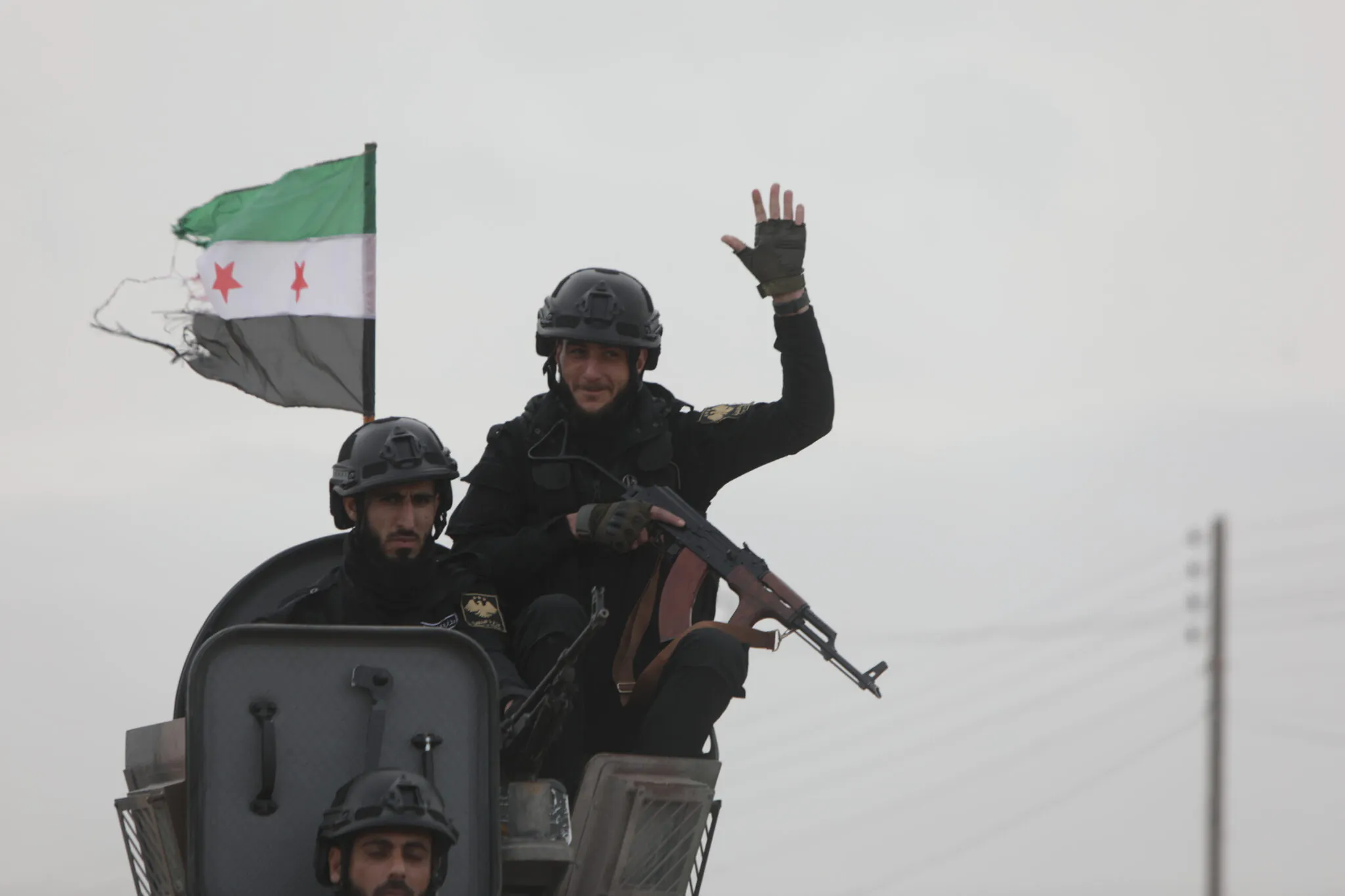
Photo: Syrian security forces enter the city of Qamishli under the implementation of an agreement concluded with the SDF in the countryside of Al-Hasakah province in northeastern Syria on Feb. 3, 2026. (Photo by Bakr Al Kasem/Anadolu via Getty Images)