Restoring Meaning, Ensuring Justice: The Definition of Apartheid in the Crimes Against Humanity Treaty
Executive Summary
This Is Not South Africa’s Definition: The Draft CAH Treaty’s Compromised Apartheid Provision, and the Case for Revision
With the second Preparatory Committee session set for April 2027 and the diplomatic conference opening in 2028, governments are preparing to settle the terms of the draft Crimes Against Humanity (CAH) treaty. In the first round of proposals released in June 2026, several states called for revising the apartheid provision. States’ agreements in the sessions ahead will determine how international law defines the crime of apartheid for decades to come. This report is written for that decision.
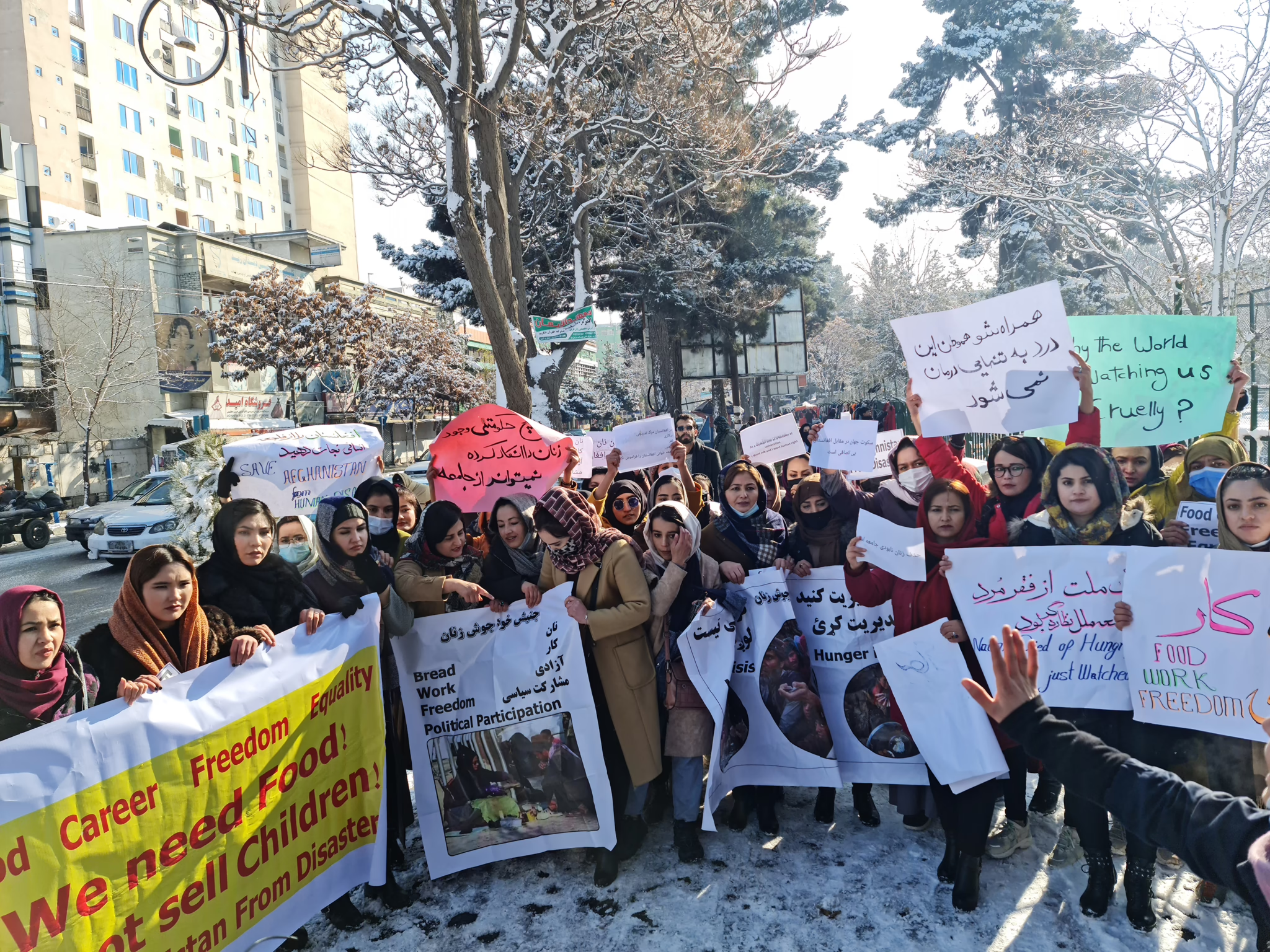
Three major struggles for justice have surfaced in the debate on the draft CAH treaty’s apartheid definition. Half a century after the Apartheid Convention’s adoption, no one has been held accountable for the crime of apartheid. Victims in South Africa and Namibia still struggle for recognition, justice, and transformative reparations. In addition, the compounded racist and patriarchal subjugation black women endured has never been legally recognized, despite South African feminists’ sustained efforts to raise that history in the Truth and Reconciliation process. In Afghanistan, since their 2021 return, the Taliban has erased women, girls, and LGBTQI+ persons from public life through edict after edict, enforced by imprisonment and violence. Afghan women have led the global campaign to have that system named for what it is, an institutionalized regime of systematic gender oppression and domination, a form of apartheid. Meanwhile, the Palestinian people have sought formal recognition of apartheid under international criminal law for decades. The International Court of Justice’s 2024 advisory opinion, which found Israel’s practices in breach of the human rights law prohibition on racial segregation and apartheid, stopped short of naming the crime against humanity of apartheid.
The apartheid provision in the Draft Articles on Prevention and Punishment of Crimes against Humanity (CAH treaty) is where those struggles converge. The draft currently defines apartheid as “inhumane acts … committed in the context of an institutionalized regime of systematic oppression and domination by one racial group over any other racial group or groups and committed with the intention of maintaining that regime.” That definition comes not from the 1973 Apartheid Convention, the instrument attributable to efforts by Global South and Non-Aligned Movement states who supported the international campaign to eradicate apartheid. It comes from the 1998 Rome Statute of the International Criminal Court (ICC), which rewrote it. The Convention and the Statute are the only places where international law defines the crime. The draft treaty carries forward the Statute’s definition, not the Convention’s. This is not South Africa’s definition.
The changes were not cosmetic. The Statute severed the definition from the colonial context the Apartheid Convention captured in its preamble. It imposed an “institutionalized regime” requirement the Convention never contained. It raised the bar for the acts that qualify. The Convention’s enumerated list explicitly recognizes denials of, inter alia, education, work, and freedom of movement as inhumane acts of apartheid. The Statute traded that list for an open category subject to a new severity threshold.
The Statute’s provision also retained the Convention’s “racial group” language, a term whose drafters, like the Genocide Convention’s before them, understood as defined by hereditary characteristics. That outdated understanding is now invoked to argue that apartheid requires groups set apart by inherent biological difference and that victims subordinated through racist political, legal, and ideological structures fall outside the definition. The Palestinian people are among those victims. The Statute also confines apartheid to racial oppression, excluding the institutionalized gender oppression and domination the Taliban imposes in Afghanistan and the compounded subjugation black women endured under apartheid in South Africa and Namibia. The CAH treaty reproduces the Rome Statute’s text unchanged, restoring nothing of what was lost and omitting the Statute’s own safeguard, Article 21(3), which aligns interpretation with international human rights law.
By 1995, when intergovernmental negotiations on the Rome Statute began, human rights law had moved decisively away from treating race and gender as biologically grounded categories. The International Convention on the Elimination of All Forms of Racial Discrimination (ICERD) and its treaty body had established that race is a social construct rather than a fixed biological classification. The Beijing Conference, convened that same year, anchored gender in social context for the U.N. system as a whole. While the Rome Statute includes persecution’s understanding of race as a social construct and extends a congruent understanding to gender, the apartheid provision’s “racial group” language was retained without examination.
Article 21(3) is one of the Rome Statute’s safeguards against its own outdated language. The provision ensures its terms are read consistently with internationally recognized human rights. It could help align the term “racial groups” and “gender groups,” if added, with their contemporary understandings. It would also help prosecutors bring the Apartheid Convention’s listed violations more squarely within the provision’s “inhumane acts” language. This would especially occur where they cumulatively charge persecution, as explained below. The draft CAH treaty omits such a provision. Without it, every compromise the definition maintains may be locked in place.
Ironically, apartheid is now arguably harder to establish as a criminal matter than genocide. The obstacle is not the definition read as Article 21(3) requires but the racial group language read without that safeguard. That misreading revives the language’s outdated biological framing to exclude the Palestinian people and other victims. The definition also provides no basis for recognizing gender oppression – neither the institutionalized domination Afghan women, girls, and LGBTQI+ persons endure under the Taliban today nor the compounded oppression black South African and Namibian women experienced under apartheid.
Taken together, these are the marks of a provision that has drifted from its historical underpinnings. When South Africa and the states of the Global South insisted that apartheid be included in the Rome Statute, they sought to shape the provision as the crime was understood by the Apartheid Convention drafters. Gender went unnamed not because it fell outside that understanding but because the gendered workings of apartheid were not yet recognized for what they were. As Part One shows, recognizing gender today returns the crime to an aspect of its own history. The Rome Statute’s provision is instead a narrowed version of the Apartheid Convention’s definition and further reflects a narrowing of the contemporary understanding of how discrimination works. The draft CAH treaty now repeats these flaws.
Part One of this report discusses the five problems the draft definition reproduces. Namely, the draft omits recognition of the crime’s colonial foundations. It conditions the crime of apartheid on an “institutionalized regime” and maintains the outdated “racial groups” language. It sets a new threshold for the inhumane acts that qualify. Finally, the definition contains no recognition of gender oppression. The draft carries each of these defects into a treaty that lacks an interpretive provision akin to Article 21(3), the safeguard that could temper them. Part One traces each problem to its source, following the definition from the Apartheid Convention’s negotiations through the Rome Statute’s revisions.
Part One also shows the twisted outcomes outdated language can license. The grant by the administration of U.S. President Donald Trump of expedited refugee status to white Afrikaners claiming racial persecution, while nearly all other refugee admissions remained suspended, previews the danger that a biological framing of racial groups can play in policy. Specifically, a hereditary or biological reading of “racial group” can serve the historically dominant as readily as the historically oppressed. Part One also recounts how apartheid in South Africa and Namibia imposed racist and patriarchal domination as one mutually reinforcing system, with its compounded weight falling on black women. That history makes recognizing gender alongside race a restoration of the crime’s history. It explains why adding gender is a return to the crime’s history rather than a departure from it.
A crime’s reach is fixed by the text that codifies it and the decisions that apply that text. Because no court has yet completed an apartheid prosecution, the crime has produced no jurisprudence of its own. The bodies that have assessed it, the U.N. accountability mechanisms and the International Court of Justice, have referenced the genocide tribunals’ doctrine on “racial groups.” Part One, Section 5 traces that across two decades and arrives at current implications, as apartheid is reportedly included in the arrest warrant applications at the International Criminal Court for Israeli Finance Minister Bezalel Smotrich and National Security Minister Itamar Ben-Gvir.
Part Two evaluates four proposed apartheid formulations against five criteria that draw on the crime’s history and contemporary law to rectify five problems in the draft definition. Each proposal advances something the draft now lacks, and each falls short in some way. None address the “institutionalized regime” language, so this report discusses solutions to the draft provision’s other weaknesses.
The first proposal adds gender groups by creating a second, standalone crime of gender apartheid, and the second adds them to the existing definition in a phrase that separates gender group oppression from racial group analysis. They would each recognize gender oppression but would fracture the crime in a way international criminal law has never accepted, obscuring compounded discrimination based on race and gender and inviting divergent jurisprudence over nearly identical elements. Both also preserve the fixed-group architecture that has been invoked to argue for excluding victims from recognition. The third proposal replaces “groups” with “grounds” and unites the two grounds of race and gender in one crime. Doing so aligns the definition with ICERD. It would encourage courts to recognize intersectional oppression based on both race and gender and to analyze the apartheid regime’s discriminatory intent, rather than to examine whether its victims possess the biological criteria of membership in a fixed group. It satisfies every criterion except the restoration of the crime’s colonial roots.
The fourth proposal is compound. It completes the set by adding “colonial discrimination” alongside the third proposal’s race and gender grounds, by recognizing colonialism’s harms in the treaty’s preamble, or by doing both. The ground would keep the definition open to forms of discrimination characteristic of colonial contexts without requiring proof of a colonial history in any given case. Discrimination associated with colonialism is condemned across international instruments, from ICERD’s preamble to the Durban Declaration. However, no instrument defines colonial discrimination as an element of a crime, and colonialism itself has yet to be codified as a crime in binding international law. An operative ground would therefore ask courts to give content to a term the law has not yet supplied, though it would reattach apartheid to its roots. Preambular recognition may be more effective and avoid the definitional problem. Because a preamble informs the interpretation of the entire treaty without creating elements courts must define, it would bear on every crime against humanity, not on apartheid alone. Thus, preambular recognition would be a substantive advance.
The Article 21(3) provision must return as well. The American Branch of the International Law Association (ABILA) has proposed the inclusion of an interpretive clause, but in its current form it lists international human rights law, international humanitarian law, and international criminal law as interpretive sources of equal standing. In a criminal instrument that equality is illusory. The principle of legality binds courts to the narrowest supportable construction because criminal statutes must be construed strictly. An unranked list could give the restrictive, hereditary readings of “racial group” and “gender group” the force of the treaty’s own text if those terms are in the treaty. This would be a result potentially more dangerous than adopting no clause at all. The clause should either add a rule of priority, directing that where these bodies of law diverge, the human rights reading governs, or it should simply restore the language of Article 21(3) itself.
Twenty-five years after the Apartheid Convention codified apartheid as a crime against humanity, the Rome Statute revised the definition. A generation on, the draft CAH treaty negotiations are the first multilateral opportunity to revise it once more. This time the revision must restore the definition’s recognition of apartheid’s colonialist foundations, modernize its treatment of race, recognize gender and intersectional oppression, adopt the interpretive safeguard that anchors the crime to human rights law, and ensure recognition for all of apartheid’s victims. The recommendations that close this report set out specific changes that states should make to the draft CAH treaty.
This report was written by Professors Lisa Davis and Kirby Anwar of the City University of New York (CUNY) School of Law. Anwar is Co-Director of the Human Rights and Gender Justice (HRGJ) Clinic at CUNY School of Law. Davis also serves as Special Adviser on Gender and Other Discriminatory Crimes to the Prosecutor of the International Criminal Court. The authors write in their personal capacities. The views expressed in this report are their own and do not represent the views of the International Criminal Court, its Office of the Prosecutor, the City University of New York, or CUNY School of Law. The authors are grateful to the reviewers whose comments strengthened the analysis, including Huma Saeed, an Afghan human rights defender, and Wendy Isaack, a South African lawyer, both Senior Fellows at the HRGJ Clinic; Jesse Waldman, Senior Legal Coordinator, and Kasia Zduńczyk, Programme Manager, TRC Programme of the Foundation for Human Rights in South Africa; and Nora Jaber, Professor of Law at the Edinburgh Law School. They also thank Julie Goldscheid for her contributions and Shelby Logan-Reese for legal research assistance for this report.
Recommendations
Each of these proposed reforms for the draft Crimes Against Humanity treaty correct a defect identified above. Together they help restore the crime of apartheid to the breadth its history and the present state of international law require. Each one draws on language and concepts states have already adopted.
1. Add gender to the definition of apartheid, and recognize gender alongside race in the definition of the crime
As regards history, the addition restores rather than innovates. In South Africa and Namibia, the apartheid regime enforced racist and patriarchal domination as one mutually reinforcing system, and black women bore its compounded weight, as history Part One, Section 7 recounts. Recognition would name that history and extend the crime’s protection to the victims of institutionalized gender oppression today, including Afghan women, girls, and LGBTQI+ persons living under the Taliban’s system of domination.
2. Define apartheid by grounds rather than fixed groups
Replace the Rome Statute’s racial group architecture with a grounds-based definition that identifies victims by the grounds on which a regime organizes its domination rather than by their membership in a fixed group. This single change resolves the contested racial group threshold that has kept the Palestinian people’s recognition in dispute. It includes Afghan women, girls, and LGBTQI+ persons through the gender ground. It also allows oppression on intersecting grounds to be charged as one wrong, recognizing the racist and gendered oppression and domination that black South African and Namibian women endured as part of a single regime. In doing so, it gives effect to the recognition they have long sought for racist and gendered oppression and domination endured as one regime. It also brings the definition into congruence with the crime of persecution, so that the persecutory acts a regime commits to enforce its domination can be charged as the inhumane acts of apartheid without a mismatch between the victims each provision recognizes. It follows the only method international criminal law has used to widen protection against discrimination, adding grounds within an existing crime, and it introduces no category the law has not applied since 1998. The recommended definition reads:
“inhumane acts … committed in the context of an institutionalized regime of systematic oppression and domination by one group over any other group or groups, on race or gender grounds, and committed with the intention of maintaining that regime.”
3. Restore recognition of colonialism in the preamble
The Rome Statute stripped the colonial recognition the 1973 Apartheid Convention placed at the center of the crime, and the draft treaty has not restored it. States should recognize colonialism in the treaty’s preamble, which under the law of treaties forms part of the text and informs the interpretation of every provision. Preambular recognition reaches further than an operative ground, because it bears on all the crimes the treaty codifies, from extermination and enslavement to persecution, rather than on apartheid alone. It can hold the broader history while the operative law matures.
4. Add Rome Statute Article 21(3) or the equivalent as an interpretive safeguard
Whatever definitional form states adopt, the treaty must direct courts to interpret its crimes consistently with internationally recognized human rights. Without that direction, the principle of legality binds courts to the narrowest reading of inherited terms, and the biological construction of racial group may return by default.
5. Remove the “institutionalized regime” requirement
The Rome Statute added a threshold the 1973 Apartheid Convention never contained, requiring proof that inhumane acts were committed in the context of an institutionalized regime of systematic oppression and domination, a threshold the draft treaty carries forward. The Convention asked only whether the acts were committed for the purpose of establishing and maintaining domination by one group over another and systematically oppressing them. States should return to that purpose-based formulation. The institutionalized regime requirement shelters the forms of domination most likely to arise today. These include regimes that govern through facially neutral laws whose cumulative effect maintains hierarchy and nonstate actors that impose systematic oppression without the apparatus of a state. It invites a defense that no apartheid existed because no statute announced one. Purpose can be proved from a regime’s laws, from its practices and their cumulative effects, and from its history, as the Convention’s drafters intended. Removing the threshold restores the Convention’s reach and returns the inquiry to what the perpetrators set out to do.
Adopted together, these reforms would give the treaty a definition of apartheid faithful to the crime’s origins, capable of reaching all of its victims, and secured against interpretations that have narrowed it. A definition so restored would also be, in the truest sense, South Africa’s definition. The crime entered international law from the lived experience of South Africa and Namibia, named and codified at the insistence of the Global South states. A definition that recognizes racist and gendered discrimination as capable of being one mutually reinforcing system, and that via the treaty’s preamble, recalls its roots in colonial domination, describes apartheid as South Africans endured it. It also describes what Palestinians endure today under a regime that contests their very standing as a group, and what Afghan women, girls, and LGBTQI+ persons endure under a regime that decrees how gender must be lived. The correction would arrive fittingly, in the moment when South Africa has become the first state anywhere to affirm charges of apartheid as a crime against humanity. The negotiations now underway are the moment to make that correction, and, once a definition is codified, the last practical moment to make it for a generation.
6. Codify Colonialism as a Crime Against Humanity
States should codify colonialism as a distinct crime against humanity. Prohibition of colonialism would have operative force in the treaty as a basis for individual criminal responsibility. Codification and preambular recognition serve distinct functions and are not alternatives. The preamble forms part of the text and informs the interpretation of every crime the treaty codifies, whereas a codified crime establishes liability for conduct that no provision presently reaches on its own terms.
The views expressed in this article are those of the authors and not an official policy or position of New Lines Institute.
Photo: Women protest against Taliban in the center of Kabul in December 2021. (published with permission)