With a Kingpin’s Death, Mexico Crosses a Cartel Red Line
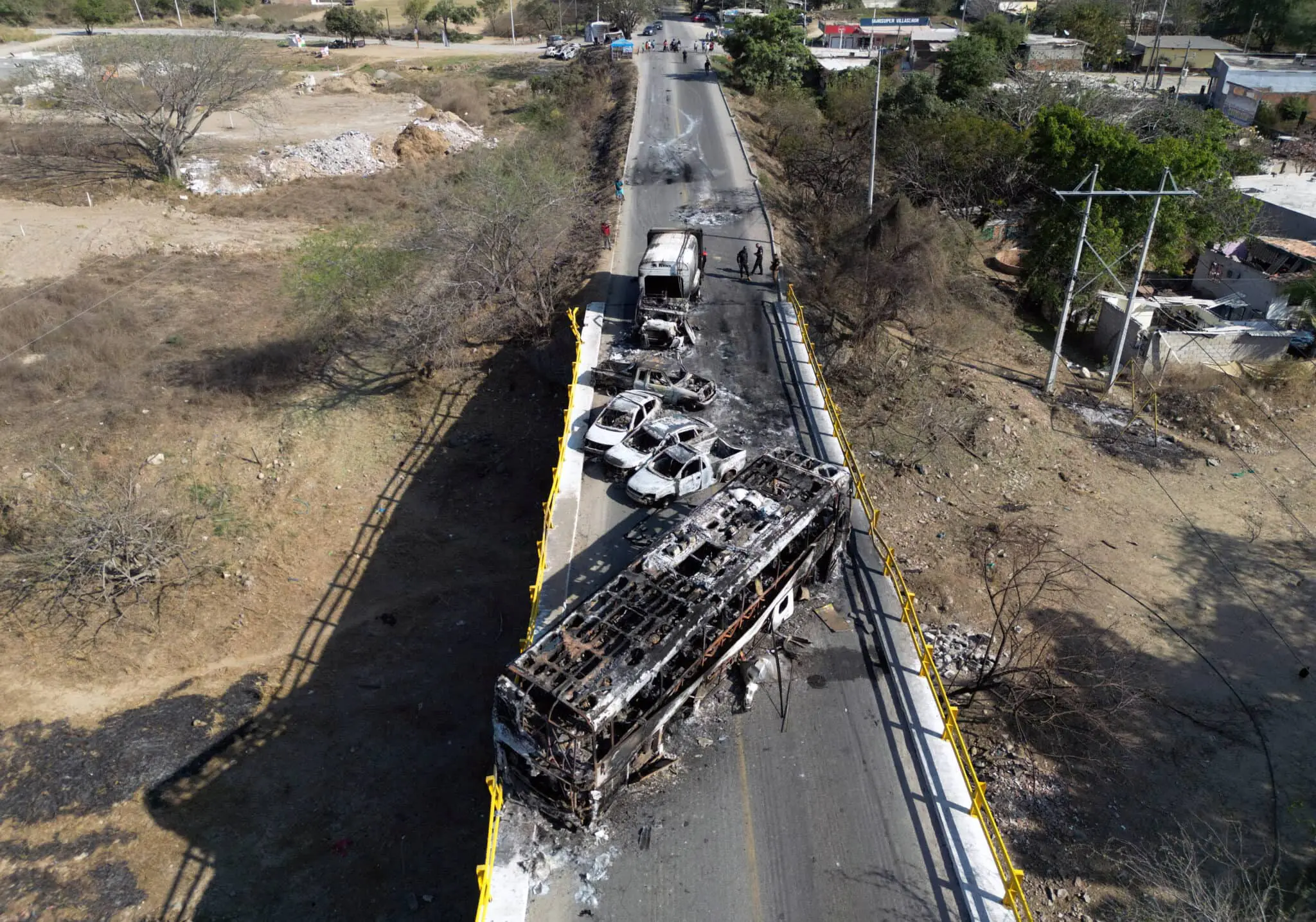
On Feb. 22, the Mexican army killed the leader of the Jalisco New Generation Cartel (CJNG), Nemesio Rubén Oseguera Cervantes, known as “El Mencho,” in Tapalpa, Jalisco. A widespread wave of retaliatory violence immediately followed in several cities. Members of the CJNG set up road blockades, set vehicles alight, and killed over 20 National Guard members. This intense reaction reflects the significance of El Mencho’s elimination and clearly illustrates the crime-conflict nexus in Mexico and the strength and influence of its criminal networks.
The operation targeting the CJNG leader, aided by U.S. intelligence sharing, follows the “kingpin strategy” of countering organized crime, which posits that neutralizing a criminal group’s leader will ultimately result in that group’s degradation or dismantling. This strategy has been a key tenet of discourse and policy debate about counternarcotics operations for decades, with many experts asserting that the strategy – employed during U.S. President Ronald Reagan’s administration’s “War on Drugs” and in other contexts – often does not result in the demise of organizations but instead further complicates their structures. In Mexico, the kingpin strategy has proved ineffective in practice and has often bred violence, whether through retaliatory attacks or competition among remnant factions.
As the first real test for the CJNG’s leadership structure, the elimination of a leader who commanded significant loyalty from lieutenants and lower-level bosses could exacerbate cartel violence. Cartels often try to insulate their operations by adopting franchise-based or decentralized structures that reduce dependence on a single leader. Whether CJNG’s structural arrangements will enable the organization to absorb leadership changes is unclear. If the group is able to coalesce around a single successor – figures like “El 03,” “El Jardinero,” and “El Sapo” have emerged as potential candidates – a relatively stable transition could occur. If not, a CJNG leadership crisis could result in fragmentation, the formation of new alliances, opportunities for new criminal actors to emerge, and increased violence perpetrated against the state.
CJNG fragmentation and competition among factions would result in severe conflict and violence. This hydra effect is a common consequence of the kingpin strategy: Chopping off one head often results in the emergence of several more that are harder to control and compete both with the state and with each other. This happened in 2024 when the U.S. captured “El Mayo,” head of the Sinaloa cartel. His arrest sparked a conflict between two major Sinalia factions, “Los Chapitos” and the “Mayitos,” sparking a cartel civil war that elevated violence in Sinaloa to unprecedented levels. El Mayo’s capture did not curb illicit activity in Mexico and has not significantly reduced drug trafficking to the U.S. CJNG is not immune to this type of fracturing. Key lieutenants commanding gunmen and fighting units could reject an appointed successor, break off, and battle for territory and control over trafficking routes with former comrades. As with the Sinaloa civil war, this fragmentation would likely result in significant waves of violence and destabilization.
Another consequence of the kingpin strategy that could materialize post-El Mencho is the formation of new cartel alliances. Should fragmentation occur, CJNG factions may partner with other cartel groups in an effort to expand territorial control, get armed support, and access trafficking routes. The Sinaloa civil war again offers a valuable case study: Los Chapitos, in an effort to gain ground lost to their former allies, announced an alliance with CJNG, their historic rival. This alliance has helped the Chapitos compete with the Mayitos while also expanding CJNG’s reach. The same dynamic could unfold with new CJNG factions that might emerge. New partnerships and alliances help ensure operational continuity and can strengthen cartels, while also threatening to exacerbate violence.
The kingpin strategy can also create conditions for elevated cartel violence against the state. An implicit red line sometimes exists between a state with strong cartel influence and the cartels: So long as top leadership is left untouched, extreme retaliation will be contained. By giving the green light to an operation that resulted in El Mencho’s death, Mexican President Claudia Sheinbaum crossed that line. The immediate wave of violence that followed served as a reminder of the consequences and an attempt on the part of cartel members to reestablish some deterrence. It is unlikely that the CJNG will sustain the retaliatory campaign, as it invites more pressure, which can distract from internal leadership decisions and the ultimate goals of profit generation and territorial control. However, the significance and weight of the revenge operation leaves room for uncertainty. CJNG is well armed and well funded, with dedicated fighting and drone units that are becoming increasingly militarized and professional. Even if the violence subsides in the next few weeks, it poses a threat to law enforcement and security forces while showcasing CJNG’s power.
El Mencho’s death marks a significant moment in Mexico’s war against cartels. It also signals that U.S. pressure on the Sheinbaum administration to confront cartels more head-on is bearing fruit. However, eliminating one of the most violent cartel leaders in Mexico’s history does not guarantee a more stable or secure landscape or a reduction in the flow of drugs to the United States. While CJNG could unite behind a single successor, cartel fragmentation and alliance formation are likely scenarios, which would bring new waves of violence to Mexico. El Mencho’s death will not be the end of the CJNG but rather a transformation that could reshape the cartel into a more fragmented and volatile entity that could potentially be harder to confront in the future.
Aerial view of burned vehicles over the “La Desembocada” bridge in Puerto Vallarta, Jalisco State, Mexico, on Feb. 24, 2026. (Photo by Alfredo ESTRELLA / AFP via Getty Images)
The views expressed in this article are those of the author and not an official policy or position of New Lines Institute.