Iraqi Military Forces’ Capacity in the Wake of a Likely U.S. Withdrawal from Iraq
In the wake of an intense regional escalation that severed Iran and its proxies across the Middle East, the U.S. finds itself in a new strategic position in Iraq and Syria, where Iranian influence and capacity have suffered a major blow. With the swift and surprising departure of the Tehran-allied Assad regime and the retreat of Islamic Revolutionary Guard Corps units and aligned proxy forces during Israeli strikes, there are new opportunities for U.S. interests in the region. With a weakened Iranian grip on Damascus and Baghdad – underlined by a dramatic decrease in Iran and Iran-backed militia strikes on U.S. and partner assets – the U.S. and its partners in the Global Coalition to Defeat ISIS face fewer distractions and greater space to improve the capacity of local partners.
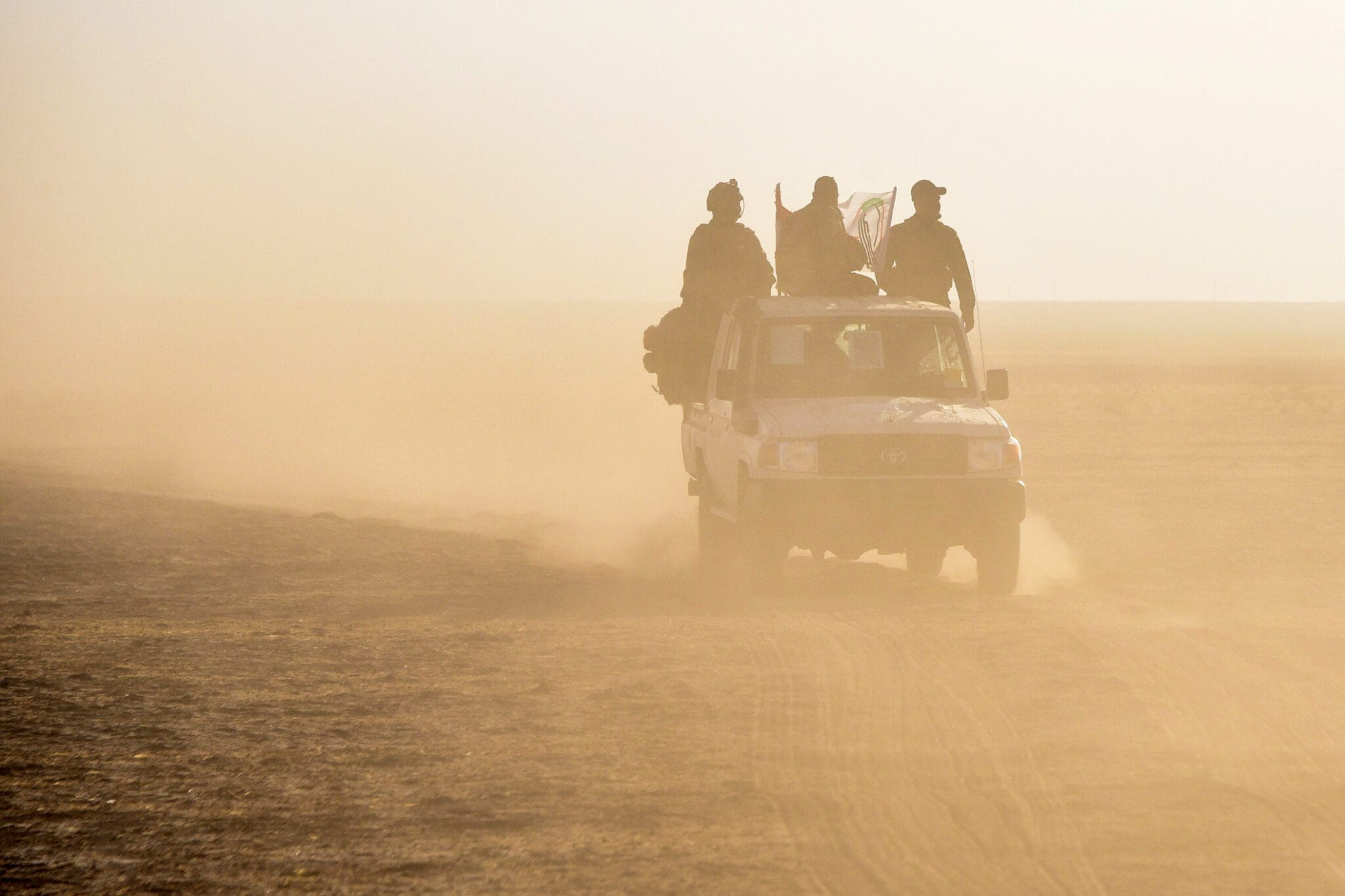
However, with opportunities, there are also risks. While the new caretaker government in Syria, led by Hayat Tahrir al-Sham, has sought to foster a smooth political transition and prevent a power vacuum, external actors’ adventurism in contested territories, such as Syria’s northeast, and an uptick in ISIS activity have proven that both state and nonstate actors are seeking to exploit this new space for influence. ISIS fighters have consolidated momentum in Syria’s badia to prepare for a cross-border resurgence into Iraq – a concern that has prompted the Iraqi Federal Government to ring the alarm bell and seek a longer-term security partnership with the United States. Already, Baghdad has signaled its tentative interest in extending the U.S. timeline for a military withdrawal from Iraq, adding three years to an already-ambiguous drawdown plan to hedge against both Iran and sudden instability.
The U.S. has traditionally perceived a fast withdrawal timeline in Iraq as an opportunity for Iran, ISIS, and other regional malign actors, risking regional stability and human security. Washington additionally has a difficult history with expedited drawdowns from counterterrorism missions: Policymakers continue to be haunted by the memory of the botched Afghanistan withdrawal process in 2021, as well as the fact that only three years after U.S. forces ended their combat mission and pulled out of Iraq, they found themselves back in the country to combat a new terrorist organization that exploited the vacuum U.S. forces left behind.
The second Trump administration marks the beginning of an uncertain chapter for the United States’ forward presence in the Levant. The new administration has demonstrated several times its desire to transfer responsibility for regional security in the Middle East to its partner Israel and conduct an immediate military disengagement. Skeptical of the value that a small U.S. forward presence in Iraq and Syria yields for Washington’s interests, it’s possible that President Donald Trump will authorize a speedy evacuation of U.S. forces in Iraq and Syria.
It’s pivotal that policymakers in Washington and its partners abroad assess the scenarios that will unfold in the wake of a U.S. drawdown: how civilian and military missions outside the Global Coalition, such as NATO Mission-Iraq, will be able to stand on their own; how local forces like the Iraqi Security Forces and Syrian Democratic Forces will be able to stave off threats from ISIS and Iran-aligned militias without U.S. assistance; and how external actors may seek territorial contestation or political influence in lieu of a long-term U.S. presence and partnership.
Policy Recommendations
- The U.S. should seek to diversify its security influence in Iraq beyond its military presence and capacity-building efforts with Iraqi military forces, seeking to revive law enforcement collaboration, counternarcotics efforts, border security initiatives, and other areas of coordination.
- Ahead of a potential U.S. withdrawal from Iraq and Syria or an extended withdrawal timeline to 2029, NATO and the EU should coordinate with security forces in Iraq to strategize their own footprint in Iraq for the future, identifying gaps their missions can fill as the counter-ISIS fight comes to a close.
- With the potential for a withdrawal, the U.S. should seek greater coordination with other military and civilian capacity-building missions, such as the NATO Mission-Iraq and EU Civilian Mission in Iraq, as a sudden American military withdrawal will render these operations vulnerable without thorough planning. NATO and the EU should engage in multilateral discussions with the U.S. government, the Iraqi government, and the Kurdistan Regional Government in Iraq to strategize their own footprint in Iraq in the wake of a potential U.S. withdrawal.
- With an increase in ISIS attacks and activity since the fall of President Bashar Al-Assad’s regime in December 2024, the U.S. should encourage the Kurdistan Regional Government and the Federal Government of Iraq to engage with the new administration in Syria and Kingdom of Jordan to increase counterterrorism, intelligence, and security cooperation, in anticipation of a potential ISIS overspill from Syria’s badia into Iraq and potentially Jordan.
The views expressed in this article are those of the author and not an official policy or position of New Lines Institute.
555