


Sexual and Gender-Based Violence
Globally, at least one in three women has experienced some form of gender-based violence in her lifetime. Issues like intimate partner violence, child marriage, human trafficking, and conflict-related sexual violence not only harm those being victimized, but also impact foreign policy objectives of the U.S. and its allies. New Lines’ Sexual and Gender-Based Violence workstream seeks to bring the issue to the forefront of policy and ensure policymakers around the world are addressing this threat to our liberal world order in the most effective, inclusive manner possible.
A Foreign Policy Priority
Sexual and gender-based violence destabilizes communities, undermines governance, and obstructs development. When left unaddressed, it erodes the foundations of the liberal world order that U.S. foreign policy seeks to uphold. This workstream makes the case for treating SGBV as a strategic imperative that demands sustained attention from policymakers, not just a peripheral concern.
Connecting the Dots
Child marriage, human trafficking, and wartime sexual violence are often treated as separate, unrelated issues. In reality, they are interconnected manifestations of the same underlying power imbalances. This workstream examines these connections, helping policymakers understand how addressing one form of SGBV can reduce vulnerability to others.
Projects
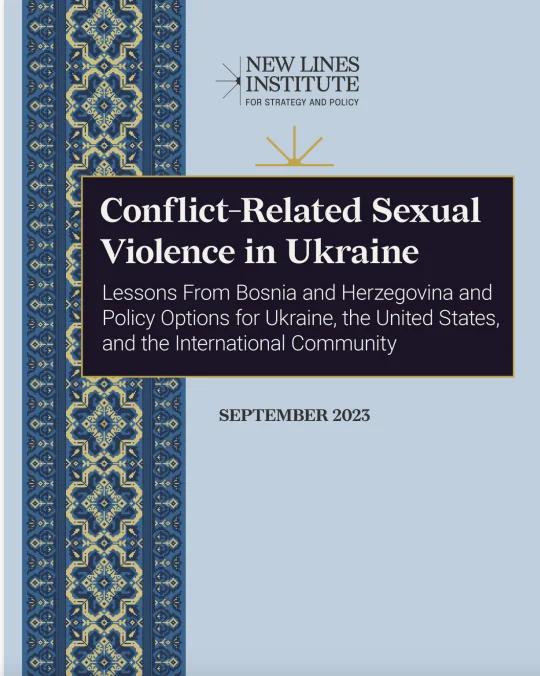
Conflict Related Sexual Violence
Global Responses to Sexual and Gender-Based Violence
All articles



Workstream Team

Emily Prey
Director, International Law and Gender Policy

Kallie Mitchell
Program Head and Analyst, Gender Policy

Amari Jones
Associate Analyst