Women’s Rights in Albania: A Growing Phenomenon and the Last Taboos
This report is part of the larger anthology “Insights into Albania: Internal Struggles and Geopolitical Challenges in the Western Balkans”
Read the report here
Read the full anthology here
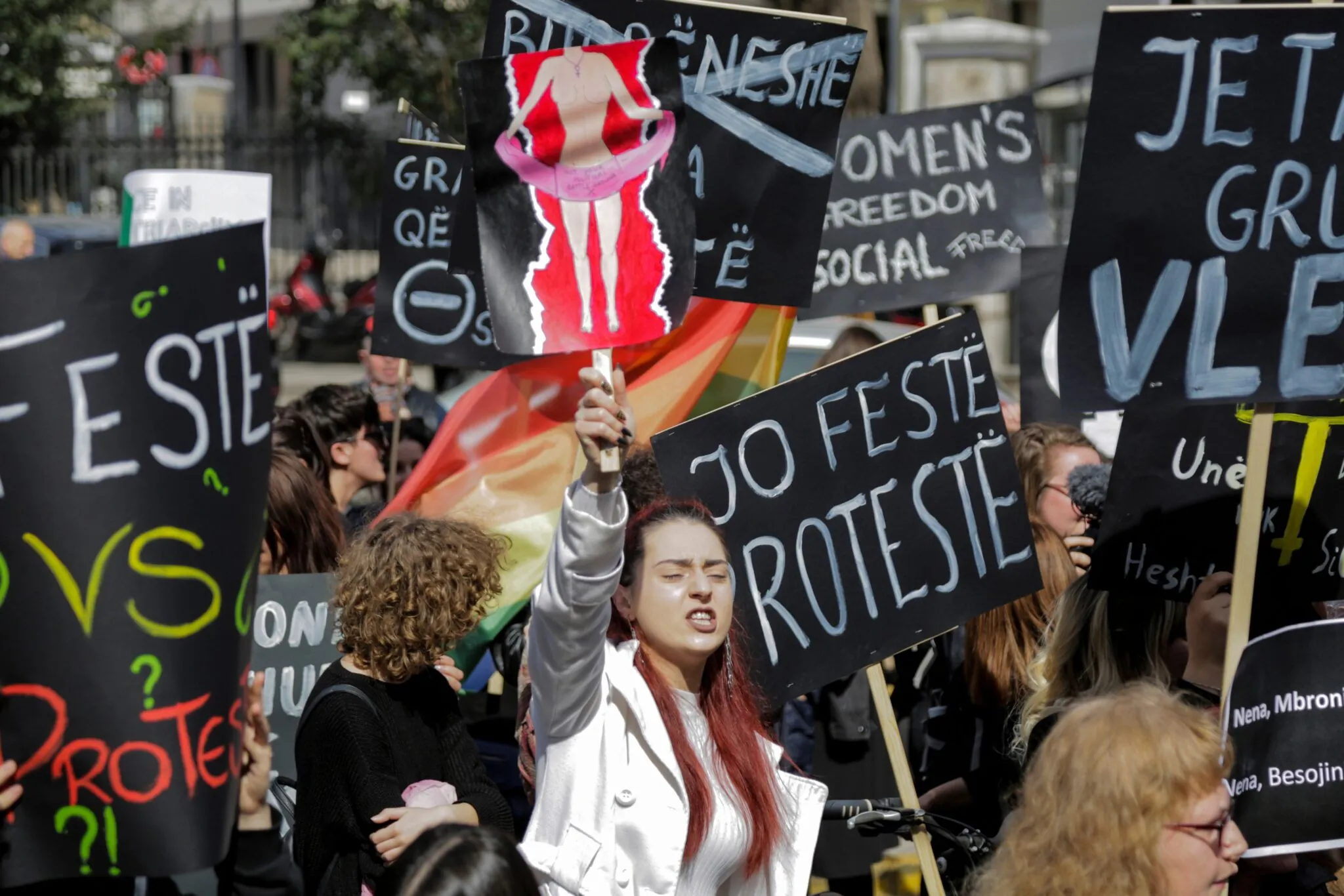
Albania is a patriarchal country that continues to face numerous challenges regarding women’s rights. Albanian society faces several issues today: one of the highest rates of domestic violence in Europe, forced and arranged marriages, restrictions on women from working or leaving the house alone, heavily enforced gender stereotypes, and violence perpetrated against women and girls online, in the media, and in public. Since 2011, at least 159 Albanian women have been murdered by a former intimate partner or family member.
Albania’s legal framework provides women and girls with equal rights to men: the rights to own and inherit, to be protected, to earn a fair salary, to access reproductive health care, and to use legal recourse to right the wrongs against them. But in reality, implementation is lacking. Women and girls are often not aware of their rights, and when they try to seek justice, they fail for several reasons. These include corruption, a long backlog of cases, societal taboos and stigmas against victims, economic complexities, and a lack of resources at every level.
Furthermore, women continue to be paid less than men, while working longer hours and undertaking more unpaid care work and domestic labor. While the country excels in women’s participation in local and national government, this does not reflect women’s empowerment in daily life.
This essay focuses on matters that are not well known or reported or that represent long-standing societal taboos. During my research for this essay, I encountered many people who believed that some of these issues, such as gender-selective abortion and “‘virginity surgery’,” no longer existed, but the truth is, that they do.
The views expressed in this article are those of the author and not an official policy or position of New Lines Institute.