Real-Time Analysis: Iran Regime Change Unlikely With Airstrikes Alone
The Trump administration’s decision to launch a major military operation in Iran, in collaboration with Israel, following the collapse of talks with Iran creates the impression that Washington’s objective is regime change. However, such change is unlikely to be achieved through air power alone, particularly against a security state with entrenched coercive institutions and layered patronage networks. The more plausible logic is coercive leverage: applying calibrated force to intensify existing elite fragmentation and shift the internal balance toward factions amenable to compromise. The central challenge for the U.S. lies in calibrating force with exceptional precision to shape elite behavior without producing a systemic shock that accelerates uncontrolled institutional breakdown and civil war – an outcome fundamentally at odds with U.S. strategic interests.
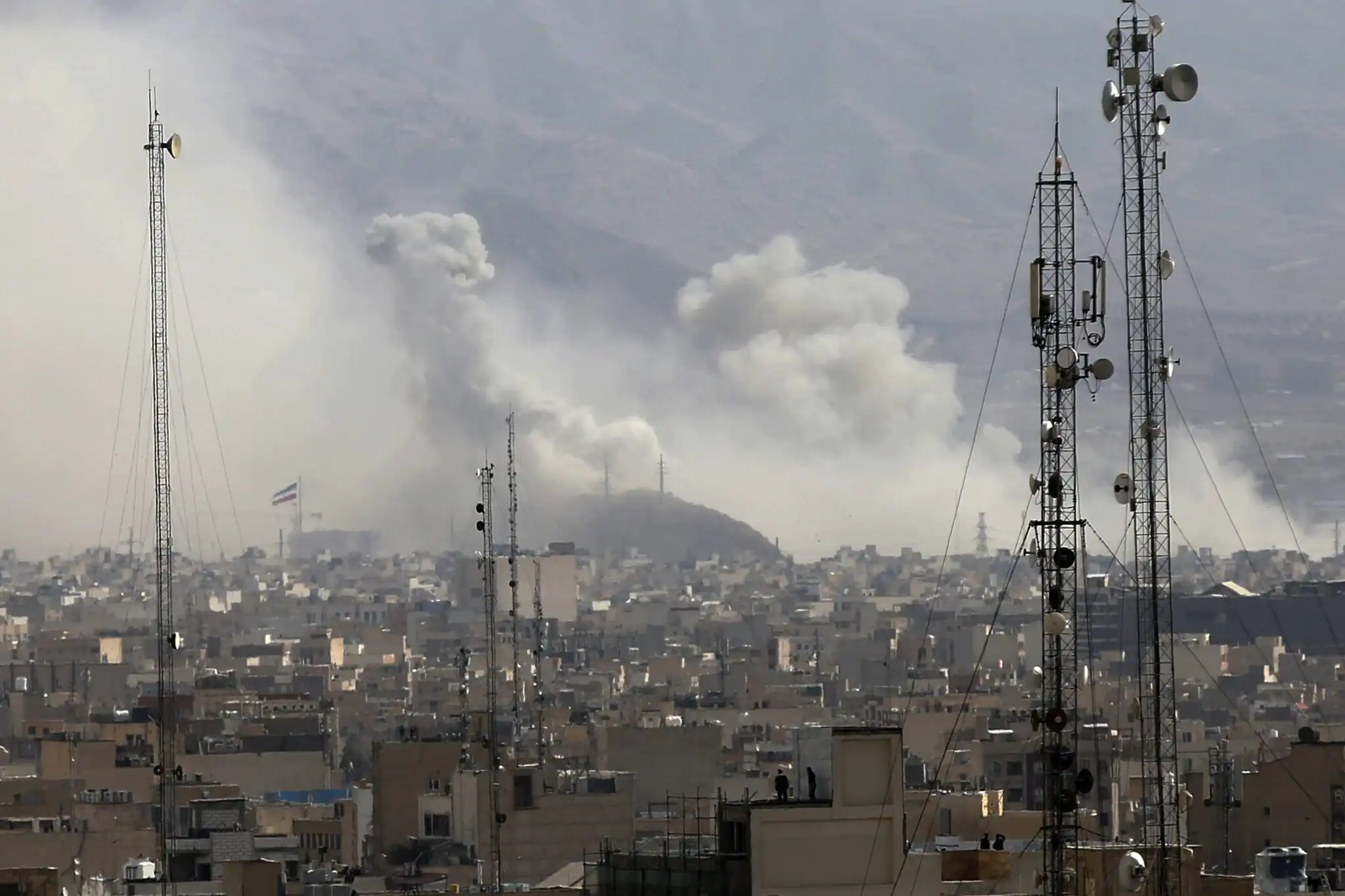
In a Feb. 28 address, U.S. President Donald Trump cast the military campaign as a defensive move to neutralize what he described as imminent threats from the Iranian regime to the United States and its allies. Trump outlined a sustained operation to dismantle Iran’s missile and naval capabilities, degrade its regional proxy network, and close any pathway to a nuclear weapon. Trump coupled this with an ultimatum “to the Islamic Revolutionary Guard Corps (IRGC), the regular military, and other security organs to lay down their weapons in exchange for immunity or face lethal force” – an explicit bid to fracture the coercive apparatus. Finally, he urged the Iranian public to shelter during the strikes and then seize the moment to overthrow the regime, signaling an effort to convert military shock into political change.
Public rhetoric notwithstanding, the Trump administration likely understands that mass uprisings alone rarely topple entrenched regimes. Sustained agitation becomes decisive only when it generates fractures within the incumbent order, prompting key power centers to withdraw support from the existing system. This dynamic was evident in the 1979 revolution that dismantled the monarchy and paved the way for the Islamic Republic. As internal security forces lost control of the streets, the regular military’s growing reluctance to fire on demonstrators signaled elite defection and fatally undermined the regime’s coercive backbone.
Today, the landscape is far more complex, as the Islamic Republic rests on parallel and at times competing coercive institutions – the IRGC, the conventional armed forces (Artesh), and the vast Basij militia subordinated to the IRGC. Any external strategy must therefore account for, and potentially exploit, these internal fault lines rather than treat the regime as a unitary actor. The IRGC faces both factional strains and institutional fatigue, compounded by attrition and reputational damage from the 2024-25 conflict with Israel. In the aftermath of the 12-day war last June, the regular armed forces appear to have gained greater influence in strategic deliberations, subtly shifting the internal balance within the security establishment.
That said, neither the IRGC nor the Artesh exercise uncontested dominance over Iran’s security apparatus. The Artesh’s influence has expanded in national defense and strategic decision-making, reinforced by its prominence on the Supreme National Security Council and the establishment of the National Defense Council in the aftermath of the June 2025 war. However, the IRGC retains a central role in national defense through its control of the military-industrial complex and conventional force projection. Crucially, the IRGC also monopolizes domestic security and internal coercion, while the Artesh remains largely confined to external defense and has no formal role in maintaining internal order.
This power imbalance is amplified by a prolonged internal evolution that has gradually weakened the theocratic foundations of the regime. Compounding the uncertainty is the historic transition underway from Supreme Leader Ali Khamenei (whose status is unknown given that he was the target of assassination in today’s airstrikes) to an as-yet-uncertain successor. The succession process has become the central focus for competing factions and power centers, shaping their calculations and alliances. These dynamics are intensified by external pressures, including the collapse of Iran’s regional influence in 2024, the war reaching Iranian territory last summer, and rising domestic unrest that further strains the regime’s cohesion.
The central challenge for Iran’s security apparatus is finding a balance between the Artesh, whose influence has been rising, and the IRGC, which has been on a relative decline. For the Artesh, the crises since 2024 have provided a historic opening to expand its authority and institutional reach. By contrast, the IRGC has been preoccupied with containing its losses amid the elimination of senior commanders and persistent internal factionalism. The current U.S.-Israeli military campaign temporarily compels cooperation, but ongoing attrition is likely to sharpen the underlying rivalries between the two institutions.
The U.S. strategy of applying targeted military pressure to exploit elite fissures and empower more cooperative factions may fail to produce the intended political leverage. Rather, it could degrade the IRGC’s control over internal security, compelling the Artesh to intervene and prioritize the preservation of the state over loyalty to the regime. This dynamic heightens the risk of intra-security force conflict, with the Basij militias further complicating the balance of power. Simultaneously, marginalized groups such as Kurdish and Baloch separatists could seize on the turmoil to advance their own agendas, amplifying the potential for broader instability.
In short, the U.S. faces a profoundly complex environment in which military pressure interacts with deep-seated institutional rivalries and ongoing political transitions. Airstrikes alone cannot engineer regime change without careful attention to elite dynamics and the delicate balance of coercive forces. Any miscalculation risks weakening the regime’s institutions to the point where preserving the state, rather than the leadership, becomes the priority. Ultimately, the outcome will depend as much on internal Iranian power struggles and public responses as on external military action.
The views expressed in this article are those of the author and not an official policy or position of New Lines Institute.
Photo: Smoke rises over the center of Tehran after U.S. and Israeli airstrikes on Feb. 28, 2026. (Photo by Fatemeh Bahrami/Anadolu via Getty Images)