Rethinking India: A U.S. Partner, Balancer, or Free Agent?
As the U.S.-Israel conflict against Iran continues, Pakistan has taken on a central role in efforts to reduce tensions. It delivered to Tehran the 15-point U.S. plan to end the conflict – which Tehran rejected – and also conveyed Iran’s 10-point counterproposal back to Washington. It offered to host talks between Iran and the U.S. On March 29, Pakistani Foreign Minister Ishaq Dar met with diplomats from Saudi Arabia, Egypt, and Türkiye in Islamabad to discuss possible strategies to resolve the regional war. On March 31, Dar traveled to Beijing to meet with China’s Foreign Minister Wang Yi in a diplomatic push to de-escalate the war. They released a five-point initiative calling for an immediate ceasefire, renewed dialogue, protection of civilians, restoration of transit through the Strait of Hormuz, and a greater role for the United Nations. These efforts contributed to a temporary ceasefire between the United States and Iran after weeks of fighting.
While Pakistan steps into a diplomatic leadership role, India’s External Affairs Minister Subrahmanyam Jaishankar said, “India cannot be a broker nation,” a clear articulation of New Delhi’s strategic posture. India maintains independent relationships with actors across the Middle East. While it engages with Iran to ensure peace, stability, security, and the safety of Indian citizens, it stands in solidarity with the United Arab Emirates and other Gulf Cooperation Council (GCC) countries at the receiving end of Iranian ballistic missile and drone attacks. On Feb. 26, two days before the war commenced, Indian Prime Minister Narendra Modi traveled to Jerusalem to meet with Israeli Prime Minister Benjamin Netanyahu. The meeting reflected their comprehensive partnership, demonstrating India’s policy of balancing relationships. On March 24, Modi had a “very friendly phone call” with U.S. President Donald Trump in which they discussed the Iranian military’s control of the Strait of Hormuz and the need to control the spike in energy prices.
This approach demonstrates that while India is deeply embedded in Middle Eastern geopolitics, it deliberately avoids crisis management roles. New Delhi’s agility and expanding presence suggest ambition; however, its diplomacy consistently prioritizes access and flexibility over regional leadership. While its engagement preserves maneuverability, it stops short of shaping outcomes. In this sense, India appears to be neither a conventional U.S. partner nor a consistent balancer, noticeably operating as a free agent instead.
Expectation-Capability Gap
Despite New Delhi’s preferences, the warring sides expect India to play the role of mediator. Earlier in March, during a phone conversation, Iranian President Masoud Pezeshkian urged Modi to leverage his position as the current chair of the BRICS alliance and India’s independent role in international affairs to halt the U.S.-Israeli hostilities against Iran. Meanwhile, Special Envoy for the Israeli Foreign Ministry Fleur Hassan-Nahoum said India is a “better mediator than Pakistan,” crediting India’s policy of maintaining good diplomatic relations with global actors. Meanwhile, Trump’s desire to keep Modi abreast of the latest developments, amid Pakistan’s diplomatic efforts to reduce tensions, suggests that the U.S. welcomes India’s involvement, even though the contours of such a role are unclear at this point.
Since the conflict began, Modi has engaged with Israel, Iran, and many Gulf countries, consistently urging all sides to engage in dialogue and diplomacy to reduce differences, while reaffirming India’s commitment to ensure the safety of its citizens in neighboring countries. As the world’s fifth-largest economy and third-largest importer of oil, India is primarily concerned with reducing the impacts of rising oil prices. Now that those prices have topped $100 per barrel, India must ensure that consistent supplies of liquified petroleum gas (LPG) and liquified natural gas (LNG) are routed through the Strait of Hormuz to mitigate economic fallout. Recently, the rupee breached the 94 rupees per dollar mark, becoming one of the worst-performing currencies this year. Jaishankar emphasized that India’s foreign policy aims for a “balanced engagement” with all actors in the Middle East, despite domestic and international pressure to take a more assertive position on the war.
India’s GCC Engagement and Its Limits
The costs India seeks to avoid in the Middle East are concrete and domestic. Nearly 10 million Indian expats live and work across the Gulf, making diaspora security and remittance flows – worth over $40 billion annually – highly sensitive to regional escalation. The GCC is India’s largest trading partner, with bilateral trade reaching $162 billion in 2023-2024, accounting for nearly 16% of India’s global trade.
Apart from its robust partnerships with the GCC bloc, at the bilateral level, ties with the UAE have advanced at exceptional speed. Anchored by the Comprehensive Economic Partnership Agreement set up in 2022, India-UAE relations have reached new heights following President Sheikh Mohamed bin Zayed al Nahyan’s India visit in January. The joint strategic partnership now includes a long-term LNG supply arrangement, a newly announced $200 billion bilateral trade target by 2032, and a formal move toward a strategic defense partnership spanning manufacturing, advanced technologies, and space.
At the same time, India has sustained high-level engagement with Saudi Arabia through institutionalized security and counterterrorism cooperation, even as regional rivalries sharpen. Days after signing a letter of intent on defense with the UAE, New Delhi convened the third India-Saudi Arabia Security Working Group in Riyadh, conducting a comprehensive review of cooperation on counterterrorism, extremism, terror financing, and cyber-enabled threats under the framework of the India-Saudi Strategic Partnership Council.
The timing was notable, coming amid visible Saudi-UAE divergences over Yemen and regional competition and power struggle. Yet India has been careful to signal that its expanding defense and security ties with Gulf partners are not intended to draw it into regional intra-Gulf conflicts.
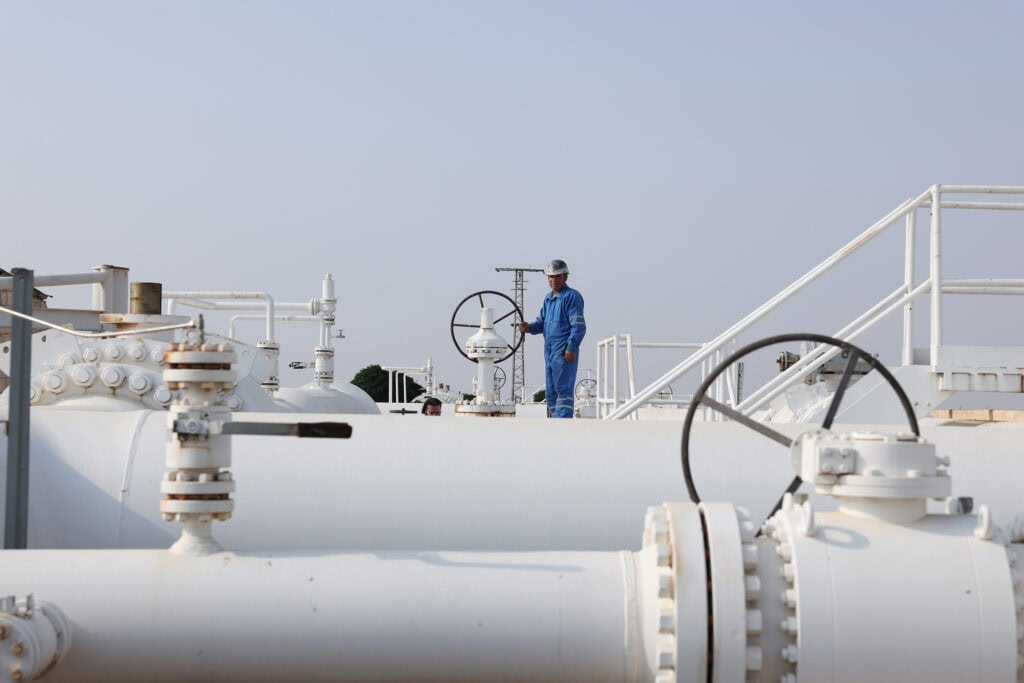
As the war in the Middle East continues, energy security and its impact on the economy remains the key limitation for India. The Gulf continues to supply 55% to 60% of India’s crude oil and around 30% of its imported natural gas, leaving India acutely exposed to disruptions in the Strait of Hormuz. Given this energy dependency, even modest oil price shocks transmit rapidly into India’s economy. Official estimates indicate that every $10 increase in crude prices widens India’s current account deficit by roughly $15 billion, intensifying inflationary pressure, fiscal strain, and exchange-rate vulnerability in an economy that imports nearly 90% of its crude oil. Prolonged regional instability would also erode the commercial logic of connectivity initiatives, such as India Middle East Economic Corridor (IMEC), the viability of which depends on predictable energy flows, stable Gulf transit hubs, and investor confidence.
Balancing Act with Israel
India’s relationship with Israel is another consideration. As New Delhi is the largest buyer of Israeli weapons, its bilateral strategic cooperation has deepened steadily over the past decade, particularly in defense, intelligence, cyber security, and advanced technologies. Bilateral merchandise trade (excluding defense) grew from roughly $200 million in the early 1990s to a peak of $10.77 billion in 2022-2023 before falling sharply to $3.75 billion over 2024-2025 as regional conflict and trade route disruptions weighed on commercial flows.
Yet as the war in Gaza has heightened political sensitivities across the region, and as debates intensify over U.S.-backed postwar mechanisms such as the proposed Gaza “Board of Peace,” India has deliberately limited its public profile, only participating in the Board of Peace meeting as an observer. This is largely due to its historical commitment to the Palestinian issue, which calls for a “sovereign, independent, and viable State of Palestine based on 1967 borders.” In this light, New Delhi has eschewed mediation efforts, avoided leadership roles in post-war security or governance planning, and framed its position primarily around humanitarian concern rather than political intervention.
India’s voting record at the United Nations on Israel and Palestine further demonstrates its constraints in advancing relations with Israel. While in December 2024, India joined 157 countries in supporting a U.N. General Assembly resolution demanding an “immediate, unconditional and permanent” ceasefire in the Gaza Strip, on June 12, 2025, India abstained from a General Assembly resolution calling for a “permanent ceasefire” by all parties in Gaza, while 149 countries voted for the resolution. Similarly, as the U.S.-Israel war against Iran continues, India co-sponsored a GCC-led resolution at the General Assembly along with 134 countries, condemning Iran and demanding the “immediate cessation of all attacks” against GCC countries and Jordan. However, India did not condemn the attacks by the U.S. and Israel on Iran that killed over 1,000 people.
Constraints in Dealing with Iran
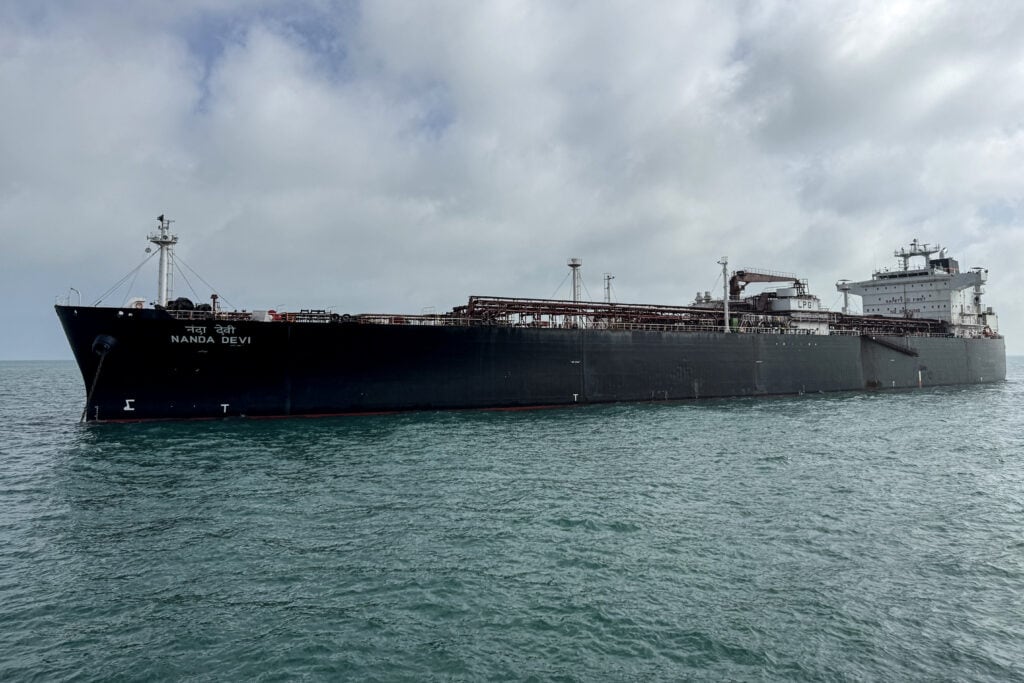
At the same time, India maintained political, trade, and economic relations with Iran, despite its independent relations with Israel and the U.S. As sanctions halted rupee-oil trades, a recent temporary U.S. waiver allowed India to receive its first shipment of Iranian crude since 2019, with a tanker carrying 600,000 barrels of oil to the Indian state of Gujarat. Additionally, New Delhi negotiated a “humanitarian window” for discounted LNG shipments, securing 500,000 metric tons to avoid fertilizer shortages. Unlike Western-linked tankers and vessels, which are routinely denied safe passage through the Strait of Hormuz, Indian-flagged vessels make it through the chokepoint, with four LPG tankers already completing the crossing and three more set to make the journey.
Central to India’s engagement with Iran is the development of the Chabahar port, envisioned as a strategic trade and connectivity hub linking India to Afghanistan and Central Asia while bypassing Pakistan. However, the earlier Cabinet decision to withhold dedicated funding in the Union Budget for the Chabahar port project points to a cautious recalibration of India’s engagement. Later, the External Affairs Ministry (MEA) clarified that India is still engaging with Iran on Chabahar port, as the U.S. conditional sanctions waiver continues until April 26. In May 2024, India signed a 10-year contract with Iran, committing to spend $120 million to equip and operate the Shahid Beheshti Terminal at Chabahar Port.
India’s connectivity-based pragmatic approach with Iran underscores the outer limits of this strategy. India recently voted against a U.N. Human Rights Council resolution censuring Iran, a move framed in New Delhi as consistent with its opposition to country-specific mandates but notable for its timing amid heightened instability. Indian policymakers view turbulence in Iran not merely as a diplomatic complication but also as a potential strategic shock, one that could disrupt regional connectivity, embolden rival alignments involving China and Pakistan, and undermine India’s access to Afghanistan and Central Asia.
What India’s Limitations Mean for the United States
If India’s balanced engagement with the GCC, Israel, and Iran point toward a rational response to regional chaos and the impact on its growing economy, it nonetheless collides with how Washington increasingly frames alliance, partnership, and burden-sharing in the Middle East.
In Washington, India is often viewed as a potential stabilizing partner, an actor that could help shoulder diplomatic or security burdens as U.S. leverage becomes more conditional and politically constrained. This expectation is highlighted in Washington’s latest National Security Strategy document that frames India as a “key partner” and emphasizes burden-sharing with capable regional actors, even as U.S. Middle East policy shifts toward transactionalism, selective engagement, military aggression, and a reduced appetite for long-term stabilization missions.
This expectation, however, rests on a misreading of what India is realistically willing to do and capable of doing. India’s restraint should not be misread as disengagement and policy paralysis. Rather, it demonstrates a deliberate refusal to substitute for U.S. “top-down” decision making or undertaking regional security arrangements that rely on coercion, enforcement, or escalation control. New Delhi’s caution to sign on to the Board of Peace underscores these limits, illustrating that India’s expanding regional footprint does not translate into a willingness to assume the liabilities historically borne by external guarantors.
India’s position therefore does not fit the category of a regional balancer. New Delhi has neither claimed such a role nor designed its diplomacy to perform one. Balancing presumes a willingness to manage trade-offs, absorb escalation risks, and arbitrate between rivals. India has deliberately chosen not to exercise it as demonstrated in the latest Gaza war and unveiled in its approach during the ongoing U.S.-Israel war against Iran. Its influence lies in undertaking multilateral efforts, supporting institutions not in enforcement or outcome-shaping.
This gap matters because U.S. efforts to externalize regional stabilization whether through ad hoc coalitions, postconflict governance initiatives, or informal burden-sharing often assume that capable partners will eventually step into roles Washington is reluctant to sustain. India’s behavior suggests the opposite. Even where its interests are directly implicated – in energy security, maritime stability, and connectivity corridors – New Delhi prefers insulation over ownership and access over authority.
For U.S. decision makers, the implication is not unreliability but recalibration. India can contribute to regional stability through economic integration, maritime coordination, intelligence cooperation, and de-escalatory diplomacy. What it will not do is replace U.S. enforcement capacity or absorb the political risks of coercive security management. Aligning expectations accordingly allows cooperation to deepen where interests overlap without turning strategic autonomy into friction.
Policy Recommendations
- Institutionalize a U.S.-India Middle East Strategic Dialogue
The State Department, in coordination with the National Security Council, should establish a dedicated Middle East contingency track within existing U.S.-India strategic dialogues. This would allow both sides to clarify roles in advance, particularly on Iran escalation scenarios, energy disruptions, and post-conflict stabilization in Gaza. This can help reduce the risk of misalignment during crises. Clearer expectations would also help avoid overestimating India’s willingness to take on enforcement or security responsibilities it is unlikely to assume.
- Leverage India’s Neighborly Relations for De-escalation
U.S. diplomats should work with India to utilize its access across Iran, Israel, and the GCC for quiet diplomacy, confidence-building, and de-escalatory engagement. Rather than expecting India to mediate formally, Washington should recognize the value of India’s good, neighborly relations and ability to maintain communication channels across rival actors. Supporting such efforts can create space for dialogue without pushing India into roles it is structurally unwilling to take on.
- Strengthen Energy Coordination Among the U.S., India, and GCC
The United States should work with India and key Gulf partners to strengthen energy security through strategic reserves and more predictable supply arrangements during crises. As a net exporter, Washington can help stabilize flows to India and reduce vulnerability to disruptions in the Strait of Hormuz. Building on existing frameworks such as IMEC, the U.S. should support greater coordination and targeted investment to institutionalize this trilateral energy partnership.
Conclusion
India’s posture in the Middle East posits a clear position: remain engaged but avoid becoming responsible for managing crises. That approach has allowed New Delhi to preserve flexibility and protect its core interests. But as conflict intensifies and regional fault lines harden, the space for such calibrated distance is narrowing. A more volatile Middle East is beginning to test the limits of a strategy built on insulation.
This shift has implications for both India and the United States. Continuing to view each other through a transactional lens – whether as a potential balancer or a reluctant partner – no longer reflects the realities of a region where risks move quickly and across domains. Instead, there is a case for a more grounded alignment, one that recognizes both India’s constraints and its growing relevance to regional stability.
As the world’s largest and oldest democracies, India and the United States have an opportunity to move beyond episodic coordination towards a more comprehensive strategic partnership. This need not rest on expectations of shared enforcement or crisis management. Rather, it can be built around strengthening economic resilience, energy security, and sustained diplomatic coordination in a region where both have enduring stakes.
The question, then, is not whether India will assume a larger role in the Middle East but whether both sides – Washington and New Delhi – are willing to rethink the terms of cooperation in a changing regional order.
The views expressed in this article are those of the author and not an official policy or position of New Lines Institute.
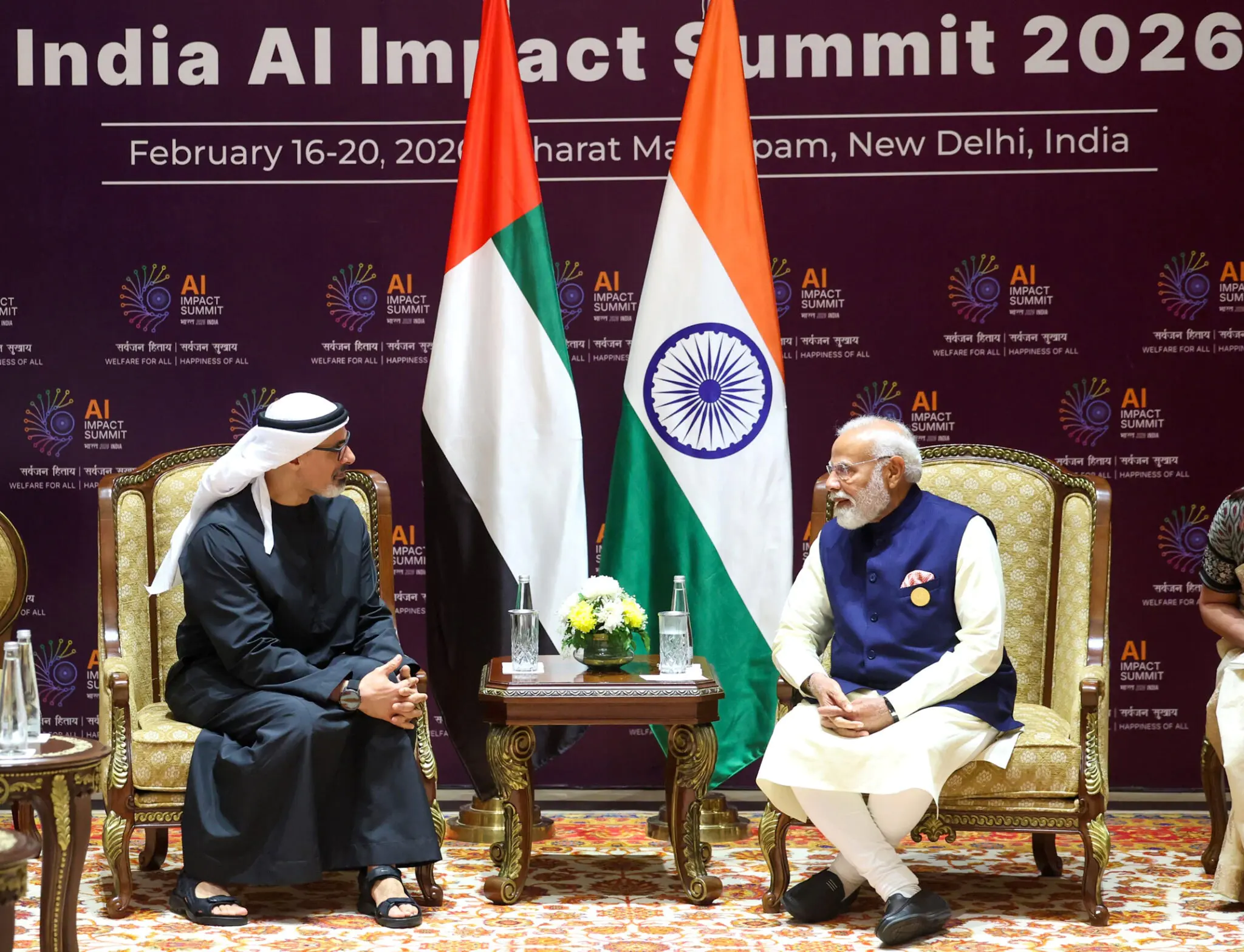
Indian Prime Minister Narendra Modi meets with Sheikh Khaled bin Mohamed bin Zayed AI Nahyan, Crown Prince of Abu Dhabi, on the sidelines of the India AI Impact Summit at Bharat Mandapam, in New Delhi on Feb, 19, 2026. (Photo by Press Information Bureau (PIB)/Anadolu via Getty Images)