Fissures Among Iran’s Ethnic Minority Groups Are Poised To Break Open
This report is the third in a four-part series exploring the strengths and weaknesses of the Iranian opposition and what this implies for policymakers. This analysis looks at the divides among Iran’s ethnic opposition groups, and the last compares the strengths and weaknesses of the royalist and the non-royalist camps and the implications for policymakers. Read part one here and part two here.
Iran is a multiethnic country in which a large percentage of the population is non-Persian. The main minority groups include Azeris (15-20%), Kurds (5-10%), Baluchis (2-3%), and Arabs (2-3%). Around 13% are Sunni Muslim.
All these groups have some grievance or other against the government’s cultural and ethnic policies. Ethnic and cultural discrimination, if allowed to continue unchecked, has created conditions ripe for convulsive conflicts in the future.
The Kurds
By far the largest and most potent ethnic opposition groups in Iran hail from Iranian Kurdistan. Demand for autonomy runs deep among the Sunni Kurdish population thanks to longstanding grievances going back nearly a century and geographical proximity to Iraqi Kurdistan, where the Kurdish population there has achieved a high degree of autonomy and economic success.
The largest Kurdish opposition group in Iran is the Democratic Party of Iranian Kurdistan (PDKI), an ethnonationalist organization with military bases near Sulaymaniyahunder Kurdistan Regional Government (KRG) jurisdiction. PDKI is close to the Iraqi Kurdistan Democratic Party (KDP), the founder of which, Molla Mostapha Barezani, was a general in the short-lived pro-Soviet Iranian Republic of Mahabad (RM). The RM was an early victim of Cold War tensions between the two superpowers; its president, Qazi Mohammad, was captured and executed by the Iranian army in 1946, an event that has dampened cooperation between Iranian Kurds and Iranian monarchist forces to the present day.
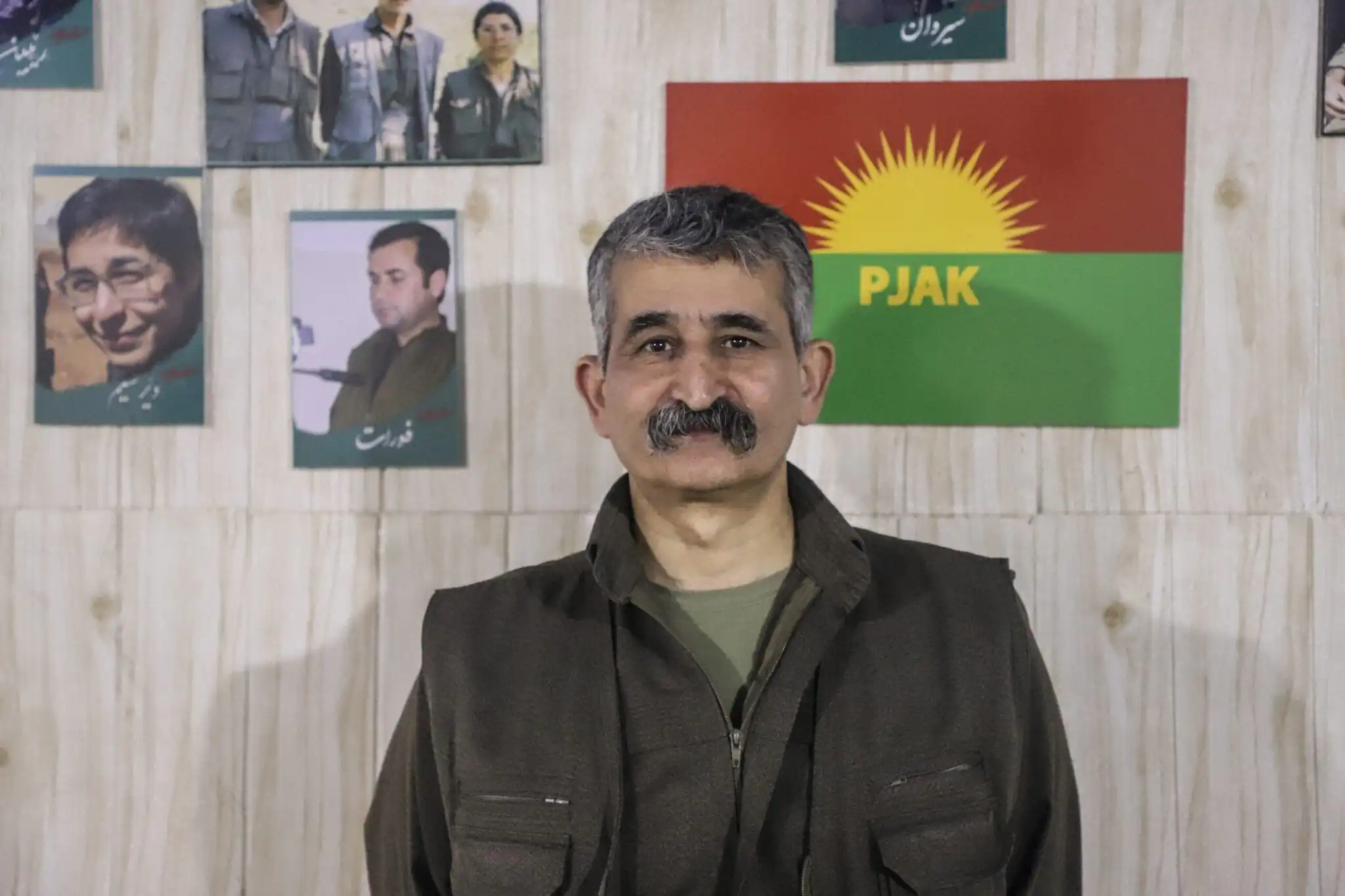
The next most important armed Kurdish group is PJAK or the Kurdistan Free life Party, which was formed in 2004 and has waged an intermittent armed struggle against the Iranian government since. The group is loosely affiliated with the Turkish-based Kurdistan Workers Party (KPP) and ideologically close to the Syrian-based Democratic Union Party (PYD). However, unlike those two mass-based parties, which have huge followings among Syrian and Turkish Kurds, it is highly unstructured and decentralized and is known to engage in both human and illicit drug trafficking to finance its activities.
The loose-knit nature of PJAK has made it possible for the Islamic Revolutionary Guard Corps (IRGC) to penetrate its ranks and use its brand identity in some of its domestic and regional operations – particularly vis-a-vis Türkiye. For instance, in July 2016, IRGC operatives, acting under the cover of PJAK peshmerga guerrillas, staged a terrorist attack against Iranian MP Heshmatollah Falahatpisheh, who was visiting the Kurdish region with some local officials. Falahatpisheh narrowly escaped the assassination attempt, but two of his companions were killed in the incident. That experience was pivotal in turning Falahatpisheh from a middle-of-the-road Islamist politician to a vigorous critic of the IRGC. But more importantly, the incident has shown the degree with which PJAK has been breached and compromised.
There are also four small groups in Iranian Kurdistan operating under the name Komala.
For several reasons, it is expected that in the event of a serious weakening of the central government, secessionist fevers may break out all over the region. First, there has been widespread Persian nationalist rhetoric targeting the Kurds in Iran under both the Pahlavi dynasty and the Islamic Republic. Second, devout Sunni Kurds residing outside Kurdish-dominated areas often report cases of religious discrimination.
Third, Iranian Kurdistan is among the bottom-tier regions in Iran regarding economic development. This level of economic backwardness is often compared by the population with the relative prosperity of their Iraqi Kurdish brethren under the KRG with whom there are extensive tribal, cultural, and familial ties.
Finally, the region was scarred by several years of civil war between the central government and the armed opposition groups after the Islamic Revolution. Many people lost family members in the conflict, and since then, the government has maintained a tight grip over the cultural and civic life of the province, further fueling disgruntlement.
For all these reasons, centrifugal tendencies in Iranian Kurdistan are the highest compared with other ethnic regions in Iran particularly because merging with Iraqi Kurdistan is less logistically problematic than similar scenarios for other ethnic minorities.
The Azeris
The next important ethnic opposition in Iran can be found in Iranian Azerbaijan. There are half a dozen small Azeri groups operating clandestinely or from exile who are fighting for cultural or ethnic independence from Tehran. Among these is the Southern Azerbaijan National Movement (SANAM), which advocates for a merger with the Republic of Azerbaijan; Azerbaijan National Resistance Awakening Movement (GAMAC) which is focused on Azeri identity-building; and the Azerbaijan National Resistance Organization (ARNO) which emphasizes human rights.
In recent years, and in tandem with the decline of Pan-Turkish tendencies in the region, there has been a marked reduction in militant anti-Persian sentiment in Iran’s Azeri-dominated provinces, according to New Lines Institute sources.
The best-known ethnic Azeri opposition figure in Iran is Hassan Shariatmadari, whose father, the late Grand Ayatollah Kazem Shariatmadari was disrobed and severely abused by Ayatollah Ruhollah Khomeini’s intelligence agents. Some believe that the ill-treatment shortened his life. For several decades now, Shariatmadari, the son, has waged a high-profile all-Iranian campaign against his father’s tormentors, with various degrees of success.
For instance, a front he created with other activists was negotiating with Reza Pahlavi, the son of Mohammad Reza Pahlavi, the former shah of Iran, for joint political action. These efforts fell apart in late 2022, possibly on account of the sharp turn toward Persian nationalism within the royalist camp as radical royalists became dominant. Relations between the two have turned sour as a result.
Baluchis
Several small Baluchi armed groups have been fighting government forces in Baluchistan. These include Jaish al-Adl; the Balochistan Liberation Front; and the Baluchistan Liberation Army. Some, like Jaish al-Adl, have known Sunni jihadist connections.
The same dynamic as was seen among other ethnic groups has been at play between Baluchi groups and the royalist camp, with one side accusing the other of separatism and the other responding with counteraccusations of Persio-ethnic chauvinism.
The best known Baluchi personality in Iranian opposition is Abdol Satar Doshouki, who heads a Baluchi organization in London called the Center for Baluchi Studies. In his public statements, Doshouki has advocated for a peaceful transition rather than armed conflict as an outcome for the Islamic Republic.
Another well-known Baluchi personality is the top Sunni Friday prayer leader in Iranian Baluchistan, Molavi Abdol Majid. While he cannot be easily categorized as an opposition figure – his sermons are still tolerated by the government in Tehran, and he straddles a fine line between “constructive criticism” and outright opposition – he has publicly challenged state policies, a rarity in Iran.
Inter-ethnic and Inter-Confessional Conflicts
Apart from the salient ethnic divide between ethnic minorities and the Persian majority, there is also volatility in inter-ethnic relations in regions where different ethnic or confessional groups reside.
For instance, the province of West Azerbaijan is home to Azeri and Kurdish minorities. The two ethnic groups clashed in a brief civil war in the first few years after the revolution in which the provincial capital, Urmia, which is now controlled by Azeris, was captured the Kurds. There is a deep festering tension in the area today as a result of that traumatic event.
Similarly, in the city of Kermanshah, the capital of Kermanshahan province, there is considerable discord between Sunni Kurds and Shia Persians and Kurds.
In the vicinity of Zabol in southeast Iran, there is similarly acute tension between the Shia-dominated Sistanis and the Sunni Baloch minority.
These sectarian strains are contained for now, but they could erupt and escalate without warning if the iron grip of the central government is eroded significantly.
Policy Recommendations
Ethnic opposition groups in Iran suffer from some of the same maladies that plague all other opposition groups. These include difficulty in communicating with their constituencies, penetration by government agents, lack of coordination with other groups, uneven tactical competence, and a lack of funds.
Almost all these groups call for some kind of cultural or political autonomy, while a few advocate open secession. The most likely candidates for actual secession are to be found in Iranian Kurdistan. However, for a variety of reasons, in particular the powerful force of Persian nationalism and the intransigence of the Turkish government, a move toward de facto cultural and economic integration with Iraqi Kurdistan would almost certainly meet stiff resistance from both Türkiye and Iran, resulting in bloody conflicts and instability.
Ethnic tensions could burst into multicommunal and multidenominational conflicts if central control lifts.
Policymakers should be aware that the fallout from such an outcome could be far reaching. Almost all these ethnic groups inhabit areas with similar ethnic compositions in neighboring countries. An outbreak of interethnic disputes could easily spill over to other countries and engulf U.S. allies.
Equally risky is encouragement of separatist impulses. Despite the popularity of such aid among some ethnic circles, it would almost certainly trigger a major backlash among the Persian majority.
Policymakers should weigh the risks and benefits of supporting each ethnic entity on an individual basis and with full consideration of the local and regional implications of their support.
The views expressed in this article are those of the author and not an official policy or position of New Lines Institute.
Photo: Mazlum Haftan, commander in the Kurdish Iranian armed faction, the Party of Free Life of Kurdistan (PJAK), poses near the Iraqi border with Iran in Iraq’s northern autonomous Kurdish region on Feb.26, 2026. “We cannot take the side of either the Americans or the Iranians. Our cause is different… our goal is democratic change in Iran — a democracy that will benefit the Kurdish people,” said Haftan. (Photo by Shwan MOHAMMED / AFP via Getty Images)