Central Asia Roundup: January 2026
The political and economic trends in Central Asia through mid-February were dominated by increased U.S. engagement via the B5+1 forum, EU consideration of anticircumvention sanctions against Kyrgyzstan, and joint efforts by Central Asian nations to promote Pakistan’s role as a new connectivity center in the south. In the big picture, Central Asia is showing increasing openness and eagerness to forge stronger trade relations with the United States and European Union, even amid the threat of sanctions against specific sectors in Kyrgyzstan by Brussels.
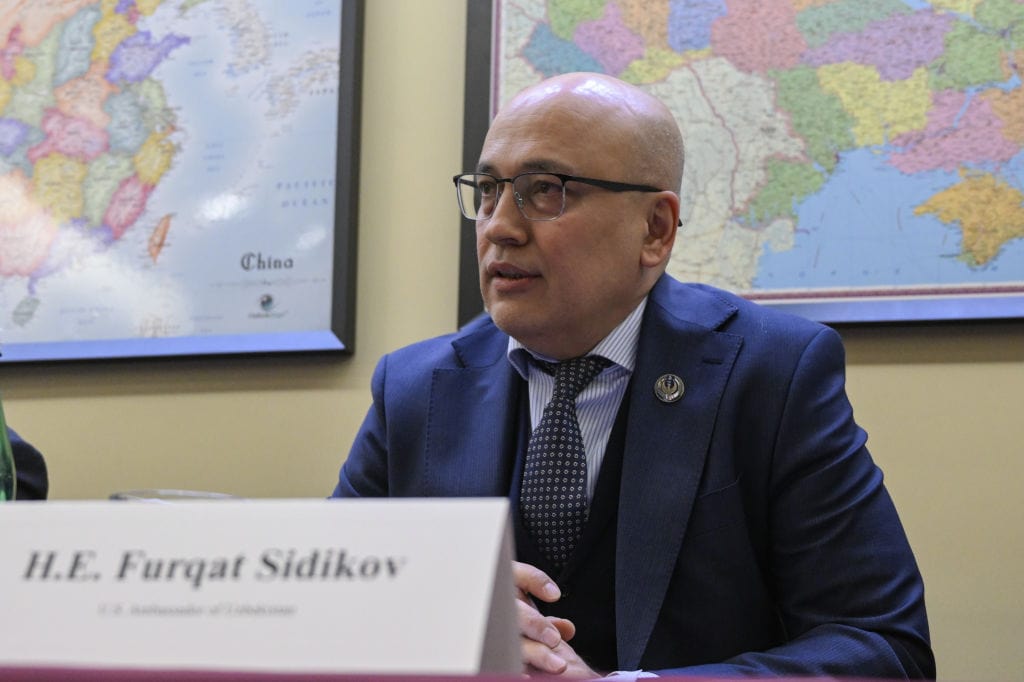
The second B5+1 business forum, held in Bishkek on Feb. 4-5, brought together around 400 representatives of 211 companies and organizations, including 34 from the United States, indicating an interest in strengthening ties with the region. Statements from key U.S. policy professionals and officials underscored Central Asia’s importance to the U.S. economy and security.
U.S. special envoy Sergio Gor announced, “For too long, the United States did not pay attention to this area. Under President (Donald) Trump’s leadership, that is something we aim to change.” The U.S. engagement strategy will be led by the private sector and focus on key minerals, logistics, and technology. This emphasis on engagement with Central Asia, however, coincides with tighter immigration restrictions in the U.S. that have affected business travel to and from the region.
Meanwhile, the EU is considering anti-circumvention sanctions against Kyrgyzstan after it allegedly helped Russia evade trade restrictions, which could lead to it’s becoming the first country in Central Asia to be subject to these measures.
Kazakhstan
The Feb. 3-5 state visit by Kazakhstan President Kassym-Jomart Tokayev to Pakistan has led to a signoff on 32 commercial agreements with the aim of strengthening strategic economic ties and supporting expansion of Kazakh trade routes to the south. Tokayev’s visit helps position his country as a pragmatic power broker in Eurasia.
Kazakhstan’s recently signed deal with the Asian Infrastructure Investment Bank aims to strengthen the country’s sustainable economic development and regional cooperation strategies. In addition, Kazakhstan has designated the location for the construction of its second nuclear power plant, despite controversy surrounding the country’s nuclear policy.
After years of negotiations, Kazakhstan and Kyrgyzstan have agreed to share hydrological data, representing a major breakthrough on cooperation over water issues in the midst of the region’s severe water crisis. That these two Central Asian economies agreed to cooperate on water resources after years of intransigence represents a significant step forward toward building regional integration.
During the World Government Summit 2026, Kazakhstan, known primarily as an energy exporter, made its ambitions to become a leader in artificial intelligence and digitalization clear. At the start of 2026, Tokayev officially announced it as the year of digital and artificial intelligence development for his country. The newly formed Ministry of AI and Digital Development, which is charged with integrating AI across various sectors of its economy, must contend with energy deficits that require it to import power from Russia and Uzbekistan.
Uzbekistan
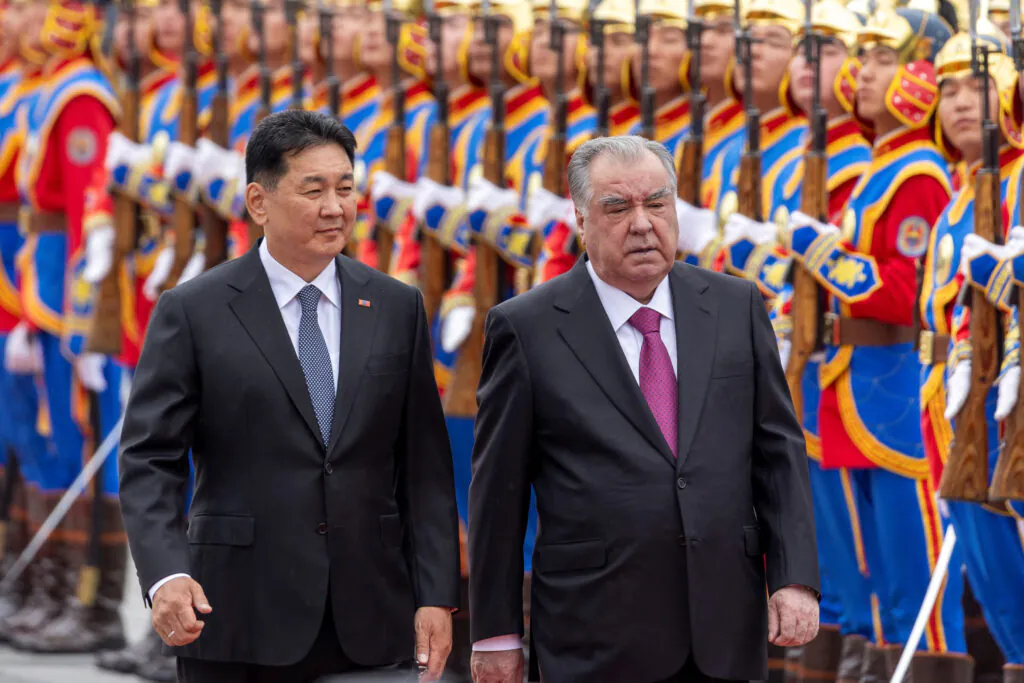
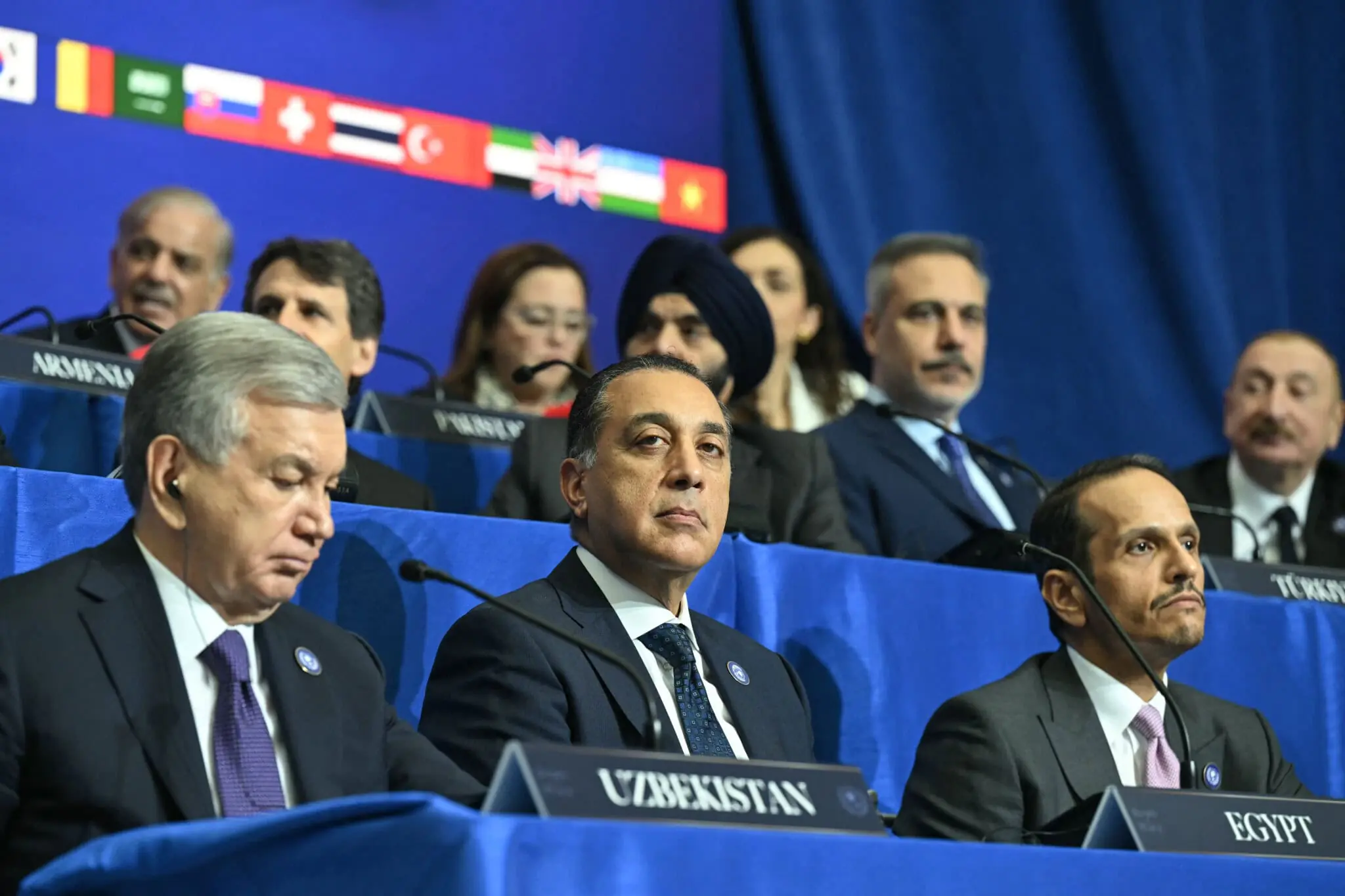
During Uzbek President Shavkat Mirziyoyev’s state visit to Pakistan on Feb. 5-6 resulted in the signing of 28 agreements forming a roadmap for defense sector cooperation and a commitment to $2 billion in mutual trade. As a result, the Supreme Level Strategic Cooperation Council between the two countries, established a year ago, has been operationalized.
Both countries also committed to stepping up the development of the Trans-Afghan Railway and the transport corridor connecting Pakistan, China, Kyrgyzstan, and Uzbekistan. In addition, both countries committed to developing joint industrial zones and to hold the First Forum of Regions later this year in Uzbekistan.
The Central Asian water crisis is changing Uzbekistan’s the energy map. It has seen a fall in hydropower generation from 8.1 billion in 2024 kilowatt-hours to 6.5 billion in 2025as water levels dropped to about 35% below average. As hydro generation fell, however, a corresponding increase in other renewable generations has helped make up for the shortfall. Solar and wind power produced 10.5 billion kWh in 2025, more than doubling the previous year’s totals. That increase helped drive overall renewable electricity generation 29% higher. With the construction of its first nuclear power plant has stalled, the country is also considering developing micro-hydroelectric plants and additional solar power installations.
Kyrgyzstan
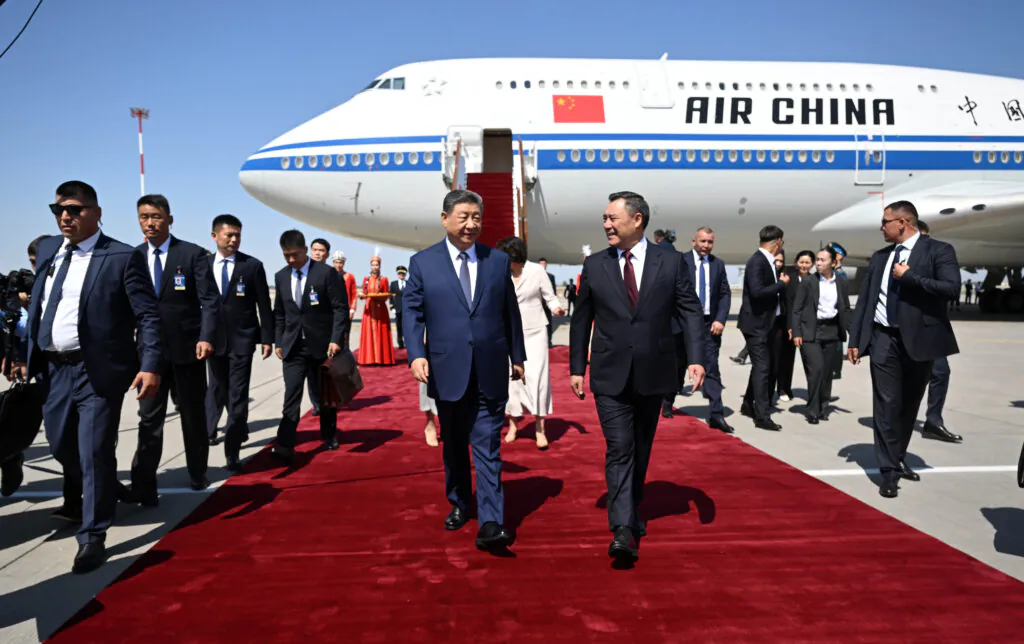
Kyrgyzstan could become the first Central Asian country subject to anti-circumvention sanctions by the European Union. As the EU readies its 20th package of Russia-related sanctions, bans on the export of machine tools and radio equipment to Kyrgyzstan have reportedly been included. The penalties are set to be imposed by Feb. 24, the fourth anniversary of Russia’s invasion of Ukraine. The possible sanctions come after the European Union expressed its concern about the country’s becoming a major transit point for shipping sanctioned goods to Russia. Kyrgyz exports have increased significantly in the past year. An EU envoy is expected to travel to Kyrgyzstan on Feb. 26 to discuss the issue.
It is worth nothing that the EU sanctions would be limited to specific sectors of goods and the United Sates has also sanctioned Kyrgyz entities. Both the U.S. and EU are applying pressure on Kyrgyzstan. The EU in particular is simply escalating that pressure, noting that their approaches are not fundamentally diverging.
A far more significant internal development is the recent removal by Kyrgyzstan’s president of the state security services chief, a move that could spark a destabilizing power struggle in a country with a long history of volatility. Should Kyrgyzstan become inwardly focused on managing such a crisis, it would likely delay key connectivity projects, including the Kyrgyzstan-Uzbekistan-China railway, and hinder its ability to participate in multilateral initiatives addressing water management, electricity supply, and other pressing regional issues.
The forum showcased Kyrgyzstan’s economic credentials – its GDP increased by 11.1% in 2025, and it launched the state-backed USDKG stablecoin and a “digital nomad” program to attract international IT experts. However, its ruble-based A7A5 cryptocurrency, which was launched in 2025 by the defense-related Promsvyazbank resulting in the flow of $100 billion by early 2026, has raised Western concerns that it can be used to evade sanctions. These concerns have already translated into concrete actions: individual Kyrgyz entities, including banks such as Keremet Bank and Capital Bank of Central Asia, are subject to U.S. and UK sanctions for their alleged roles in helping Russia evade restrictions and finance its defense industry. Kyrgyz Deputy Prime Minister Emil Baisalov downplayed the controversy, contending that the country should not be punished for conducting economic activity with its major economic partner.
Tajikistan
Tajikistan, like the rest of Central Asia, is facing a serious water resources challenge and the country’s Rogun Dam project remains financially troubled. Auditors issued a warning of an accounting gap of $540 million and an operating loss of $30 million in 2024 reporting that they were unable to verify the project’s financial statements. This has resulted in a funding shortfall, as international lenders expressed reluctance to issue loans without a repayment plan, raising concerns about the project and its future.
The uncertain future of the dam and a dwindling water supply has prompted Tajik officials to move forward with the development in additional solar power resources. In January, the country finalized $250 million in agreements for the construction of two solar farms. It aims to build a partnership with ACWA Power (Saudi Arabia) and Masdar (UAE) for future solar farm construction projects.
Beyond water and energy concerns, Tajikistan has burnished its regional leadership credentials in ordnance disposal operations by training an additional 18 specialists from around Central Asia in demining operations.
Turkmenistan
Turkmenistan has assumed the role of chairman of the Commonwealth of Independent States (CIS), a mostly ceremonial role that nevertheless ensures Turkmenistan’s participation in CIS structures despite its official status as a “permanent neutral state.”
By sending 13 representatives to the recent B5+1 forum, historically isolationist Turkmenistan signaled its interest in diversifying its economy beyond energy exports to China.
The development of Phase Four of the Galkynysh gas field by China National Petroleum Corporation is under way with a notable difference from previous phases in that Turkmenistan covering all expenses, a sharp contrast with previous Chinese-funded development of the project. The development aligns with Turkmen policy to diversify its export markets, with China being its main customer. In self-financing this phase Turkmenistan will retain the option of selling gas from it on the wider market rather than remain beholden to Chinese debt obligations.
The legalization of cryptocurrency exchanges and mining, which comes into effect on January 1, 2026, is a rare instance of Turkmen modernization. The country’s adoption of a national motto that includes “Independent Neutral Turkmenistan – Homeland of Purposeful Winged Steeds” is a notable reflection of its unique governance style that still characterizes its culture.
Regional Implications
Effective regional strategies in Central Asia are increasingly marked by the fragmentation of external partnerships. The United States is taking a transactional economic approach centered around supply chains, logistics corridors, and strategic minerals, supplanting the previous framework of democracy promotion. At the same time, the EU is taking a more punitive stance over sanctions evasion regarding Russia. . That said, the two Western approaches remain broadly aligned, with both applying pressure on sanctions evasion while also engaging the region economically. The simultaneous engagement with Pakistan by both Kazakhstan and Uzbekistan demonstrates a regional interest in the development of the Southern Corridor as an alternative infrastructural trade route to those connecting with Russia or those subject to Chinese influence. This includes the development of the Trans-Afghan Railway and the broader Pakistan corridor.
Washington should be aware that its emphasis on economic partnership exists in parallel with restrictive visa policies for Central Asia and the EU’s sanctions threats, factors that may force the region to lean back toward Moscow’s sphere. The B5+1 format’s focus on the business sector engagement, intentionally avoiding government-level agreements, may be insufficient to offset Chinese investment in infrastructure projects and Russian economic pressure.
Regional actors are employing a highly sophisticated multivector foreign policy strategy. This includes maintaining good relations with rival countries without becoming dependent on any one of them. However, the potential for the EU to impose sanctions against Kyrgyzstan and the political instability stemming from changes in its leadership structure may force Central Asian countries to determine whether they can continue that balancing act in the face of pressure from rival powers.