Domestic Fragmentation and Geopolitical Flux Mark Upcoming Iraqi Elections
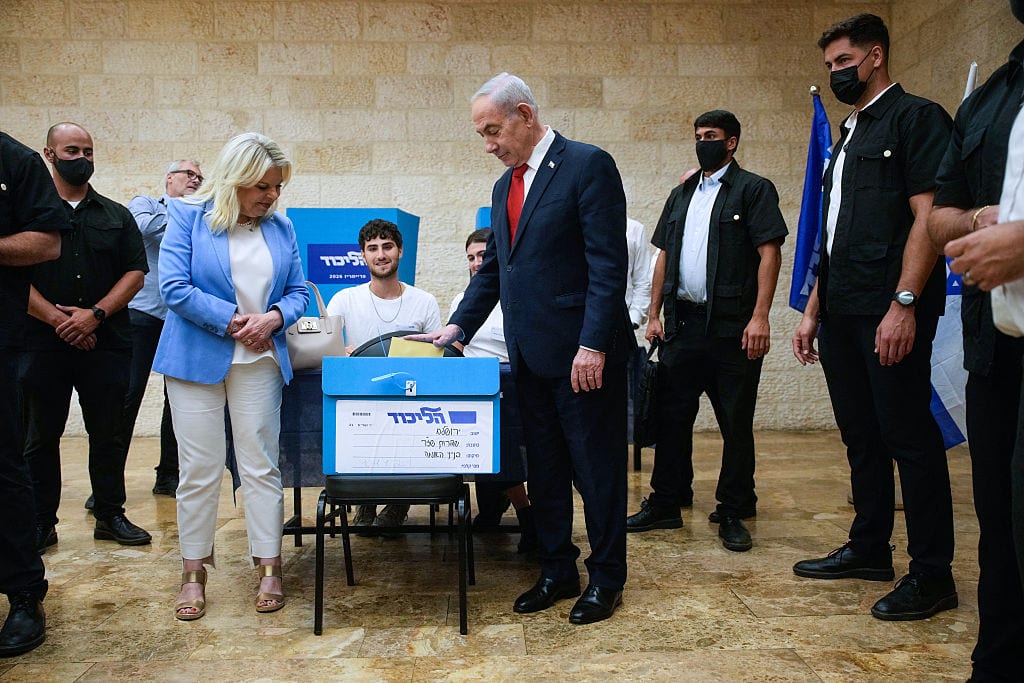
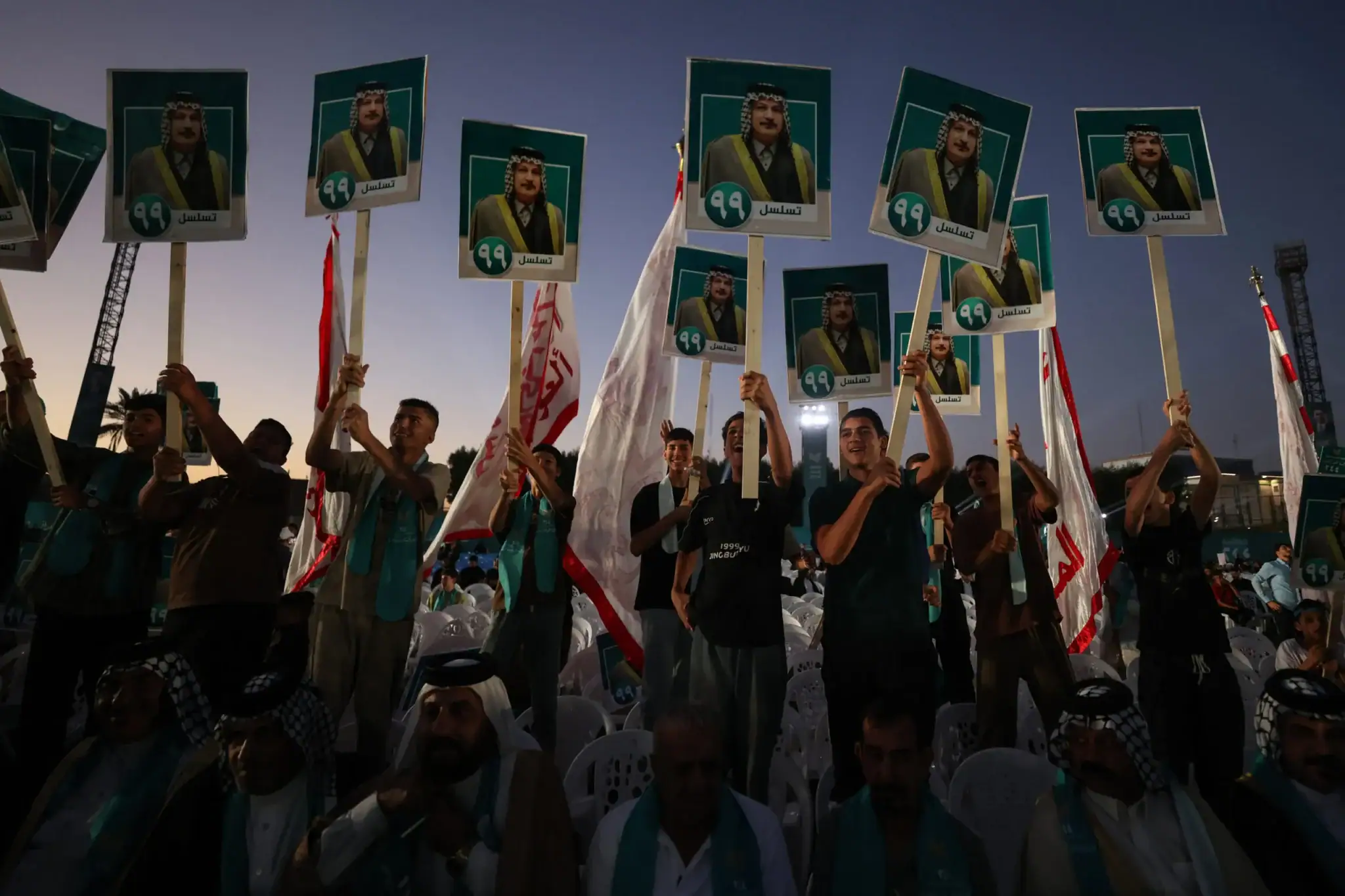
Iraqis will vote Nov. 11 in the country’s sixth parliamentary elections since the fall of Saddam Hussein’s Baath regime in 2003. Nearly 8,000 candidates from around 90 electoral tickets are running for Iraq’s 329 parliamentary seats, with about 21.5 million registered voters (about a quarter of the country’s 29 million eligible voters are not registered). The very act of holding elections would be a remarkable achievement, demonstrating a continued commitment to electoral politics in a country mired in conflict and crisis for much of the past two decades. Elections are expected to proceed as planned, barring a renewed regional war involving actors like Israel and Iran.
These elections should be viewed not as a self-contained event but as a hinge between two interlocking arenas: domestic contestation and regional rivalry amid major geopolitical flux in the Middle East since October 2023. The balloting will likely be one of Iraq’s most consequential since 2010, serving as a stress test for the post-2003 order, where domestic fragmentation and external rivalries are inseparable. The deepening divisions within and across Shia, Sunni Arab, and Kurdish camps – and their interplay with regional power struggles – could prolong government formation or even paralyze governance and potentially open the door to instability after a period of relative recovery.
In the Shia arena, politics are defined not only by the contest between religious-political leader Muqtada al-Sadr and his rivals in the governing Shia Coordination Framework formed in 2022, but also by Prime Minister Mohammed Shia al-Sudani’s uneasy positioning against competing factions within the Coordination Framework itself. Among Sunnis, the decline of former parliament speaker Mohammed al-Halbousi and interference by Shia blocs have left the field fractured, yet Sunni activism is rising, emboldened by the weakening of the Iran-led axis and shifts following Bashar al-Assad’s fall in Syria. The Kurds remain divided between the Kurdistan Democratic Party (KDP) and Patriotic Union of Kurdistan (PUK) undermining their efforts to preserve autonomy as Baghdad’s recentralization drive threatens Kurdish self-rule. Overall, in this round of elections, there is a growing tendency to emphasize development and infrastructure-building over identity politics, though the latter remains a powerful undercurrent in Iraqi politics, even if not openly acknowledged.
Externally, the elections unfold amid a volatile environment shaped by the October 7 conflict in Gaza, Iran’s weakened regional position, and possible renewed confrontation with Israel. Türkiye’s expanding influence, Gulf efforts to curb Tehran, a U.S. military drawdown, and the lingering threat of the Islamic State (ISIS) all weigh heavily on Iraq’s politics. The outcome could redefine governance in Baghdad and Iraq’s role in a reordering regional landscape.
Notably, the elections come amid growing voter apathy, which has become a structural feature of Iraqi politics, driven by perceptions of corruption and resulting institutional distrust and societal cynicism toward those in power. Turnout has declined from roughly 76 percent in 2005 to 43 percent in 2021, though some estimates put participation in the mid- to high-20s, depending on whether turnout is calculated based on the number of registered voters or on all eligible citizens of voting age. Many eligible citizens either refuse to register as voters or to cast ballots, as there is a widespread belief that elections fail to bring tangible change and instead serve as a springboard for corrupt politicians and parties to preserve their grip on power and material privileges and a mechanism for redistributing power among the established elites. The outcome is that despite holding elections and apparent shifts of power at the top, the post-2003 Iraqi political system continues to suffer from perceptions of illegitimacy. Contributing to this electoral disillusionment is the staggering cost of running for office, as candidates increasingly rely on tribal networks, with some reportedly spending between $3.5 million and $4 million to secure a seat.
The Shia Arena: Growing Division amid External Pressures
The Shia political landscape has evolved dramatically since the minority Sunni Arab-dominated Baath regime fell following the U.S.-led invasion in 2003, paving the way for the majority Shias to dominate national politics in Iraq for the first time since the state’s founding in the early 1920s. Once-dominant groups such as the Supreme Council for the Islamic Revolution in Iraq (SCIRI) and the Dawa Party have seen their influence decline sharply compared to the first decade after 2003. The rise of Muqtada al-Sadr and his movement under different nomenclatures has been one of the most significant developments within the Shia community. His movement first entered politics with the aim of resisting the U.S. occupation of Iraq and later adopted a reform-oriented platform. Yet, after failing to put together a governing coalition, Sadr withdrew from formal politics in mid-2022, leaving his movement outside the electoral process. While the Sadrists remain politically influential — boycotting the upcoming elections and shaping public sentiment — their absence from the political process has allowed groups closer to Iran to gain ground, as seen in the 2023 provincial elections.
Several deep fault lines now cut across the Shia political sphere. Five broad and informal orientations can be identified, though they do not necessarily correspond to clear alliances or rivalries.
Muqawama (Resistance) Factions
The first orientation comprises Islamist, overtly pro-Iran groups such as the political wings of armed factions that coalesced under the Fatah Alliance in the 2018 and 2021 parliamentary elections. These groups are seen as part of the Iran-led Islamic Resistance or Muqawama camp in the region. Key groups in this current include the Badr Organization led by Hadi al-Amiri, Asa’ib Ahl al-Haq under Qais al-Khazali, and Kata’ib Hezbollah headed by Ahmad Mohsen Faraj al-Hamidawi. Their leaders maintain close ties with Iran’s Islamic Revolutionary Guard Corps (IRGC), and their organizations owe much of their growth to these links. The armed wings of these groups fought in Syria alongside Bashar al-Assad’s forces and are known for periodic attacks on U.S. military, diplomatic, and business interests in Iraq. Many of these groups have been either designated or sanctioned by the U.S. government. These groups are running on separate tickets in the current elections but would likely join forces in the government formation phase, as in the past. These groups are running on separate tickets in the current elections but would likely join forces in the government formation phase, as in the past.
Pragmatic Shia Camp
The second orientation includes more moderate Shia organizations that, despite alignment with Iran, have espoused pragmatism and sought more balanced foreign relations, including with the West and the United States. Among them are the Dawa Party and its State of Law Coalition under former Prime Minister Nouri al-Maliki, the Al-Hikma (Wisdom) Movement led by Ammar al-Hakim, and the Nasr (Victory) Coalition under former Prime Minister Haider al-Abadi (which is boycotting the current elections but has voiced support for Sudani). More recent entrants to this camp are the Al-Asas (Foundation) Alliance led by Deputy Parliament Speaker Mohsen al-Mandalawi and the Tasmim (Determination) Alliance led by Basra’s popular Gov. Asaad al-Eidani. These largely Islamist but politically experienced actors also engage with liberal and technocratic circles, aiming to bridge the gap between Shia traditionalists and Iraq’s youth and urban middle class. They are also running on separate tickets in the November elections.
Sudani’s Nascent Group
The third orientation centers on the Development and Reconstruction Coalition of Prime Minister Mohammed Shia al-Sudani and allies such as Popular Mobilization Forces (PMF) chief Falih al-Fayyadh. Sudani’s coalition runs on an “Iraq First” platform, echoing U.S. President Donald Trump’s slogan but adapted to an Iraqi context, where emphasizing national interests resonates strongly with domestic audiences. To launch his electoral ticket, Sudani recently broke away from the Coordination Framework – the Shia bloc formed after the 2021 elections to counter the Sadrists – appearing to believe that he could perform better on a separate ticket. This angered Shia heavyweights like Maliki, who view him as an emerging rival and are determined to torpedo his chances of retaining office. Since 2014, when Maliki was forced from office under U.S. and Western pressure, Iraq’s prime ministers have typically lacked a political base and deep patronage networks. Sudani has sought to change that by prioritizing public services, expanding civil sector hiring, and portraying himself as politically nonsectarian and socially moderate, though his record is mixed.
Sadrists
The Sadrists form a distinct and largely cohesive orientation. Their power is built on the religious authority of the Sadr family, which produced two influential religious authorities or maraji: Mohammed Baqr al-Sadr and Mohammed Sadiq al-Sadr, Muqtada’s uncle and father, respectively. Sadr’s political fortunes have risen steadily under various names since his movement’s first participation in parliamentary elections in 2010, when his list secured 40 out of 325 seats, to 2021, when his bloc won 73 seats out of 329, becoming the largest single Shia faction. Sudani has reportedly sought Sadr’s blessing in hopes that the movement’s followers might quietly back his list, but Sadr has reiterated his call for a boycott and issued veiled criticism of all political leaders in late September. While he has espoused antisystem rhetoric in recent years, Sadr has been very much part of the system, with some government bodies under his movement’s control implicated in significant corruption in the past. Any collapse of the current system could threaten Shia dominance over the Iraqi state – an outcome that would also work to Sadr’s detriment.
The Tishrinis
A fifth orientation includes the so-called Tishrinis, named after the October 2019 protest movement (Tishrin al-Awal in Arabic). These young activists spearheaded an unprecedented uprising against corruption, nepotism, and Iraq’s sectarian system. The core of the movement ended up with 15 seats in the 2021 parliamentary elections under the Imtidad (Extension) Movement (nine seats) and Ishraqat Kanoun (six seats) and failed to become an influential political force (there were also several individual MPs broadly aligned with the Tishrin movement’s outlook). Disillusionment has spread among their supporters, many of whom are likely to abstain from voting. Leading Tishrini figures are now grouped under the Badeel (Alternative) Alliance. It remains to be seen whether the Tishrinis and other relatively liberal-leaning Shia forces can capitalize on discriminatory measures by the current Islamist Shia groups — such as the personal status law that severely disadvantages Shia women through restrictive rules on marriage and inheritance – to draw votes away from the Shia Islamists and mobilize women, in particular, to their cause. Independent MPs are being absorbed by ruling parties — underscoring the enduring strength of traditional parties and the fragility of the political currents that once propelled independents into politics.
These orientations should not be viewed as fixed or rigid formations, as alliances among them, and movement between camps have been common. For example, the current Coordination Framework brings together groups from both the first and second orientations. Likewise, figures such as Ammar al-Hakim – whose SCIRI was once deeply tied to Iran – have sought to distance themselves from that legacy, with Hakim founding the more moderate Wisdom Movement. Or Abadi has voiced his support for Sudani in the upcoming elections. Similarly, Mohsen al-Mandalawi entered politics as an independent aligned primarily with the Tishrini movement but soon became a key figure within the Iran-backed Coordination Framework, rising to the post of deputy parliament speaker.
The Sunni Arab Landscape: A Political Maze
The decline of the Iran-led Axis of Resistance – especially after Assad’s fall – has energized Sunni political actors in Iraq. While the upheavals of the past decade, including the rise of jihadist movements, had devastated Iraqi Sunni cities and communities, the post-October 7 environment has created an opening for greater Sunni participation and a larger role in Iraq’s national politics.
Once alienated from state institutions dominated by Shia and Kurdish groups after 2003, Sunnis began gradually embracing the political process in the late 2010s as a platform for pursuing their interests. Yet their influence remains constrained by internal fragmentation along regional and personality-based lines, as well as interference from Shia power centers and Iran. Over the years, the leadership of the Sunni bloc has shifted repeatedly – from the Iraqi Islamic Party in the mid-2000s to the Nujaifi brothers in Mosul, and later to Anbar-based figures such as Halbousi and Khamis al-Khanjar. For Sunnis, key priorities include greater self-rule in their areas, the return of displaced families to places such as Jurf al-Sakhr, the release of those they claim were unfairly detained, and the reduction of interference from Shia political and armed groups in their regions.
Halbousi’s Taqadoum (Progress) Party has been the dominant Sunni force since 2018. It won 37 parliamentary seats in 2021, becoming the top Sunni vote-getter. Halbousi served as parliamentary speaker from 2018 until 2023, when the Federal Supreme Court removed him over alleged document forgery. Although a subsequent court cleared him of forgery accusations, allowing him to run for office again, the entire saga underscored his vulnerability. Halbousi is now running again, seeking to reclaim leadership of the Sunni bloc and even eyeing the presidency – a post traditionally held by Kurds in post-2003 Iraq (except for a brief period in 2004-2005). However, since Halbousi’s downfall was widely seen as a consequence of his alliance with the Sadrists and the Kurdistan Democratic Party after the 2021 elections – opposed by Tehran and its allies – it remains unclear whether he can reclaim the mantle of Sunni leadership.
Khanjar’s Siyada (Sovereignty) Alliance remains Taqadoum’s principal rival. In the 2021 elections, the Al-Azm (Resolve) Alliance that he led garnered 34 seats but following splits he ended up leading a 14-member parliamentary bloc. A native of Anbar, Khanjar has a long record of advocating for Sunni rights and supporting antigovernment movements, particularly during Maliki’s premiership in the early 2010s. Following Assad’s fall, Khanjar has criticized Iraq’s political system, calling on its Shia elites to learn from the fall of Syria and realize a state of justice and citizenship for all in Iraq. The recent killing of Sunni Siyada candidate Safaa al-Mashhadani, described by some as a “political assassination,” could heighten tensions between Sunni and Shia blocs if not handled carefully. Mashhadani was reportedly critical of Shia militias’ takeover of Sunni towns, and some have speculated that these militias may be behind his death – a charge they have denied.
Another rising actor is Muthanna al-Samarrai, the current head of Al-Azm al-Iraq Alliance from Salahuddin province. Samarrai has cultivated ties with Shia and Kurdish leaders and built local networks in Sunni regions beyond his home base, particularly in Anbar. His ambition and pragmatic style could make him a key player after the elections. He has allied with Usama Nujaifi, a former Sunni vice president and parliamentary speaker, and the scion of a powerful family in northern Nineveh province. Samarrai recently called for banning Halbousi from Iraq’s political process over corruption and is engaged in a fierce competition with him.
Smaller regional parties led by figures such as Ahmad al-Jubouri from Salahuddin and current Defense Minister Thabet al-Abbasi and the National Hasm (Decisiveness) Alliance are also contesting seats. Importantly, the city of Baghdad will be a particularly contested political battleground between Sunni and Shia groups, as the Sadrist boycott opens space for Sunni factions to perform better. Its status as Iraq’s capital and its symbolic place in the Sunni collective imagination add further weight to the contest over Baghdad.
Overall, the main differences among Sunni blocs lie less in their platforms and more in regionally and personality-driven politics, which have fragmented the Sunni political landscape. Halbousi has built a reputation for delivering reconstruction to Sunni areas devastated by the anti-ISIS campaign, as seen during his tenure as Anbar governor and later as parliament speaker. Success in Sunni politics has also depended on proximity to Shia groups and Iran at different times, which has often determined who rises to power, as was the case with now-exiled Tariq al-Hashemi and his Iraqi Islamic Party from 2003 to 2010, and later with Halbousi following the emergence of ISIS. Persistent personality-centered politics, de-Baathification measures, and interventions by Shia-dominated bodies continue to weaken Sunni cohesion, leaving the community politically fragmented and dependent on sponsorship from Shia factions and external actors.
The Kurdish Scene: Oscillation Between Division and Unity
Kurdish politics have been marked by growing fragmentation since 2010 and the Kurdistan region’s unsuccessful 2017 independence bid. The landscape continues to be dominated by the KDP and PUK. The PUK’s internal divisions since the late 2000s eroded its parity with the KDP, allowing the latter – led by Masoud Barzani – to emerge as the dominant Kurdish force. In the 2021 elections, the KDP won 31 seats, while the PUK secured 17.
The KDP remains a disciplined and family-centered organization with strongholds in Erbil and Dahuk. It leads the Kurdistan Regional Government (KRG) and retains a strong party machinery, an extensive patronage network, and a web of foreign relations.
The PUK, headquartered in Sulaimaniyah, is still recovering from years of infighting. Under the current leadership of Bafel Talabani – son of the late Jalal Talabani, Iraq’s first Kurdish president – the party is attempting to reunify. Recent purges of internal rivals underline Talabani’s determination to consolidate control.
Other, smaller parties, including the Kurdistan Islamic Union, Kurdistan Justice Group, and Halwest (Stance) Current, are participating but will likely have limited impact. Kurdish votes largely originate from Dahuk, Irbil, Sulaimaniyah, and Halabja, along with Kurdish-majority areas in Nineveh, Kirkuk, Diyala, and Salahuddin. Preserving Kurdistan’s autonomy, resolving longstanding disputes with Baghdad over oil and gas management and financial issues, and pursuing partisan and personal interests will be key factors shaping how the Kurds approach Baghdad and the postelection bargaining process. Short of a united front between the KDP and PUK, Kurds might find themselves in a difficult position in those negotiations. Growing rifts between the elite and society over governance and social injustice – exacerbated by partisan bickering – are also eroding the strength of the current political order in Kurdistan. As the party leading the KRG, the KDP will likely prioritize maintaining the Kurdish region’s autonomy over other considerations. Meanwhile, the PUK’s energy may be mainly directed toward retaining the Iraqi presidency – particularly under Talabani, who has signaled interest in the position.
Regional Overlay and Effects on Iraqi Electoral Politics
Since 2003, Iraqi elections have served as arenas of regional competition. While domestic power struggles dominate the headlines, external actors – particularly the United States, Iran, and, to a lesser extent, Türkiye, and the Gulf states – play pivotal roles as coalitions are built after the elections. This external involvement will complicate internal decision-making processes inside Iraq.
The U.S. had been the principal external broker of Iraqi politics, shaping government formation through 2011 and again in 2014 during the campaign against ISIS. Its influence declined after 2018 as pro-Iran groups installed leaders such as Adil Abdul-Mahdi and later Mohammed Shia al-Sudani. Now, Iran’s weaker position, presents Washington with an opportunity to regain that leverage. Recent U.S. opposition to legislation expanding PMF powers and position in Iraqi politics along with its calls to “disarm” those groups suggest a more assertive Trump administration posture – one that views Iraq primarily through the lens of its Iran strategy. If the United States opts for a policy of excluding PMF-aligned factions from the government or appointing a prime minister not aligned with them, it could further prolong the government formation process. The recent appointment of Mark Savaya – a Michigan-based donor of Iraqi origin to Trump’s campaign – as special envoy for Iraq could also, beyond other considerations, signal an effort to shape the postelection process in Iraq.
Iran, however, remains a formidable player in Iraqi politics. It views Iraq as essential to its regional strategy for several reasons. Iraq, a Shia-majority state, provides Tehran with a crucial political ally in a hostile region. It also serves as a vast market for Iranian goods and exports, while the porous, nearly 1,000-mile border between the two countries facilitates smuggling and sanctions evasion for Tehran. Moreover, given the bitter legacy of the Iran-Iraq War, Tehran is determined to prevent Iraq from becoming a hostile state again.
Against this backdrop, a reduction in regional tensions – particularly if Iran and the U.S. reach an agreement on Tehran’s nuclear program – could help facilitate the formation of the next Iraqi government and foster a degree of alignment between U.S. and Iranian perspectives regarding Iraq.
Beyond the U.S.-Iran rivalry, other regional actors – particularly Türkiye, the UAE, Qatar, and Saudi Arabia – might maneuver to shape Iraq’s next government. Türkiye’s growing influence in Iraq, bolstered by its successes in post-Assad Syria, positions it as a key external stakeholder, offering support to some Sunni and Kurdish forces such as Siyada and the KDP in particular. Ankara’s goal is twofold: to counter Iran’s reach and to secure business opportunities amid its domestic economic difficulties. The Gulf states, meanwhile, might see Iran’s weakening as a chance to expand their footprint by supporting Sunni and Kurdish factions (as Kurds are mainly Sunni Muslims as well) to balance Shia dominance. Siyada and the KDP in particular.
The interplay of these domestic and external dynamics give these elections particular significance. Each faction will hedge its bets by aligning with external actors with which it shares ethnic, sectarian, ideological, or political affinities, hoping to gain an upper hand domestically against its rivals and advance its interests regionally. This could contribute to delays in formation of a government. For context, Iraq took nearly a year to form a government after the 2021 elections, while the Kurdistan Region has yet to form a new Cabinet a year after its own parliamentary vote.
Lingering disputes over territory, regional autonomy, resource-sharing, and senior state positions are likely to prolong negotiations. Based on prior patterns of government formation and the consensus-based nature of Iraqi politics, Sunni and Kurdish parties may not be in a rush to join governing coalition until they extract concessions from Shia leaders on these issues particularly now, as Shia factions find themselves in a relatively weaker position.
Scenarios for Coalition Formation
Given these entanglements, several scenarios are plausible.
Broad cross-sectarian, cross-ethnic government
One possibility is the reemergence of a broad, cross-sectarian, cross-ethnic government similar to the current State Administration Coalition. This loose alliance of Shia forces within the Coordination Framework, including those affiliated with pro-Iran armed factions, the two major Kurdish parties, and leading Sunni blocs like Taqadoum, Siyada, and Azm could regroup under the current or a new name. Such an arrangement would ensure representation across Iraq’s communities – though not equal power and partnership — and would likely produce a heterogeneous, unwieldy government hampered by competing agendas. This scenario would be particularly more likely in the event of a U.S.-Iran nuclear deal and easing of their bilateral tensions.
More Western-friendly government
A second scenario envisions a more streamlined coalition led by moderate and pragmatic Shia factions – Sudani’s bloc, Hakim’s Wisdom Movement, and Maliki’s State of Law – joined by the KDP, PUK, and major Sunni parties. In this case, groups with strong ties to Iran, such as Asa’ib Ahl al-Haq and Kata’ib Hezbollah or even the Badr Organization, could be excluded under U.S. pressure, particularly amid recent U.S. demands to disarm these groups, even though no specific faction was named. The key question is whether these excluded factions would seek to sabotage the new government, as they did under Prime Minister Mustafa al-Kadhimi, who came to office following protests in October 2019. The changed regional environment and the fear of becoming targets of U.S. or even Israeli retaliation might push these groups to adopt a more accommodating stance toward a government that excludes them. Alternatively, they could react forcefully by challenging the government’s authority to raise the stakes of their exclusion and avoid appearing weak or submissive. Much of this would depend on Iran’s strategic calculus and its regional ambitions moving forward. If more hostilities between Israel and Iran occur, further weakening Iran’s regime, Tehran’s Iraqi allies would likely see their positions erode and might be compelled to accept a smaller role in Iraqi politics.
Protracted paralysis and caretaker government
A third scenario involves extended political paralysis, with Sudani’s government continuing in a caretaker capacity well beyond 2026. This outcome, though damaging to legitimacy, would not be unprecedented. As seen in the KRG, Iraq’s institutions can persist even without a functioning parliament, though accountability and governance would suffer. Prolonged deadlock could stem from Shia infighting over the premiership or from Sunni and Kurdish reluctance to endorse a government perceived as unresponsive to their demands and partisan interests. Such an outcome could fuel domestic instability the longer it persists and further erode Iraq’s regional standing, ultimately prompting renewed efforts by regional powers that might either deepen the crisis or eventually forge a new government, with U.S. assistance, to prevent the collapse of the post-2003 order.
Next prime minister?
Predicting who might become the next prime minister remains difficult. Since Maliki’s second term (2010-14), incumbents have rarely been reappointed, partly due to fears of authoritarian consolidation. Post-2003 prime ministers have typically been consensus figures with limited political bases, chosen for their perceived harmlessness to the entrenched interests of established parties (Maliki was the only one to break that rule in his second term). Sudani’s bloc may perform relatively well but is highly unlikely to dominate parliament. Iraq’s fragmented parliamentary system and its consociational ethnic-sectarian system of dividing power (muhasasa) ensures that government formation will remain a drawn-out, transactional process shaped by intra- and inter-communal bargaining among Shia, Sunni, and Kurdish elites. The termination of the U.N. Assistance Mission to Iraq at the end of 2025 would also likely contribute to a prolonged government formation process, as the body had previously played an important role in facilitating dialogue. Fears of a breakdown of the post-2003 order might prompt a push for an unlikely candidate, even an individual close to Sadr, to ensure the survival of the current order. Shia figures such as Qassim al-Araji, the current national security advisor, and Asaad al-Eidani, Basrah’s pragmatic and relatively successful governor, or Adnan al-Zurfi, Najaf’s former governor, could have a chance at the premiership given their overall, though varying levels of acceptance among various Iraqi political currents, as well as by both the U.S. and Iran. De-Baathification measures and rulings – by the Supreme Federal Court and other bodies – during and after the elections could produce unexpected outcomes, as has been the case in this and previous election rounds.
To avoid a repeat of past crises, Iraq’s political forces and their external partners must adopt a proactive and flexible approach to the postelection landscape. Regional powers and the United States should exercise pragmatism to preserve Iraq’s fragile order – an outcome that could have grave regional and global consequences, as witnessed during the rise of ISIS between 2013 and 2019. Domestically, greater flexibility among Shia forces toward the demands of other communities is essential. This includes addressing Sunni grievances such as the return of displaced families to places such as Jurf al-Sakhr and the fate of detainees, as well as accommodating Kurdish demands for preserving their autonomy and fair revenue-sharing in line with the constitution. Equally vital are governance and security sector reforms to ensure that the monopoly on arms rests firmly with official state security forces and that pro-Iran armed factions are reined in. Such an inclusive and balanced set of compromises can help Iraq avert paralysis and preserve stability amid deep regional turbulence.
The views expressed in this article are those of the author and not an official policy or position of New Lines Institute.
555