A Secular, Democratic India: A Thing of the Past
India’s Secular Democracy in Retreat
Kamran Bokhari, Founding Director, Newlines Institute
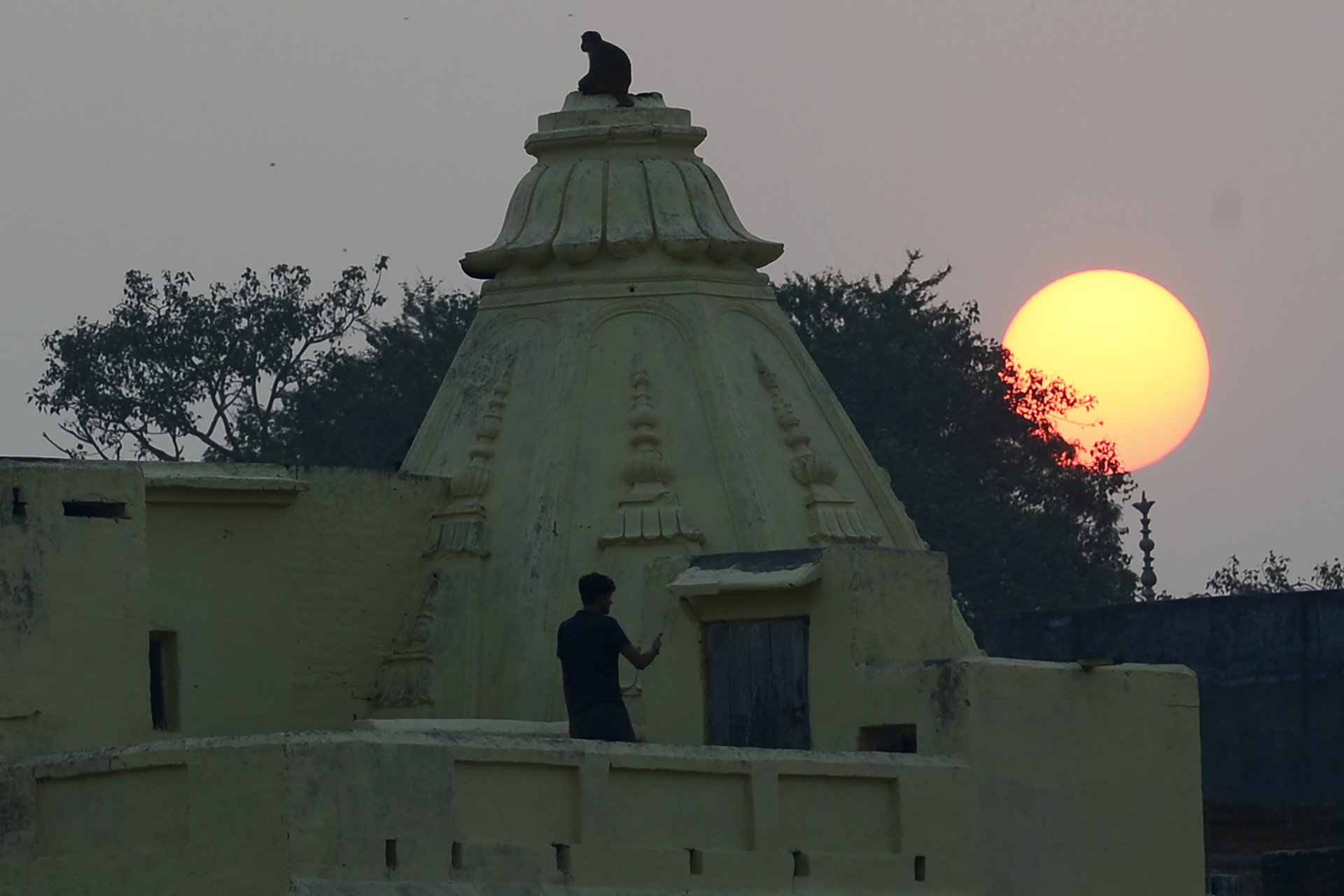
In a watershed verdict, the five-judge panel of India’s Supreme Court ruled unanimously to allow the construction of a Hindu temple at the site of the 400-year-old Babri Masjid, which right-wing Hindu nationalist groups demolished in 1992.
An old professor of mine in graduate school would stress the adage, “law is politics.” This phrase applies to the 1,045-page long judgment by the apex Indian court and underscores how difficult it must have been for the justices to reach a verdict that could mitigate conflict on this highly contentious issue. That said, the ruling is a major victory for Prime Minister Narendra Modi and his ruling Bharatiya Janata Party, whose supporters wanted to see the mosque replaced by a temple. Far more important, though, is the matter of the continuing erosion of India’s secular democratic political culture.
India’s intense tilt toward Hindu extremism is not simply a domestic political matter. Instead, it is an issue of geopolitical proportions – one that will exacerbate the existing insecurity in South Asia due to Islamist extremism that has been radiating from Afghanistan and Pakistan.
The Hope that Rule of Law will Prevail in India is Lost
Dr. Amir Khan, Indian School of Business
The Babri Masjid judgement is unique for a number of reasons. Firstly, the Supreme Court has accomplished what the Parliament could not do, by way of solving a persistent political problem. Secondly, it has placed the rule of faith over the rule of law. Thirdly and surprisingly, it has declared those who desecrated and demolished the mosque as criminals. Fourthly, it has created a precedent on title suits that strikes harshly at the root of private property protection. And finally, it has effectively given legal legitimacy to the Hindu Nationalist agenda of Prime Minister Narendra Modi’s government.
The issue is not about Muslims or India’s secular character anymore. The Muslim population had given up on this mosque when a mob demolished it in 1992 in the public eye. The issue remained alive for others, especially the liberal Indians who continued to believe in India’s legal and political institutions. The fight was for the idea of a liberal and progressive India versus the Hindi and Hindu idea of Hindustan that Modi and his party stands for.
It is the fight for keeping India a rule of law state that is lost now. It is now tough for us economists to seek foreign investment in a country that has on the one hand a huge potential for growth and on the other an institutionalized apathy toward protecting property rights. On the ease of doing business index, India is at the bottom of the heap on one parameter: the enforcement of contracts, at 163rd place among 190 countries. This is a most direct indictment of the state of India’s judiciary. The Babri judgement simply validates this sad reality.
Indian Supreme Court Rewards and Legitimizes Hindutva
Dr. Muqtedar Khan, Senior Fellow, New Lines Institute | University of Delaware
The Indian Supreme Court has rewarded decades worth of Hindutva activism by giving it victory in the Babri Mosque and Ram Temple dispute. I presume this is the safest judgement they could cobble together. The court ruled in favor of God Ram, who was granted legal standing by the Supreme Court, and against Muslims. The court handed over 2.77 acres of land to the central government using Article 142 of the Indian Constitution, which gives the court power to legislate and override legislature in special circumstances, to build a Hindu temple where a mosque stood for over 400 years. The court accepted belief as fact, and even though it could not find conclusive evidence that a temple once stood where the mosque was built in 1526 (Hindu vandals destroyed it in 1992), it decided that the land dispute must be settled in favor of Hindus.
I suspect that the court in its wisdom assumed that if the decision went against Muslims, the oppressed minority might be upset, but peace will prevail. On the other hand, if the decision had gone against Hindus there would be violence, riots, and further damage to the national fabric. So to end this long dispute without too much trouble, it relied on what S. Vardarajan calls “faith based logic’” and passed a political decision and not a legal verdict. Majoritarian politics prevailed.
The Indian Muslim community is economically backward and politically underrepresented. It has also been suffering from an avalanche of assaults by cow vigilantes, Hindu mobs lynching minorities and frequent riots in which cops look the other way when minorities are killed or raped and their properties destroyed. This decision will further undermine their faith and trust in India’s political institutions. If even the Supreme Court has become saffron (Hindu nationalist), then India’s secular democracy is dead. What hope do religious minorities have for equal rights in a Hindu Rashtra (Hindu State)? The community also fears that this might not be an end to this dispute; in fact, this might invigorate Hindu movements to attack more mosques. A statement issued by Hindu Vishwa Parishad saying “it’s the beginning” provides credence to these fears. This decision will further the anti-Muslim narrative that fuels Hindu nationalism. With the success in the triple talaq issue, revocation of Article 370 of the constitution, and the creation of the National Citizenship Registry, the Modi government is taking major strides against Indian Muslims.
Nevertheless, I think it would be wise for Indian Muslims to accept this decision. Let the illusion that the legal system is still fair persist. It could sometimes work in their favor when the stakes are not as high. Indian Muslims should accept the five acres of land that the decision grants them, a sort of reparations for the gross injustice done to them, and build a Babri Museum on it — a museum that will preserve the best of Hindu-Muslim relations and traditions in India, and especially preserve the heritage of Indian Islam.
Pluralist India is Waning
Minna Jaffery, Content Manager of New Lines Institute
The Indian Supreme Court decision to allow for the construction of a Hindu temple in the spot where the Babri Masjid stood is a victory for a highly majoritarian view of democracy. The religious sites and relics of empires past have often been used as houses of worship for the predominant religion. The Hagia Sofia in Istanbul, Turkey is the most prominent example of this, with its Persian iconography and basilica architecture.
The flurry of news surrounding the decision is not necessarily about the space, but about the fact that India’s highest court has decided this under a BJP-run government, which suggests that the pluralistic India is ceasing to exist. Governance in the largest democracy in the world is beginning to look more like the rights of the minorities decided by the will of the majority. India is inherently an ethnically and religiously diverse society, but the Supreme Court decision appears to ignore this reality, and will pave the way for instability and insecurity in what will soon be the most populous nation on the planet.
The views expressed in this article are those of the author and not an official policy or position of the New Lines Institute.