The Western Balkans 2024: Assessment of the Current Security Posture and Geopolitical Challenges
Foreword
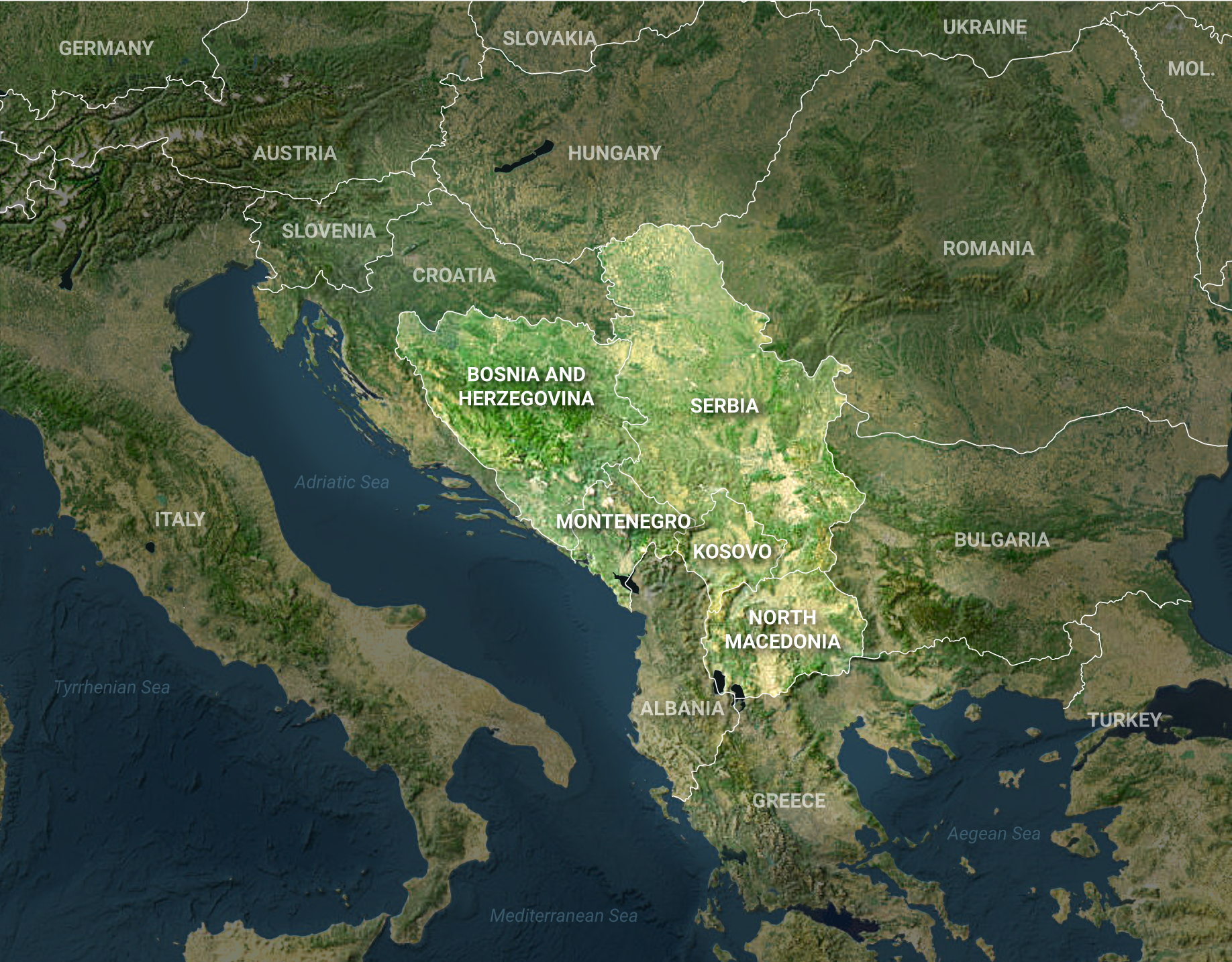
Amid rising Russian aggression in Eurasia, the Western Balkans have disproportionately felt the effects of regional destabilization, along with a heightened urgency for Euro-Atlantic integration. With Kosovo and Serbia embroiled in border skirmishes, and interethnic tensions rising throughout the region, forces of political polarization, ethnonationalism, and secessionist movements are posing a growing threat to stability and peace in the Western Balkans.
Both the region’s geopolitical relations with Russia and China and its domestic challenges pose barriers to peace and stability. In Montenegro, ongoing illicit activities, institutional corruption, and criminal networks pose a threat to the rule of law and governance – a threat exacerbated by the resurgence of authoritarianism throughout the region. In Bosnia and Herzegovina, EUFOR’s mission of maintaining a “safe and secure environment” lacks sufficient deterrent capabilities, manpower, and artillery to fully execute its mission. North Macedonia’s identity insecurity is often subject to exploitation by domestic and foreign actors, spreading apathy and disillusionment among the population. Although economies of care are primary factors of sustainable peace in post-conflict contexts, women across the Western Balkans remain disadvantaged by gender discrimination in health care, education, and economic mobility. Meanwhile, Serbia and Kosovo’s deficits in the rule of law and challenges in normalization talks have hindered the countries’ pursuit of EU membership, resulting in a continued state of EU enlargement fatigue.
The New Lines Institute’s Western Balkans Observatory draws on an expert roster of academics, journalists, and former policymakers to identify emerging crises in the Balkans and offer policy solutions for sustainable peace and security. In this monograph, we examine the contemporary security posture in the Western Balkans through lenses of EU integration, rule of law, ethnic and religious tensions, and feminist security studies. We hope that this report, in providing insights on geopolitical challenges and security issues in the Western Balkans, will spur policies to promote peace and stability in the region and avert further threats to its security posture in the near future.
-Dr. Azeem Ibrahim OBE
The essays in this report were edited by Tanya Domi.
Read Ismet Fatih Čančar’s essay here.
Read Ramadan Ilazi’s and Leureta Lumi’s essay here.
Read Vladimir Vučković’s essay here.
Read Ivana Jordanovska’s essay here.
Read Filip Ejdus’s essay here.
Read Aida A. Hozić’s essay here.
The views expressed in this article are those of the author and not an official policy or position of New Lines Institute.