
China-Middle East Connectivity: Can Chinese Projects Close Economic Gaps?
Read the full report Here
A key barrier to Middle Eastern economic growth is the lack of economic connectivity that exists among the region’s states, and between them and the rest of the world. Since the onset of the Belt and Road Initiative, China has emerged as an increasingly key provider of physical and digital infrastructure in the Middle East. Accordingly, could the nature and quantity of China’s infrastructure engagement in the region herald a tangible improvement in the Middle East’s economic connectivity? Four key deficits characterize the region’s lack of connectivity: 1) insufficient border facilities, customs efficiency, and logistical capacities; 2) insufficient information and communications technology (ICT)infrastructure; 3) a lack of integration among national energy systems; and 4) insufficient maritime port efficiency.
To ascertain whether China’s infrastructure engagement could address these deficits, this series begins by looking at connectivity and integration deficits as key barriers to Middle Eastern economic growth and introducing the general nature of China’s investment and infrastructure engagement in the Middle East, and its imbalanced character that focuses on a few select regional countries. Part 2 will contain two case studies on the highest and second highest focus countries of this Chinese engagement, Saudi Arabia and the UAE. Part 3 will do the same for Iraq, Egypt and Oman. Finally, Part 4 will use these case studies to analyze how Chinese engagement could address the f Middle East’s connectivity deficits on a regional level.
In sum, China’s infrastructure engagement in the Middle East is making varied progress in addressing the region’s four key economic connectivity barriers:
- Border facilities and customs efficiency: China’s development of special economic zones, particularly in the GCC and Egypt, may indirectly improve regional connectivity through supply chain diversification and increased market access. However, direct impact on border facilities and customs efficiency is limited.
- ICT infrastructure: China’s investments in Saudi Arabia, UAE, and Egypt are promising, but expansion to other countries is needed for true regional digital connectivity. Political factors and instability in some countries hinder Chinese involvement. Additionally, improvements in education and service industries are necessary to fully leverage ICT advancements.
- Energy systems integration: China’s partnership with ACWA Power could potentially catalyze regional renewable energy integration, particularly in the GCC and Egypt. However, this integration is not yet realized and requires significant infrastructure development.
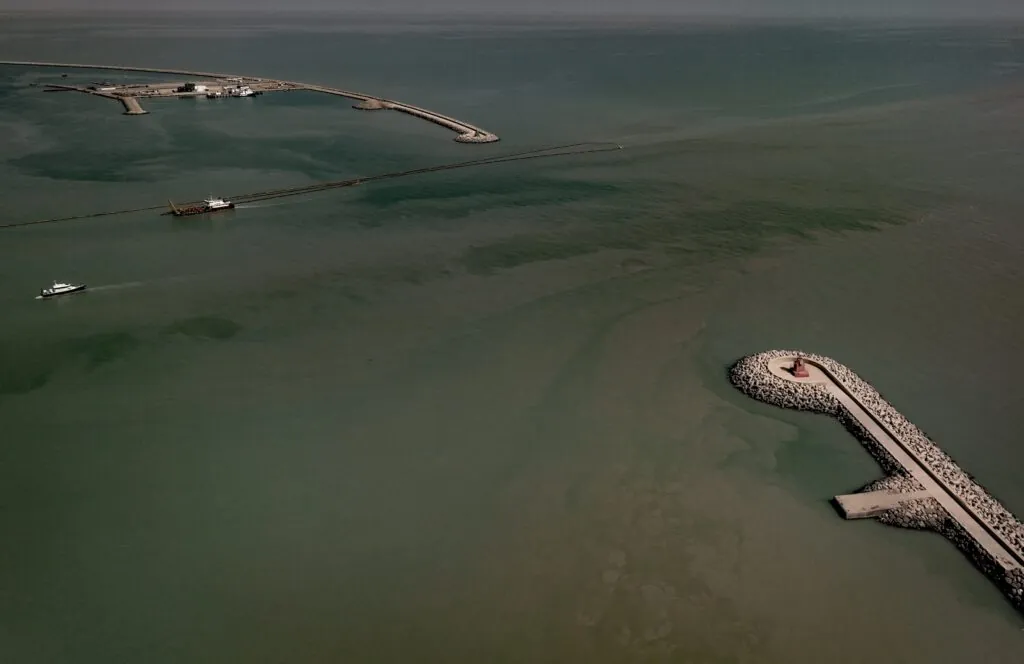
- Maritime port efficiency: China has made substantial progress in enhancing port complexes and associated industrial ecosystems in Egypt, UAE, Saudi Arabia, and Oman. These improvements indirectly benefit other regional nations by creating enhanced maritime commerce nodes.
The views expressed in this article are those of the author and not an official policy or position of New Lines Institute.