A Nexus of Cartels, Corruption, and Oil Smuggling in Tamaulipas
The capture and subsequent death of Nemesio Oseguera Cervantes – the founder of Mexico’s Jalisco New Generation Cartel (CJNG), known as “El Mencho” – in early 2026, followed heightened U.S. pressure on the Mexican government to target its criminal cartels. The capture and death of El Mencho, however, spurred CJNG members to conduct a wave of violent retaliation that brought about chaos across major cities, targeted attacks on authorities, and significant casualties. The fallout from this targeting illustrates an aggressive U.S. counter-cartel strategy that lacks a holistic methodology.
To effectively weaken cartels, the U.S. government must help Mexico to cut off their diversified revenue streams – including prolific sources of non-narcotic cash flow. While narcotics production and smuggling are central to their business model, cartels generate income from a plethora of sources, including other illicit trades, such as human trafficking, and involvement in licit industries, such as avocado production.
Fuel Theft Innovation
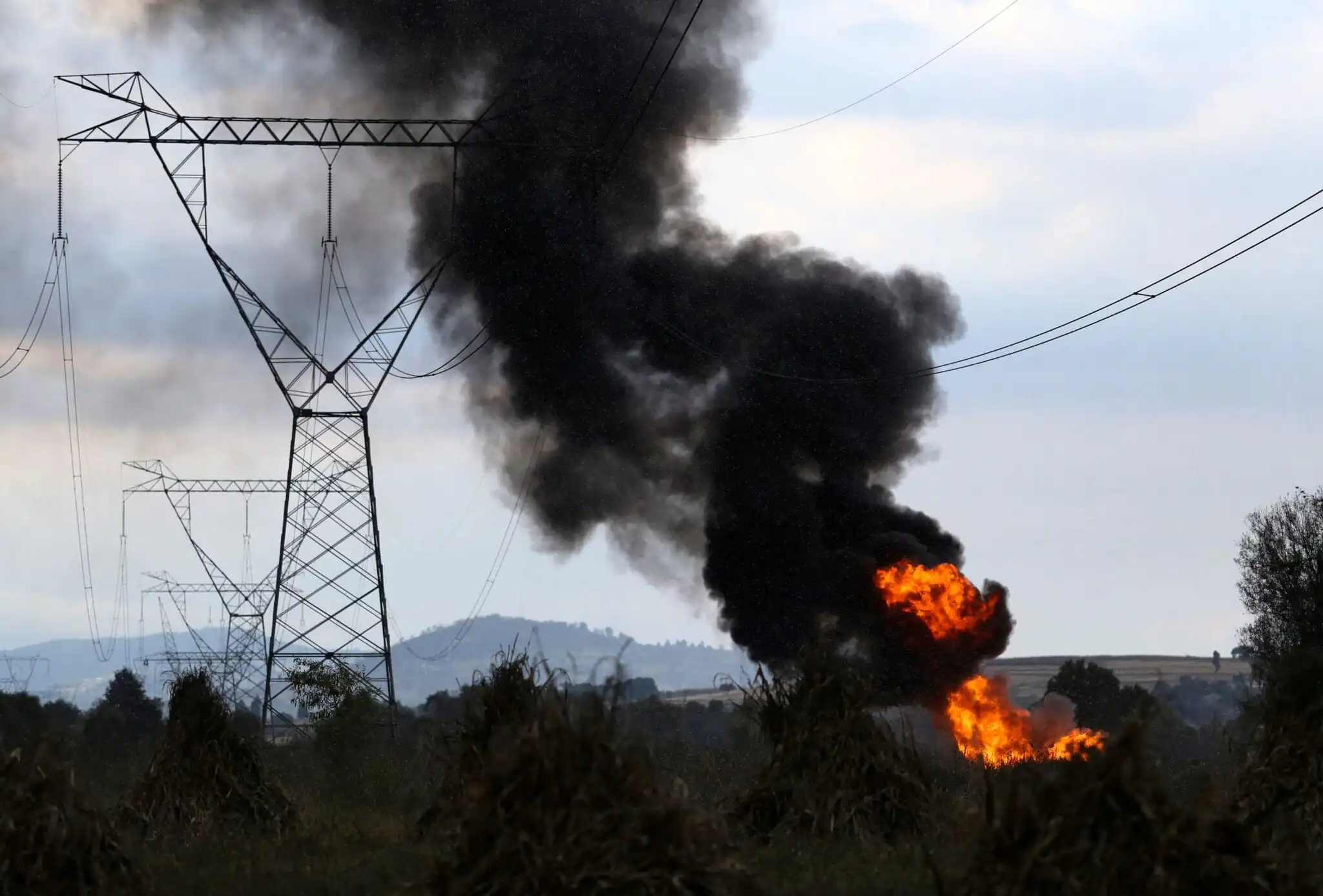
Beyond narcotics, the most prominent cartel income source is fuel theft – colloquially referred to as huachicol – in which cartel members steal fuel from the state-owned Petróleos Mexicanos and sell it domestically. The practice has expanded over the past decade, powered by the innovation of huachicol fiscal: a white-collar crime.
Huachicol fiscal involves transnational energy shipments: cheap crude oil obtained through traditional huachicol flows north to complicit U.S. refineries, while refined fuel flows south to Mexican consumers, undercutting high Mexican import taxes. Huachicol fiscal has become so prolific that illicit fuel trade now accounts for one-third of Mexico’s domestic market.
The majority of transnational crossings of illicit fuel occur in Tamaulipas. Its position alongside the Río Grande and the Gulf of Mexico on the U.S.-Mexican border makes it an ideal transit hub. The state’s well-defined commercial infrastructure, considerable cross-border transit, and high levels of corruption provide actors with the means and cover to effectively conduct huachicol fiscal. Tamaulipas serves not only as a gateway for huachicol fiscal but also as a hub for profits returning to cartels. The U.S. Treasury Department has found that the bulk of huachicol fiscal profits are remitted to Mexico through U.S. cities bordering Tamaulipas.
Both forms of huachicol, traditional and fiscal, contribute to Mexico’s instability. They are deeply pervasive in private industry and governance. Traditional huachicol is a territory-dependent enterprise that requires access to fuel pipelines, smuggling routes, and productive sales locations, which heightens territorial competition and associated violence. In contrast, the white-collar nature of huachicol fiscal fosters and deepens corruption, a major constraint on Mexican governance. Compounding these systemic issues, the illicit fuel market is a major source of lost tax revenue for the Mexican government, with a shortfall estimated at $10 billion in 2025.
Actors on Both Sides of the Border
Huachicol fiscal activity depends on complicit non-cartel actors on both sides of the border. In Mexico, this means government officials are essential to the supply chain. When smuggled petroleum crosses the border, it is subject to the jurisdiction of the National Customs Agency of Mexico (ANAM), which collaborates with the Mexican Secretariat of the Army and the Mexican Secretariat of the Navy. A 2025 huachicol scandal – in which naval and ANAM officials smuggled over 2 million gallons of illicit fuel through Tamaulipas – has exposed the proliferation of the fiscal corruption tied to the practice.
U.S. private actors, including shipping companies and refinery operators, also play a major role in illicit fuel networks. These operations use shell corporations to conceal their activities. Often connected to cartels through intermediaries, complicit U.S. actors either pay a set fee for each shipment of smuggled fuel or funnel a portion of their profits directly back to the syndicate. Private U.S. actors can derive substantial profits from this trade with minimal accountability.
In response to the growth of huachicol fiscal, the U.S. Treasury Department’s Financial Crimes Enforcement Network issued an alert urging financial institutions to be vigilant regarding Mexican cartel activity. It acknowledged the proliferation of the trade and its ascension as the most significant non-drug illicit revenue source for cartels. A large portion of huachicol fiscal activity, however, goes unchecked and unnoticed.
In Mexico, the government’s operation targeting El Mencho is unlikely to affect the highly decentralized huachicol activity in Tamaulipas. Moreover, while CJNG is dominant in the huachicol fiscal market, other cartels also participate. This diverse ecosystem of Mexican actors blunts the efficacy of targeting individuals as a strategy to curb huachicol fiscal revenue.
Nevertheless, as the huachicol fiscal market continues to grow, draining more legitimate revenue and deepening corruption, the Mexican government will face an increasing imperative to direct more resources toward curbing the trade. Such resources will likely come from counter-cartel funding currently allocated to counternarcotics operations – further straining U.S.-Mexico relations.
Mitigation of huachicol fiscal cannot focus solely on arresting cartel actors. It also requires pursuing culpable Mexican officials and revealing widespread corruption. However, this places the Mexican government in a dilemma: While widespread corruption within the Mexican government is well documented, the state’s confirmation of it would heighten political instability.
The nature of this destabilizing dynamic requires a holistic approach that targets the drivers of corruption, namely huachicol fiscal, and leverages resources from both Mexico and the United States. If the trade is not addressed by operations on both sides of the Rio Grande, it will continue to escalate, strengthening cartels and weakening the Mexican government while simultaneously driving a wedge between U.S. and Mexican policy imperatives.
Policy to Curb Huachicol Fiscal
As cartels advance revenue diversification efforts, the agreements and tactics between the U.S. and Mexico to combat them must evolve in tandem. While evidence is emerging that cartels have increased profits through huachicol fiscal, agreements between the countries have lagged.
The Mérida Initiative, the core U.S.-Mexico counter-cartel agreement until 2021, focused on strengthening security, which led to increased violence and facilitated the current cartel environment. The initiative enabled and reinforced the kingpin strategy targeting the leaders of criminal networks, which was widely criticized for fracturing, not degrading, cartels and heightening violence.
Now, the Bicentennial Framework, which replaced the Mérida Initiative as the core counter-cartel agreement, shows promise. It focuses more on dismantling a cartel’s organization as a whole. The framework outlines goals to address cartel recruitment by increasing education and economic opportunity, while also pledging to disrupt illicit financiers with extradition. However, its holistic approach to cartels does not mention the illicit fuel trade or the involvement of U.S. actors.
In late 2025, the U.S. and Mexican governments agreed to establish a high-level implementation group on security cooperation. Its goal is to expand on the Bicentennial Framework, honing its scope and focus to emphasize aspects such as fentanyl trafficking and fuel theft. However, the mandate of the agreement is broad, promising to tackle issues including “clandestine border tunnels” and the general prosecution of drugs and arms. While it promises “enhanced collaboration” on fuel theft, huachicol remains a secondary concern, and cross-border fuel smuggling – huachicol fiscal – is not addressed at all.
The United States and Mexico should forge a new agreement centered on huachicol fiscal, addressing its rapid expansion, the systemic damage it poses to Mexico, and the revenue it provides cartels. The white-collar nature of the crime exposes it to fiscal intelligence, while the trade routes running through U.S. territory, concentrated around Tamaulipas, provide U.S. policymakers with jurisdiction.
This agreement should increase tracking and accountability of U.S. actors while heightening intelligence on trade and fiscal flows along the border. The framework should aim to increase collaboration between U.S. and Mexican agencies responsible for patrolling these points of entry to prevent smugglers from evading detection. As cartel revenue streams evolve, so too should the agreements and methods used by Mexico and the U.S. to counter them.
Photo: Smoke billows from a fire at a Petroleos Mexicanos (Pemex) pipeline that exploded while being repaired after an apparent theft attempt in November 2019. Theft of fuel and crude oil has become a lucrative sideline for Mexico’s criminal cartels. (Photo by EMMANUEL FLORES/AFP via Getty Images)