Weekly Forecast Monitor: Sept. 6, 2024
The Weekly Forecast Monitor is a forward-looking assessment of geopolitical dynamics shaping our world. To get more in-depth analysis of these issues and learn more about analytical products from New Lines Institute — including simulations, training sessions, and forecast reports — contact us at [email protected] and visit https://newlinesinstitute.org/analytical-products/.
Listen to the WFM podcast here
Global Hotspots
The Global Hotspot Tracker examines the outlook for key geopolitical hotspots around the world. (Go to the Global Connectivity Tracker)
Russia/Ukraine Conflict
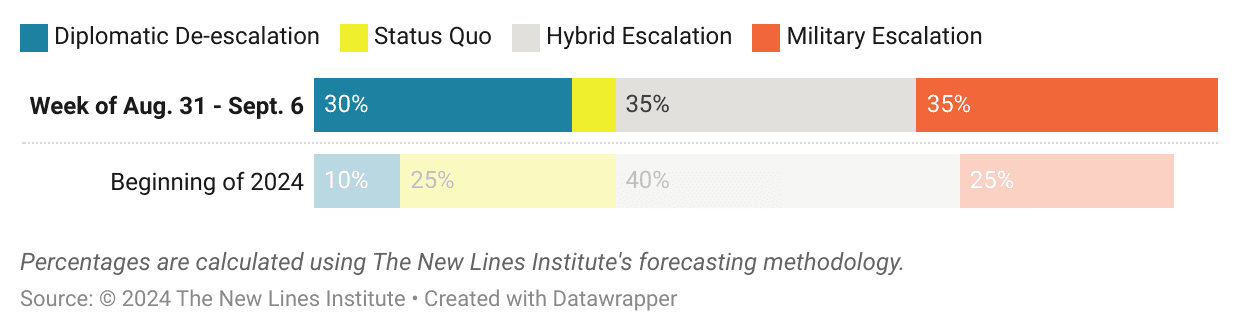
Summary – The Russia-Ukraine conflict trended toward military and hybrid escalation as Russia continued to seize territory in Ukraine’s Donetsk oblast and attacked Ukrainian cities with heavy bombardment. Ukraine conducted a large-scale drone attack against Russian energy infrastructure. Ukrainian President Volodymyr Zelenskyy dismissed numerous ministers from his Cabinet and met with allied defense ministers in Germany
Military escalation scenario
- Russia continued heavy strikes against cities across Ukraine. One attack, in the central Ukrainian city of Poltava, killed at least 53 people and injured another 298.
Risk level – medium - Russian forces continued to advance in Donetsk oblast, while Ukraine maintained control of seized Russian territory in Kursk.
Risk level – medium - Zelenskyy asked Canadian Prime Minister Justin Trudeau to lobby Ukraine’s allies to lift their ban on using Western weapons to conduct long-range strikes inside Russia. Zelenskyy also traveled to Germany to plead Ukraine’s case in person at a gathering of allied defense ministers.
Risk level – medium
Hybrid escalation scenario
- Ukraine conducted one of its largest-ever attacks targeting Russian energy infrastructure, reportedly utilizing over 150 drones in a single overnight operation.
Risk level – medium - Sanctions have forced Russia’s Gazprom to curtail expansion plans in the Arctic.
Risk level – medium - The U.S. government is pursuing legal and economic penalties against employees of Russian media outlet RT who were accused of participating in U.S. election interference.
Risk level – medium - Mongolia failed to detain Russian President Vladimir Putin during his state visit there in direct violation of an International Criminal Court arrest warrant.
Risk level – low
Diplomatic de-escalation scenario
- Putin listed China, Brazil, and India as countries he would trust to act as mediators in Ukraine peace talks. Ukraine is opposed to negotiating directly with Russia but has made public its openness to work with intermediaries.
Opportunity level – low/medium
Middle East
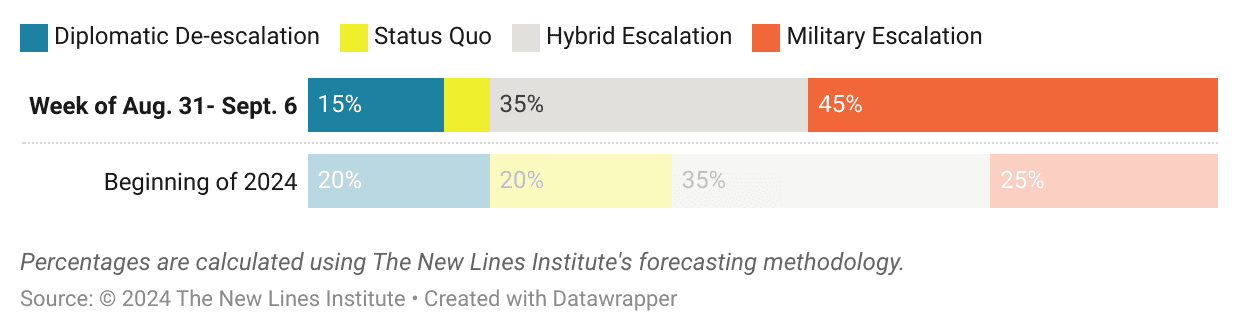
Summary – Tensions in the Middle East trended toward military escalation and diplomatic de-escalation scenarios as Hamas executed Israeli hostages and Israel concluded its ground operation near Jenin. Mediators from the U.S., Egypt, and Qatar are working to finalize the details of a cease-fire and hostage release deal.
Military escalation scenario
- Hamas executed six Israeli hostages, including one with dual Israeli-U.S. citizenship. The hostages were reportedly killed shortly before Israeli forces arrived at their location.
Risk level – medium/high - Israel reportedly ceased its major ground operation near the West Bank city of Jenin. The operation was the most destructive of its type in years and left dozens of Palestinians dead. A Palestinian gunman reportedly killed three Israeli police officers near Hebron.
Risk level – medium/high - Israel and Hezbollah exchanged fire across the Israel’s border with Lebanon, as Israel continued its air campaign inside Gaza, killing dozens of Palestinians.
Risk level – medium - U.S. and Iraqi forces conducted a large-scale joint raid in Anbar province, targeting senior Islamic State leadership. At least 15 Islamic State militants were reported killed, and seven U.S. troops were wounded.
Risk level – medium
Hybrid escalation scenario
- The U.S. has formally charged six senior Hamas leaders, including Yahya Sinwar, with crimes associated with the Oct. 7 attacks as well as other terrorism-related charges. Three of the leaders named in the criminal complaint are deceased.
Risk level – low - Citing safety risks, a European Union task force has ceased salvage operations on a burning tanker carrying 1 million barrels of oil damaged by an al-Houthi rebel attack in the Red Sea.
Risk level – low
Diplomatic de-escalation scenario
- Israeli Prime Minister Benjamin Netanyahu said Israel must maintain full control of the Philadelphi Corridor in any post-conflict scenario, a stance many senior Israeli security officials oppose. The U.S. is expected to make another diplomatic push to secure a cease-fire and hostage release deal.
Opportunity level – low
U.S./China/Indo-Pacific
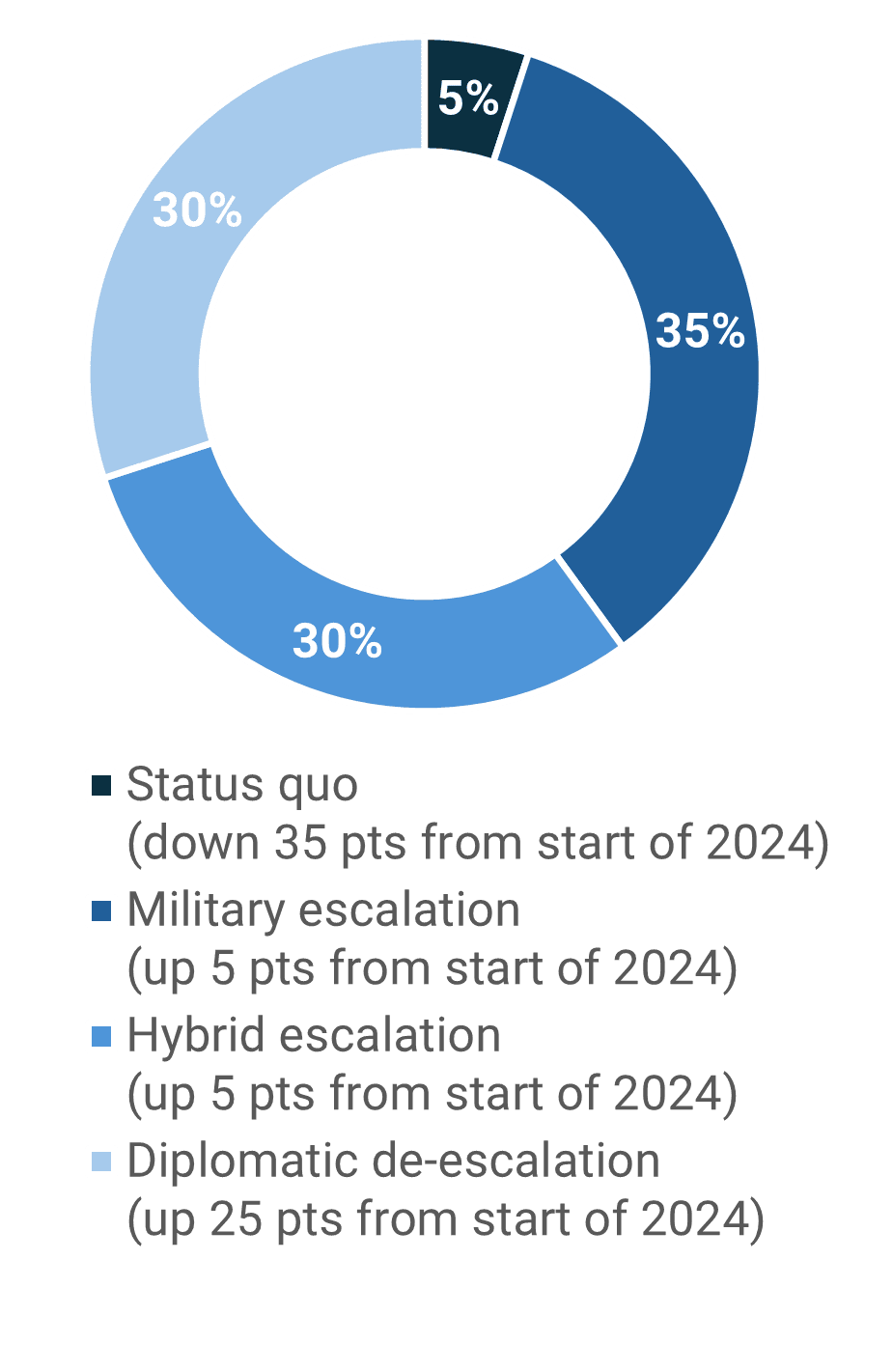
Summary – Tensions in the Indo-Pacific trended toward a military escalation scenario, as a Chinese surveillance vessel entered Japanese territorial waters. China and the Philippines traded accusations over incidents of coast guard ships ramming one another in an escalating confrontation in the South China Sea. Beijing hosted over 50 African nations at the Forum of China-Africa Cooperation. Japan and Australia agreed to increase defense cooperation.
Military escalation scenario
- A Chinese naval surveillance vessel entered Japanese territorial waters. While Beijing insisted the ship was making a routine legal passage through international waters, Tokyo issued a strong protest.
Risk level – medium - The U.S. Department of Defense unveiled plans to build military repair hubs in Japan, South Korea, Australia, Singapore, and the Philippines, allowing the U.S. to draw on local industrial capabilities in the event of conflict in the region.
Risk level – low/medium - China and the Philippines each accused the others’ coast guards of deliberate ramming incidents near the disputed Sabina Shoal in the South China Sea, with the Philippine vessel allegedly sustaining damage. The European Union and the U.S. accused China of acting dangerously.
Risk level – low/medium - Taiwan’s Ministry of National Defense tracked 50 Chinese aircraft and 29 naval vessels around the island, with 38 aircraft crossing the Taiwan Strait median line.
Risk level – low
Hybrid escalation scenario
- Taiwan’s Ministry of National Defense tracked 50 Chinese aircraft and 29 naval vessels around the island, with 38 aircraft crossing the Taiwan Strait median line.
Risk level – low - Taiwan’s Ministry of National Defense tracked 50 Chinese aircraft and 29 naval vessels around the island, with 38 aircraft crossing the Taiwan Strait median line.
Risk level – medium - The Netherlands is expanding restrictions on exports of advanced processor chip manufacturing equipment outside the EU, citing security concerns.
Risk level – medium - Chinese officials have threatened economic retaliation should Japan increase restrictions on exports of chipmaking equipment to China.
Risk level – medium - Alice Guo, the former mayor of the Philippine municipality of Bamban, was arrested in Indonesia after four weeks on the run. She is accused of spying for China.
Risk level – low
Diplomatic de-escalation scenario
- Beijing hosted the Forum of China-Africa Cooperation, ending with a pledge of $50 billion in financial support and $140.5 million in military aid to over 50 African countries.
Opportunity level – low - In Nanjing, Chinese Ambassador to the U.S. Xie Feng honored the memory of American “Flying Tiger” aircrew members who fought alongside China during World War II.
Opportunity level – low
Global Connectivity
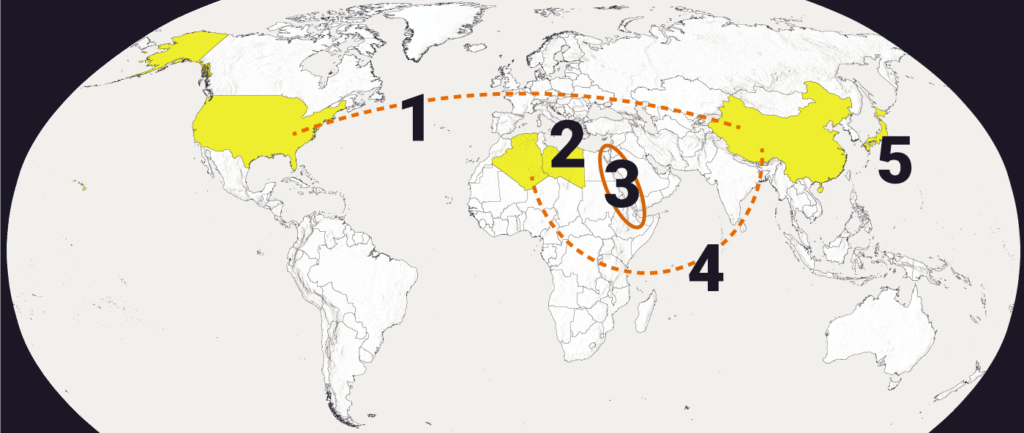
The Global Connectivity Tracker examines the sectoral impact of geopolitical dynamics on key themes like the global energy/climate transition, trade, and technology. (Go to the Global Hotspot Tracker)
- US/China: Cyber
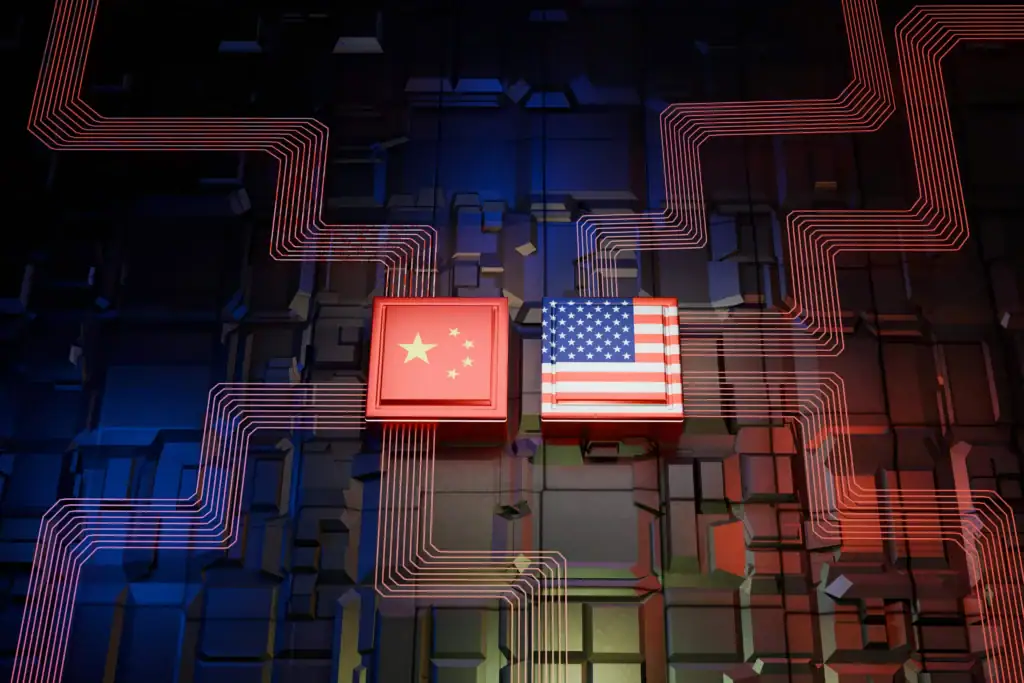
What happened: U.S. cybersecurity firm Lumen Technologies announced it had found a key vulnerability in U.S. computer network servers that has been exploited by a Chinese hacker group.
Significance/Outlook:Versa Director, a network management tool created by leading network services provider Versa Networks, was the target of an intrusion. Versa’s offerings, including cloud management and cybersecurity services and network optimization tools and integration services, are used by a range of different companies. As such, the exploitation of Versa Director meant that hackers could access and control the networks of a large number of U.S. entities. Lumen Technologies, which discovered the vulnerability and widely shared the information, including with the U.S. government, attributed the intrusion to the Chinese government-backed Volt Typhoon group based on patterns of attack. Although patches to the vulnerability are being employed by private and governmental agencies, the threat of intrusion remains.
Opportunity level – low/medium - Libya: Oil
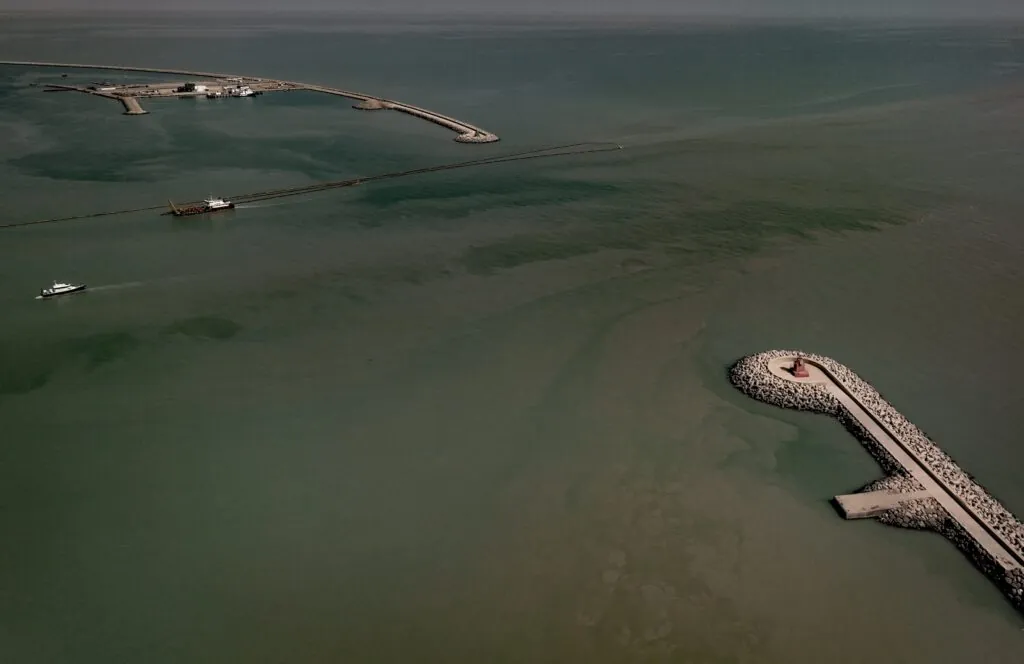
What happened: Al-Houthi rebels have claimed responsibility for attacks on two crude oil tankers in the Red Sea this week.
Significance/Outlook: The U.S. Central Command confirmed that the Iran-backed Houthis attacked two crude oil tankers, the Panama-flagged, Greek-operated MV Blue Lagoon I and the Saudi-flagged MV Amjad, with ballistic missiles and a drone, damaging both vessels. Despite the strikes, the ships were able to continue their journeys. According to the Associated Press, the Blue Lagoon I was en route to an undisclosed destination from the Western Russian port of Ust Luga, signaling that it was transporting Russian crude. The Saudi-flagged tanker can hold up to 2 million barrels of crude, while the Blue Lagoon I has a capacity of 1 million barrels. Ongoing attacks may continue to disrupt regional and global trade, potentially pushing oil prices higher due to concerns about supply chain disruptions and rising shipping insurance costs.
Risk level – low - Red Sea: Shipping
What happened: Eastern Libya’s government said it will halt oil production and exports until further notice due to a central bank crisis.
Significance/Outlook: The shutdown of Libya’s main revenue source follows the Tripoli-based Presidential Council’s dismissal of central bank governor Al-Siddiq Al-Kabir, causing economic panic. In response, a local group in the Al Wahat region, Libya’s largest oil-producing area, halted oil production, demanding fair wealth distribution before reopening the fields. This action might return Libya to its pre-Geneva political agreement state, posing significant security and political risks. The closure of eastern oil fields, which account for nearly two-thirds of Libya’s output, effectively halts exports. Oil markets reacted with a 3% increase in prices, placing the U.S. and Western nations in a precarious position amid sanctions on Russia.
Risk level – medium - China/Algeria: Natural Gas
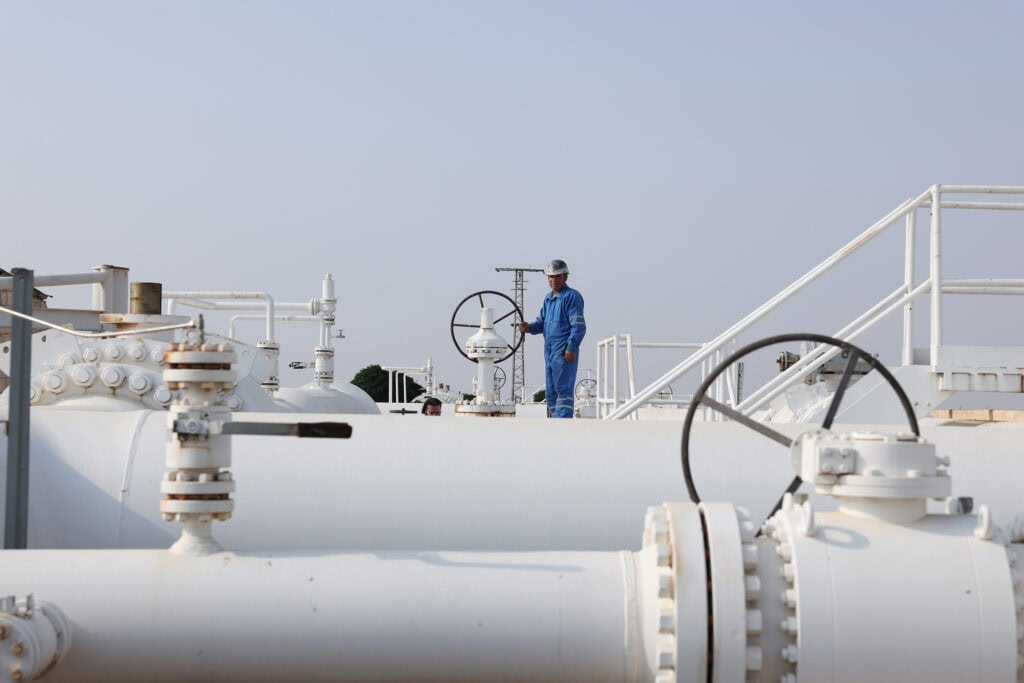
What happened: Algeria’s Sonatrach has signed a $210 million contract with China Petroleum Engineering & Construction Company for a comprehensive upgrade of the Alrar gas field in the Illizi basin.
Significance/Outlook: This project represents Sonatrach’s commitment to investing in upstream gas projects to meet rising national demand. The upgrade will allow Sonatrach to extend the life of the Alrar gas field, which has been operational since 1984, through 2048 by managing the inevitable reduction in output as its reserves dwindle. In addition, the renewal of production will make it possible for Sonatrach to fulfil its commitments to global customers and help Algeria continue to play a significant role in that market.
Opportunity level – low/medium - Japan: Fusion Power
What happened: Japanese start-up Helical Fusion announced plans to put a pilot fusion reactor in service by 2034, with a commercial-scale power plant to follow a few years later, Reuters reported. The planned 50- to 100-megawatt reactor would use a helical magnetic field design to create a sustainable fusion reaction. If the plan is realized, the company could become the first to put a commercially viable fusion power project in service.
Significance/Outlook: Technical, regulatory, and financial hurdles remain before Helical Fusion’s reactor project could start producing electricity on a commercial scale. Japan’s NIFS, one of the world’s largest fusion research facilities, has held hydrogen fuel at a temperature of 180 million degrees Fahrenheit for almost an hour. However achieving that result required a net input of energy, a problem that fusion research has yet to overcome. Helical Fusion CEO Takaya Taguchi said an investment of 1 trillion yen ($6.9 billion) would be needed to build the pilot reactor.
Opportunity level – low