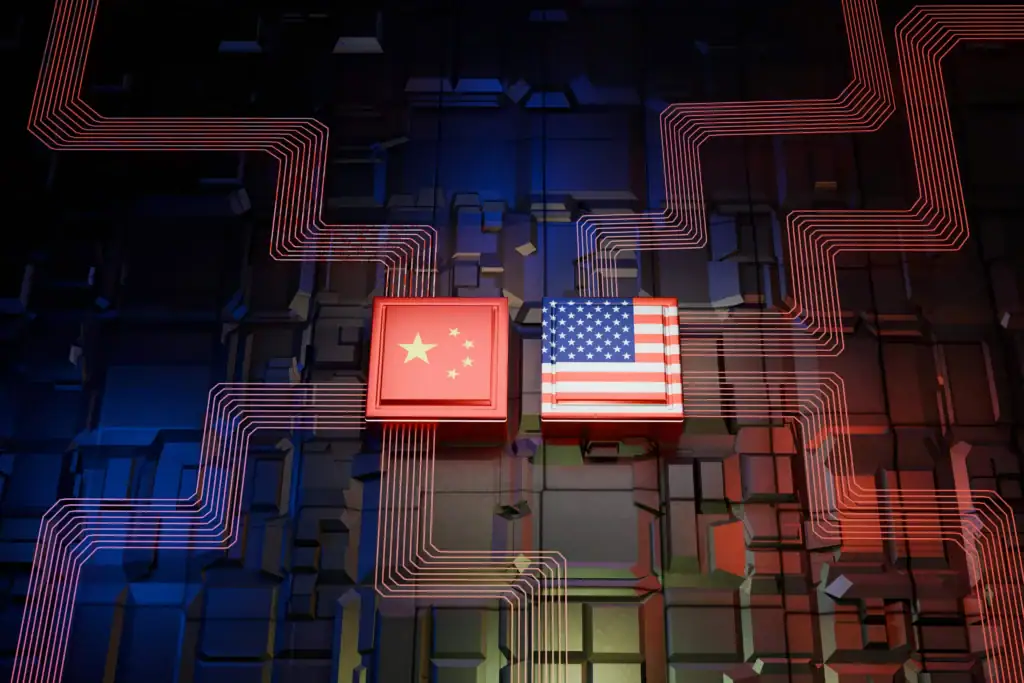

U.S.-UAE AI Cooperation: Future Trajectories
The U.S.-UAE $1.4 trillion technology investment framework, agreed in March 2025, marks a significant expansion in bilateral AI cooperation [1]. Central to this partnership is the $500 billion Stargate data center project, which positions the UAE as a critical node in America’s global AI infrastructure ambitions. However, realizing the framework’s full potential requires addressing concerns around chip security, preventing technology diversions to U.S. adversaries, and establishing lasting regulatory mechanisms.
This report proposes a two-tier regulatory approach based on the frequency and timing of chip diversions, allowing adequate governance of U.S. chip exports while preserving the strategic benefits of the partnership. It also identifies opportunities for extending the framework’s benefits to the broader Middle East region.
Data Center Financing and Chip Security
The UAE’s Stargate project offers substantial incentives for U.S. companies through domestic AI capacity expansion, including hosting 5 gigawatts of data centers using NVIDIA’s most advanced hardware. With global data center capital expenditure projected to reach $6.7 trillion by 2030, securing external financing from Gulf allies helps diversify funding away from overburdened U.S. tech giants.
Key considerations include formalizing AI chip trackers as a component of bilateral regulations and leveraging the UAE’s existing dual-use export control system to prevent unauthorized technology transfers. These export controls are unique within the region, further opening up the possibility of expanding this framework to other regional actors.
Building AI Systems on U.S. Technology
The preliminary agreement to export approximately 500,000 advanced NVIDIA chips annually to the UAE builds on Washington’s broader strategy of promoting U.S.-made AI systems globally. Extending this agreement through 2030 provides leverage for deeper regulatory cooperation. The UAE’s demonstrated willingness to accomodate U.S. security concerns, exemplified by the G42’s divestment from Chinese hardware, suggests a viable path toward sustainable technology sharing in the region.
A Cooperative Regulatory Framework
Effective chip export governance should incorporate two metrics:
- Frequency: Export levels can be calibrated based on compliance with anti-diversion protocols. The number of suspected chip diversions to adversaries should inform deliberations on future shipment volumes, framed as a national security consideration rather than an exclusionary measure.
- Timing: Regular intelligence assessments give Emirati authorities space and information required to address U.S. concerns while distinguishing between unauthorized diversions and legitimate bilateral arrangements with other partners.
Policy Recommendations
Position the 5-gigawatt AI technology cluster in Abu Dhabi as infrastructure supporting computation demand across GCC countries and the broader Middle East.
Support cooling technology hubs that generate affordable electricity for energy-stressed states like Syria through collective data center infrastructure.
Utilize corporate investments in Abu Dhabi and Saudi Arabia's HUMAIN venture to expand AI services and computational resources to regional partners.
Share insights from Stargate's multi-ministry data coordination to strengthen Iraqi initiatives like the Injaz data center, which supports citizen identification systems and forensic analysis.
Extend early assessments of Stargate's domestic performance to less-developed economies, helping them scale data center initiatives with strong governance standards.
Leverage the talent development hub within Stargate to address training and AI expertise gaps in priority U.S. industries.
Formalize a multi-stakeholder structure including policy makers, technology leaders, industrial representatives, and civil society to ensure the framework addresses diverse sectoral needs.
The views expressed in this article are those of the author and not an official policy or position of New Lines Institute.
Major shifts in this new investment include Abu Dhabi’s targeting of U.S. investments across semiconductors, smart AI infrastructure, and critical technologies, as well as data centers.