Weekly Forecast Monitor: May 17, 2024
The Weekly Forecast Monitor is a forward-looking assessment of geopolitical dynamics that are shaping the international system. To get more in-depth analysis of these issues and learn more about analytical products from New Lines Institute — including simulations, training sessions, and forecast reports — contact us at [email protected] and visit https://newlinesinstitute.org/analytical-products/. Download PDF version.
Global Hotspot Tracker
The Global Hotspot Tracker examines the outlook for key geopolitical hotspots around the world. (Go to the Global Connectivity Tracker)
Middle East
Summary – Tensions in the Middle East trended toward military and hybrid escalation scenarios amid the evacuation of civilians from Rafah and Israel’s advancement of tanks and troops into the city, while firefights broke out between the IDF and Palestinian armed groups across Gaza. Combat and shelling between Hezbollah and Israel intensified. The EU urged Israel to end its operation in Rafah. Egypt threatened to cease its mediation efforts between Israel and Hamas.

Military escalation scenario
- Around 600,000 Gazans evacuated Rafah, while Israeli forces pushed deep into northern Gaza and multiple areas of Rafah and clashes intensified.
Risk level – medium/high - Israel and Hezbollah exchanged heavy fire, causing fatalities and injuries among civilians and military personnel. Israel reported the death of a top Hezbollah commander in a drone strike. A Hezbollah drone strike damaged a sensitive Israeli Air Force facility.
Risk level – low/medium - An Iraqi officer and four soldiers were killed in an Islamic State attack.
Risk level – low
Hybrid escalation scenario
- The EU urged Israel to end its military operation in Rafah immediately, warning that failure to do so would undermine Israel’s ties with the bloc.
Risk level – low/medium - Egypt threatened to cease mediation between Israel and Hamas and warned that military and intelligence cooperation will stall if the situation continues.
Risk level – low
Diplomatic de-escalation scenario
- Arab countries are considering a U.S. plan to send Arab peacekeeping troops to Gaza after the war.
Opportunity level – low
Russia/Ukraine Conflict
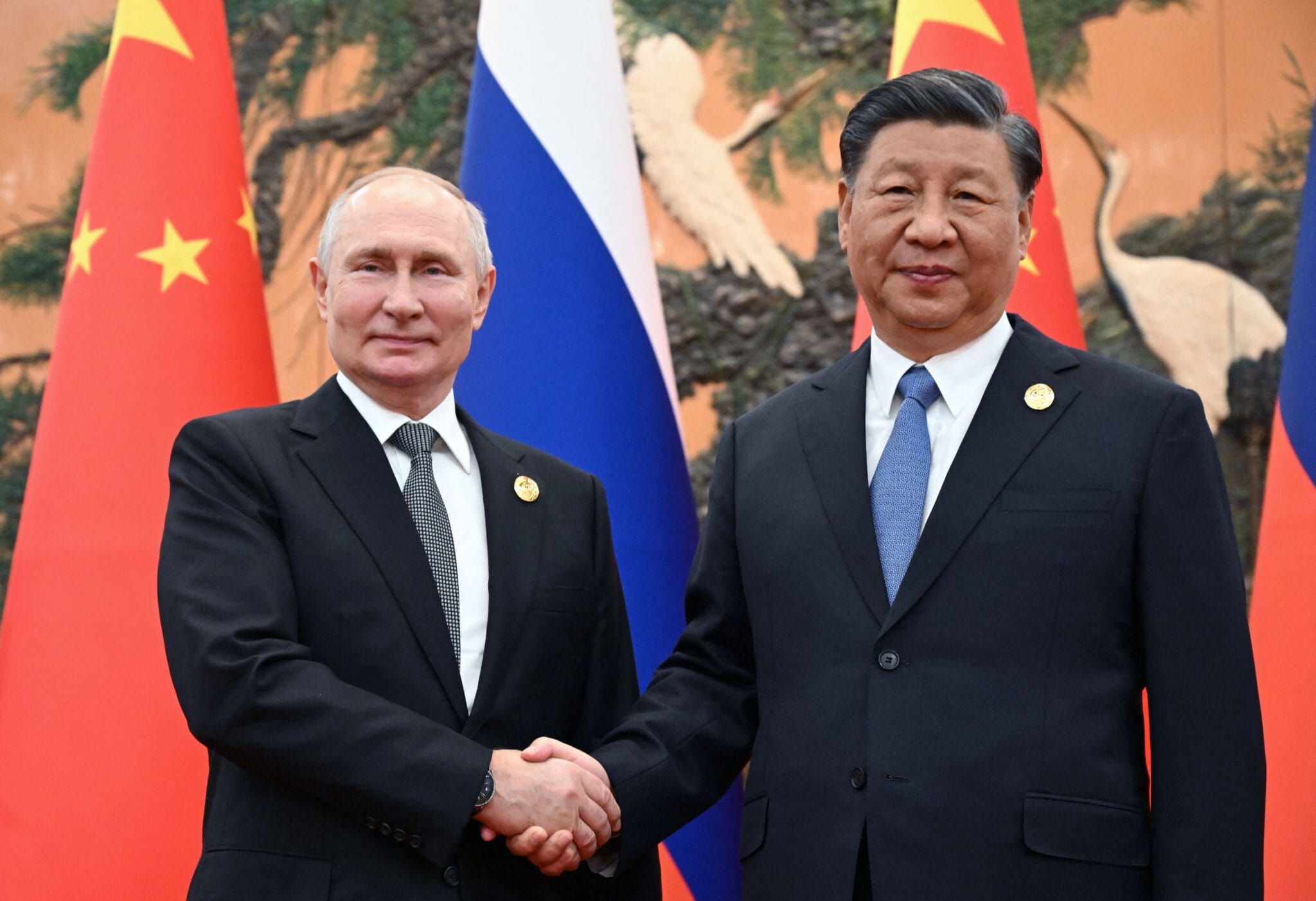
Summary – The Russia-Ukraine conflict is trending toward military and hybrid escalation scenarios as Russia conducted an offensive in Ukraine’s Kharkiv region in a bid to carve out a buffer zone against Ukrainian attacks against Russia’s Belgorod region. Russia also made a push in other regions in eastern and southern Ukraine and could be preparing a push in the north. Ukraine attacked Russian infrastructure, causing logistical disruptions. Russian President Vladimir Putin reshuffled his Cabinet. U.S. Secretary of State Antony Blinken made a surprise trip to Ukraine, and Putin and Chinese President Xi Jinping met in Beijing.

Military escalation scenario
- Russian forces continued to push into Ukraine’s Kharkiv region after opening a new front the previous week, making incremental gains and taking several villages and settlements there. Ukraine said its forces retreated from the border region to “more advantageous positions,” and thousands of civilians have been evacuated, though Ukraine’s military said it had halted Russia’s advance in some parts of the region.
Risk level – medium - Russian forces took a village in Zaporizhzhia in southern Ukraine. The head of Ukraine’s military intelligence warned of a Russian offensive in Sumy in the north.
Risk level – medium
Hybrid escalation scenario
- Ukraine attacked refineries and power facilities in Crimea, causing blackouts in Sevastopol, the base of Russia’s Black Sea Fleet.
Risk level – medium - Russian authorities shut down two airports in Tatarstan following a Ukrainian drone attack.
Risk level – low - A freight train in the Russian city of Volgograd was derailed due to suspected sabotage, and Russia’s security services arrested two people, accusing them of planning to blow up a rail track in Crimea.
Risk level – low
Diplomatic de-escalation scenario
- Putin supported China’s 12-point peace plan to end the war in Ukraine ahead of a visit to Beijing, stating that it addressed the “root causes” of the conflict.
Opportunity level – low - Russia took part in a virtual training exercise with Western countries that simulated a large oil spill in the Arctic, as Norway sought to maintain cooperation with Moscow through the Arctic Council.
Opportunity level – low
U.S./China/Indo-Pacific
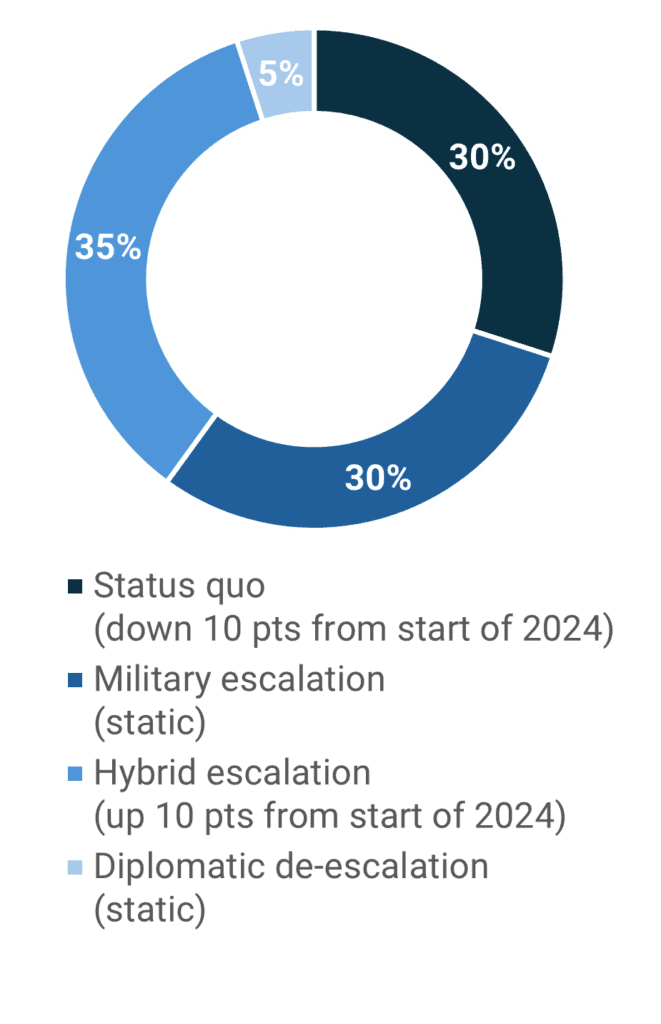
Summary – Tensions in the Indo-Pacific trended toward hybrid and military escalation scenarios ahead of Taiwan’s inauguration of pro-independence President-elect Lai Ching-te. China has increased its military presence near Taiwan and the frequency of cyberattacks against the island. The U.S. imposed major tariff rate increases on Chinese goods including electric vehicles and solar panels.
Military escalation scenario
- The U.S. and Taiwan secretly conducted joint naval drills last month. The report comes as China’s military presence around the island has increasingly crossed into Taiwanese waters and air defense zones at ahead of Taiwan’s May 20 presidential inauguration.
Risk level – medium - The Philippines deployed two ships to a part of the South China Sea where it believes China is building “an artificial island.”
Risk level – low - The South Korean military claimed North Korea launched short-range ballistic missiles off its eastern coast, the day after joint U.S. and South Korean military drills.
Risk level – low
Hybrid escalation scenario
- The U.S. announced increased tariffs on several imports from China, including Chinese electric vehicles (EVs) and solar panels. A 100% tariff rate will be placed on Chinese EVs (up from 25%). Tariffs on Chinese solar panels will double to 50%.
Risk level – medium - Taiwan’s National Security Bureau reported the island is seeing 2.5 million cyberattacks per day, 2.5 times more than the cyberattack surge that occurred in the days before the presidential election in January.
Risk level – medium - The EU is continuing its anti-subsidy investigation on China’s EV sector, with a decision on whether to impose provisional duties on Chinese-made EVs expected before June 5.
Risk level – medium - Putin visited China, where he and Xi agreed to increase trade relations between their countries.
Risk level – low
Diplomatic de-escalation scenario
- No major indicators.
Global Connectivity Tracker
The Global Connectivity Tracker examines the impact of geopolitical dynamics on key themes like the global energy/climate transition, trade, and technology. (Go to the Global Hotspot Tracker)
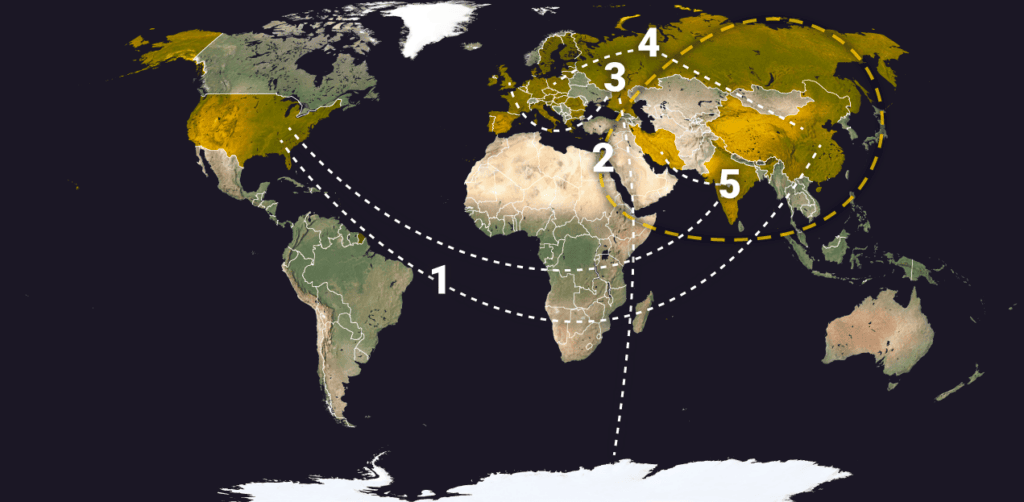
Energy/Climate
- United States/China: Technology
What happened: The United States is increasing tariffs on imports from China, including on semiconductors, electric vehicles, and batteries.
Significance/Outlook: A total of $18 billion worth of Chinese imports will be subject to tariff increases. These tariffs will target crucial industries such as semiconductors, electric vehicles, lithium-ion batteries, essential minerals such as graphite and silicon, steel and aluminum products, and medical supplies. Raising taxes on Chinese imports will put an end to what the U.S. deems unfair trade practices and stop China from flooding American markets with goods. This will give American automakers more flexibility to compete with China and protect U.S. jobs. Because Chinese corporations dominate the supply chain and end products, China is likely to take retaliatory measures.
Risk level – medium - Asia/Middle East: Oil
What happened: Asian refiners are diversifying their oil imports away from the Middle East and increasing imports from the U.S. and Brazil.
Significance/Outlook: While Saudi Arabia maintains its position as a top oil supplier to Asia, Asian refiners are looking to diversify their import destinations. In 2023, China raised its imports of crude oil from Brazil by 52% and from the United States by 81%. This is likely not sustainable due to the increased costs associated with the longer journey. Similarly, oil coming from the Middle East is not as attractive as it used to be due to recent price hikes, such as Saudi Arabia raising its selling price to $2.90 above the Oman/Dubai benchmark. With the new Yulong refinery starting up in China by the end of the year, exporters are expecting demand to increase in the region.
Risk level – low
- Russia/U.K./Antarctica: Energy
What happened: Russia discovered 511 billion barrels’ worth of oil and natural gas in British Antarctic territory.
Significance/Outlook: Experts believe that Russia is challenging the 1959 Antarctic Treaty, which prohibits oil development in the area. Russia has reassured the Antarctic Treaty committee that these activities are for scientific purposes, but experts are skeptical that is the case. Such moves are seen as deliberate attempts to challenge the established standards of seismic survey research, eventually leading to more resource exploration. The heightened tensions might lead to fights over oil and gas resources between countries involved.
Risk level – low/medium - Russia/EU/China: Gas
What happened: Following a sharp drop in European gas trade, Russian natural gas giant Gazprom reported an annual net loss of $7 billion in 2023.
Significance/Outlook: Gazprom, the largest and most profitable oil and gas company in Russia, is likely to face a prolonged period of poor performance as it tries to make up for lost sales in Europe through sales in China and other markets. Europe was Gazprom’s biggest sales market until 2022, when Russia’s conflict with Ukraine prompted the EU to curtail imports. Russia is looking to China to increase pipeline gas sales to 100 billion cubic meters (bcm) by 2030. Gazprom will see some export profits, but it will be difficult to make up for the lost European business. Russia can access China’s market at pricing and revenue levels that are lower than those for its European operations.
Opportunity level – low/medium - India/Iran/U.S.: Chabahar port
What happened: India revived a 2016 deal with Iran to develop the strategic Chabahar port, becoming its first major overseas port venture.
Significance/Outlook: India signed a 10-year contract with Iran to develop and operate the strategic trade route. The Iranian port, a little more than 60 miles (100 kilometers) from the Iran-Pakistan border, will provide India with a direct link to resource-abundant Central Asia without the need to navigate through rival Pakistan. The port is also seen as a counter to Chinese investment in the Gwadar port in Pakistan, about 100 miles from Chabahar. This could also allow India to resume oil shipments from Iran through the Arabian Gulf and Gulf of Oman. Although the port has long-term potential, possible U.S. sanctions likely will dissuade Indian firms from engaging in business with Tehran. Nonetheless, the agreement is viewed as a productive partnership between the two countries.
Opportunity level – low/medium
Key Stats of the Week
- Russia shipped 63.8 bcm of gas to Europe in 2022, a number that fell 55.6% to 28.3 bcm in 2023.
- Gazprom’s exports to the EU and Turkey are down from a 2018 peak of 200.8 bcm.
- Russia was China’s second-largest pipeline gas supplier after Turkmenistan in 2023, delivering 15.5 bcm, accounting for 25% of China’s imports and 15% of Russia’s exports.
- In 2023, Russia delivered pipeline gas to China for $6.60 per million British thermal units (mmBtu).
- Russian gas to Europe averaged $12.90/mmBtu in 2023.
Source: Natural Gas World