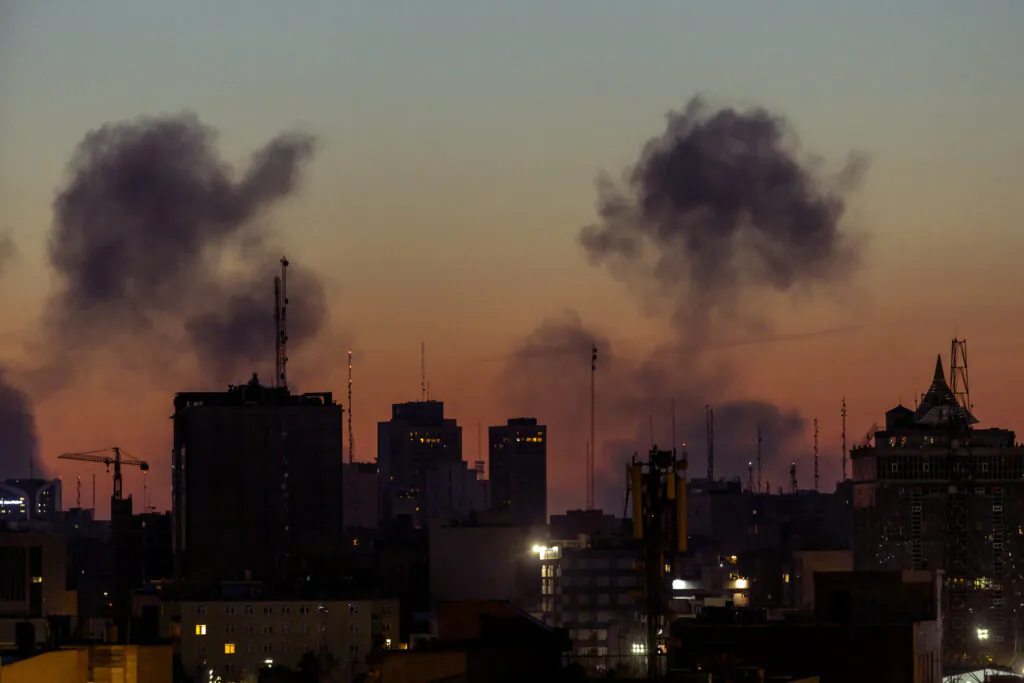
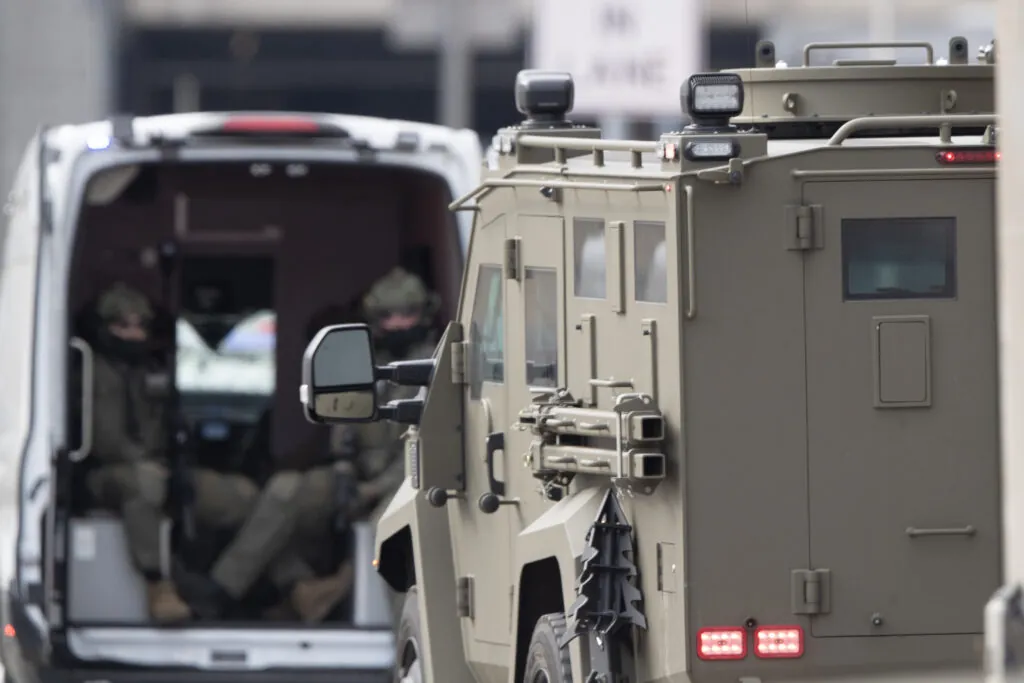
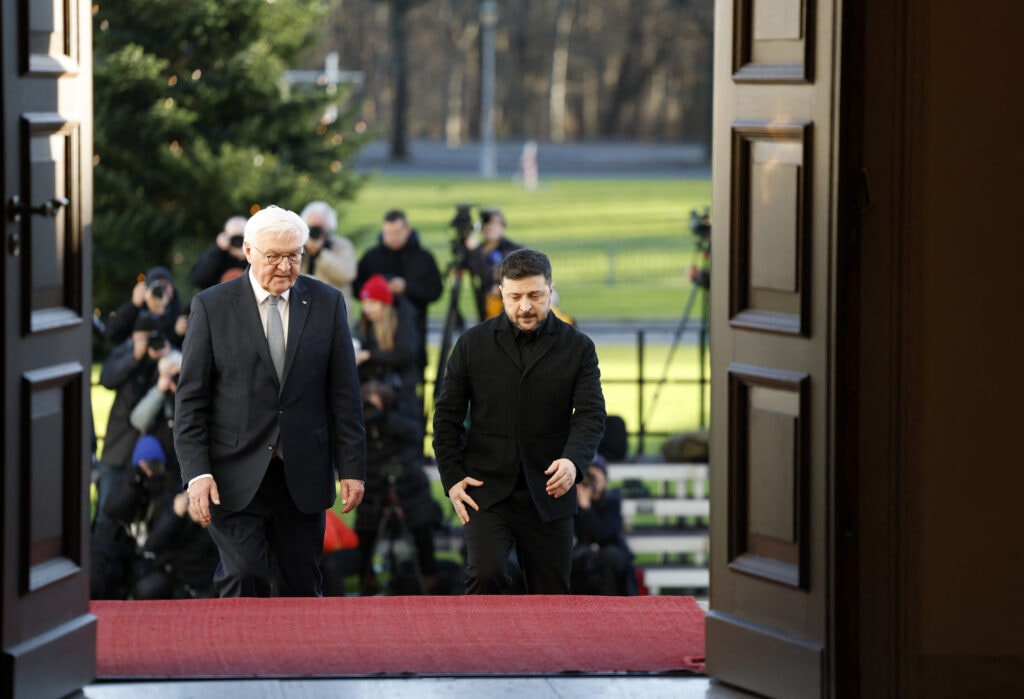
This week, U.S.-Venezuela tensions escalated as U.S. forces boarded and seized a sanctioned oil tanker off Venezuela’s coast. In the Russia-Ukraine conflict, Ukraine launched drone attacks against Moscow and Russian shadow fleet tankers in the Black Sea, while European leaders held a phone call with U.S. President Donald Trump to advance peace efforts. In the Indo-Pacific, fighting resumed between Thailand and Cambodia, and the U.S. conducted a joint military drill with Japan in response to Chinese military deployments near Japanese airspace. In the Middle East, Israel-Hamas ceasefire efforts stalled over issues dealing with the disarmament of Hamas, and Trump delayed the announcement of members of the Gaza Board of Peace until next year.
The Geopolitical Hotspots Monitor examines the outlook for key geopolitical hotspots around the world.
1
Russia/Ukraine Conflict
The Russia/Ukraine war trended toward diplomatic de-escalation as Ukraine presented the White House with a counterproposal to the U.S.-drafted peace plan, and leaders of the E3 participated in a phone call with Trump to advance peace efforts. Meanwhile, Ukraine conducted a drone attack against Moscow and launched separate drone strikes that disabled a Russian shadow fleet oil tanker in the Black Sea and hit a Lukoil platform in the Caspian Sea, causing a halt in production. Ukrainian Armed Forces Commander-in-Chief Oleksandr Syrskyi reported Ukraine’s recapture of 13 square kilometers of land around Pokrovsk. The U.S. House of Representatives approved a version of the National Defense Authorization Act that appropriates $800 million for the Ukraine Security Assistance Initiative over the next two years.
2
Middle East
The Middle East remained at the status quo as implementation of the U.S.-brokered Gaza ceasefire stalled. Trump delayed plans to announce members of the Gaza Board of Peace until “early next year,” and no nations have committed forces to the proposed International Stabilization Force that would take over security responsibilities in Gaza. Khaled Meshaall, a senior Hamas political leader, reaffirmed the group’s refusal to disarm and said it wanted to offer a counterproposal to the U.S. regarding the issue. Husam Badran, another senior Hamas political leader, said it was “not possible” to begin Phase II of the peace process while Israel continued to violate the ceasefire.
3
U.S./China/Indo-Pacific
The Indo-Pacific trended toward military escalation as the U.S. and Japan deployed fighter jets and nuclear-capable bombers in response to mounting Chinese harassment of Japanese aircraft near Japan’s southern island chain. China conducted joint air patrols with Russian aircraft near South Korean airspace. The Thailand-Cambodia ceasefire collapsed as Thailand launched airstrikes against Cambodia, killing a dozen people and displacing tens of thousands more. Trump authorized the sale of Nvidia’s H200 microchips to China, though China is likely to limit their purchase as it continues to seek technological self-reliance.
4
Other Hotspots
United States/Venezuela
The U.S. seized a sanctioned oil tanker off the Venezuelan coast. A joint group of Marines, Coast Guard, and special operations forces units boarded the ship in what the Venezuelan government called an act of “international piracy,” with Trump suggesting the U.S. would keep the seized oil. This represents the latest escalation of the pressure campaign against Venezuelan President Nicolás Maduro. Forecast – military escalation scenario
Democratic Republic of the Congo
The Rwandan-backed M23 rebel group has advanced toward the town of Uvira bordering Burundi, displacing 200,000 people, killing more than 70 civilians, and injuring 80 more. This comes after Trump had hosted the leaders of the DRC and Rwanda to proclaim peace. Forecast – security destabilization scenario
United States/Denmark/Greenland
The new U.S. ambassador to Denmark, Kenneth Howery, met with Danish and Greenlandic officials in Nuuk this week, where the U.S. and Greenland agreed to show “mutual respect” as tensions have been strained in recent months following comments from the U.S. that it was interested in acquiring the semi-autonomous island. Forecast – diplomatic de-escalation scenario
5
Global Connectivity
China/Renewable Energy
Australian research group Climate Energy Finance claims in a new report that Chinese companies have invested $80 billion in clean energy technologies in Asia, Africa, the Middle East, and Latin America in the past year. Since 2023, China has invested a total of $180 billion in green technology such as solar photovoltaics, batteries, and electric vehicles. This spike is due to China’s manufacturing dominance and its demand for new markets to absorb overcapacity.
Forecast – energy enhancement scenario: The funding represents an opportunity for developing countries to reduce reliance on imported fossil fuels and emissions of greenhouse gases as they make the switch to clean energy. Chinese companies’ dominance in global supply chains and economic advantages have made it harder for U.S. companies to compete globally. Increasing prices, tariffs, and legislative uncertainty are just few challenges that energy companies in the United States face.
Brazil/Hydrogen
Manufacturer Electric Hydrogen is establishing a presence in Brazil and Latin America as part of an ambitious plan to reduce reliance on fossil fuels and strengthen Brazil’s position in the global energy sector. Electric Hydrogen uses renewable electricity and advanced Anion Exchange Membrane electrolysis to split water into hydrogen and oxygen for cost-effective, zero-emission hydrogen generation. This green hydrogen production at industrial scale is especially suited to assist Latin American markets to speed up domestic production of green fertilizer, e-fuels, and decarbonization of heavy industries. This the technology allows for competitive domestic production due to abundant renewable energy and high nitrogen fertilizer imports.
Forecast – energy enhancement scenario: The country’s burgeoning green hydrogen economy, powered by its abundant renewable resources, will contribute to decarbonization efforts and energy security in Latin America. The green hydrogen value chain will create skilled electrolyzer, fuel cell, plant building, and operations positions for economic growth.
United States/Energy
U.S. utilities are securing long-term supply agreements with data center operators as the AI boom drives an unprecedented surge in electricity demand. Goldman Sachs estimates that data centers will consume 8% of all U.S. power by 2030, up from 3% in 2022, prompting utilities to expand generation and transmission capacity nationwide. Companies such as NextEra, Constellation, and Entergy have collectively locked in tens of gigawatts of new commitments with Google, Microsoft, Meta, Amazon, and other hyperscalers. These deals span clean energy, nuclear restarts, energy-storage additions, and multigigawatt grid upgrades scheduled to come online between 2026 and 2029. This reflects both the rapid scaling of AI-driven infrastructure and utilities’ ambition to capture future earnings as industrial-scale demand accelerates across the country.
Forecast – energy enhancement scenario: Continued data center expansion could strengthen utilities’ revenue outlook through large, long-term contracted loads. However, rising demand will strain grid reliability, require major transmission investment, and heighten competition for clean energy.