This week, U.S. President Donald Trump prepared for his upcoming meeting with Russian President Vladimir Putin in Alaska, holding calls with European leaders, and warning that Russia may face severe consequences if negotiations falter. In the Indo-Pacific, the U.S. and China have agreed to extend the deadline for the mutual reimposition of tariffs by another […]
The Geopolitical Hotspots Monitor examines the outlook for key geopolitical hotspots around the world.
1
Russia/Ukraine Conflict
Summary
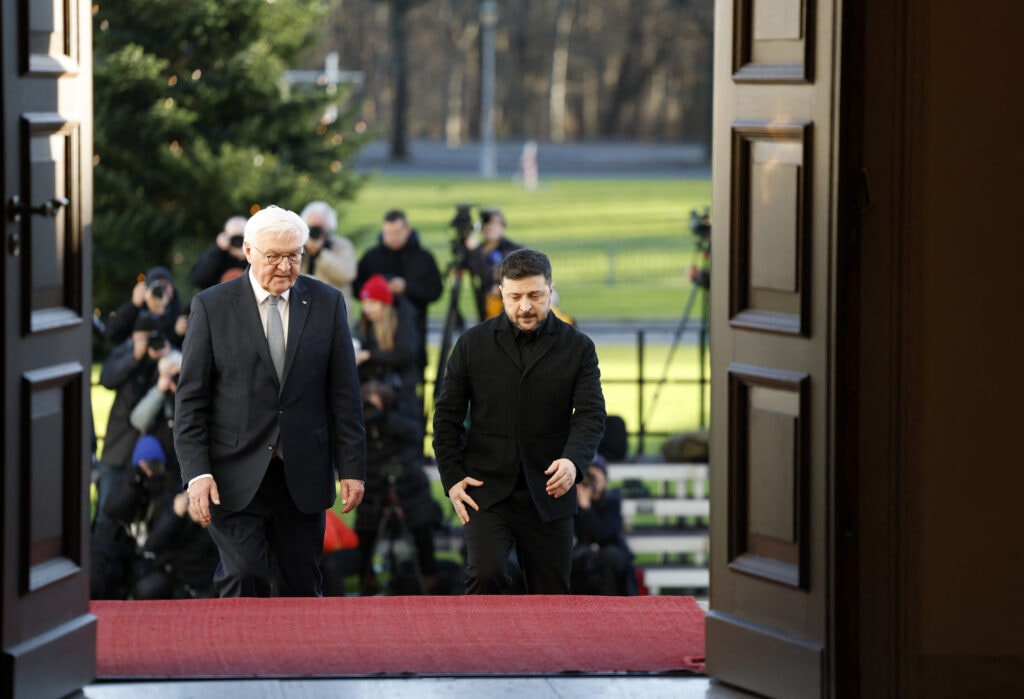
The Russia/Ukraine war trended toward diplomatic de-escalation as U.S. President Donald Trump and Russian President Vladimir Putin are scheduled to meet in Alaska on Aug. 15 to discuss peace efforts in Ukraine. Putin said the U.S. was making “quite energetic and sincere” efforts toward peace and that a nuclear arms deal between Russia and the U.S. will also be discussed at the meeting. Trump has said Russia would face “very severe consequences” if his meeting with Putin ends without achieving tangible progress toward a ceasefire agreement. Trump added that if the meeting “goes OK,” he would like a follow-on meeting to occur “immediately” among himself, Putin and Ukrainian President Volodymyr Zelenskyy. Trump conferred with European, Ukrainian, and NATO leaders about his intentions for the meeting with Putin. Meanwhile, Russia bombarded cities across Ukraine as Russian forces advanced near Pokrovsk in Donetsk.
2
Middle East
Summary
The Middle East trended toward military escalation as Israeli Chief of the General Staff Lt. Gen. Eyal Zamir approved the Israel Defense Forces’ operational concept for the planned offensive to seize and hold Gaza City expected to commence in the coming weeks. Israeli bombardment of Gaza City killed at least 123 Palestinians in a 24-hour period on Aug. 13. Israeli Finance Minister Bezalel Smotrich claimed Trump and Israeli Prime Minister Benjaman Netanyahu support the construction of settlements to cut off East Jerusalem from the rest of the West Bank. Iranian President Masoud Pezeshkian said negotiation with the U.S. was necessary to avoid war, while the U.K., Germany, and France have reiterated their willingness to activate the Joint Comprehensive Plan of Action’s snapback mechanism and reimpose sanctions on Iran if negotiations over its nuclear program do not resume by the end of August. Türkiye announced it will provide weapons, training and logistical support to Syria’s armed forces after Ankara and Damascus signed a “military cooperation accord” on Aug. 13.
3
U.S./China/Indo-Pacific
Summary
The Indo-Pacific trended toward diplomatic de-escalation, as the U.S. and China agreed to extend the Aug. 12 deadline on tariffs by another 90 days as trade negotiations continue. China has demanded that the U.S. ease restrictions on advanced microchip exports as a condition in these negotiations, with Trump acknowledging that as a possibility. China’s Ministry of Commerce has sanctioned two European banks in retaliation for the EU’s latest round of sanctions against Chinese entities linked to Russia, and Beijing cut ties with Czech President Petr Pavel after his recent meeting with the Dalai Lama. Beijing warned companies not to stockpile rare earth elements as a hedge against further export curbs. The U.S. deployed two warships in the South China Sea to shadow a Chinese coast guard vessel following its clash with a Philippine naval vessel near the contested Scarborough Shoal.
4
Other Hotspots
United States
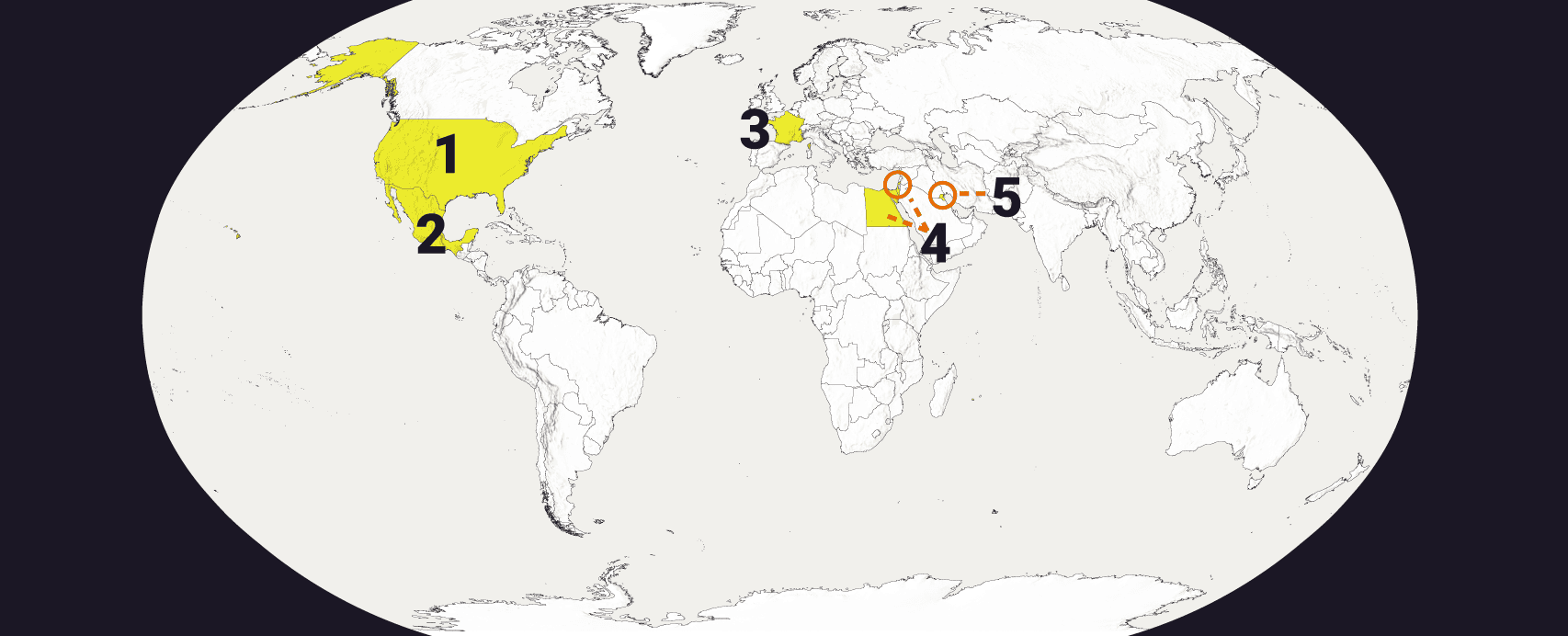
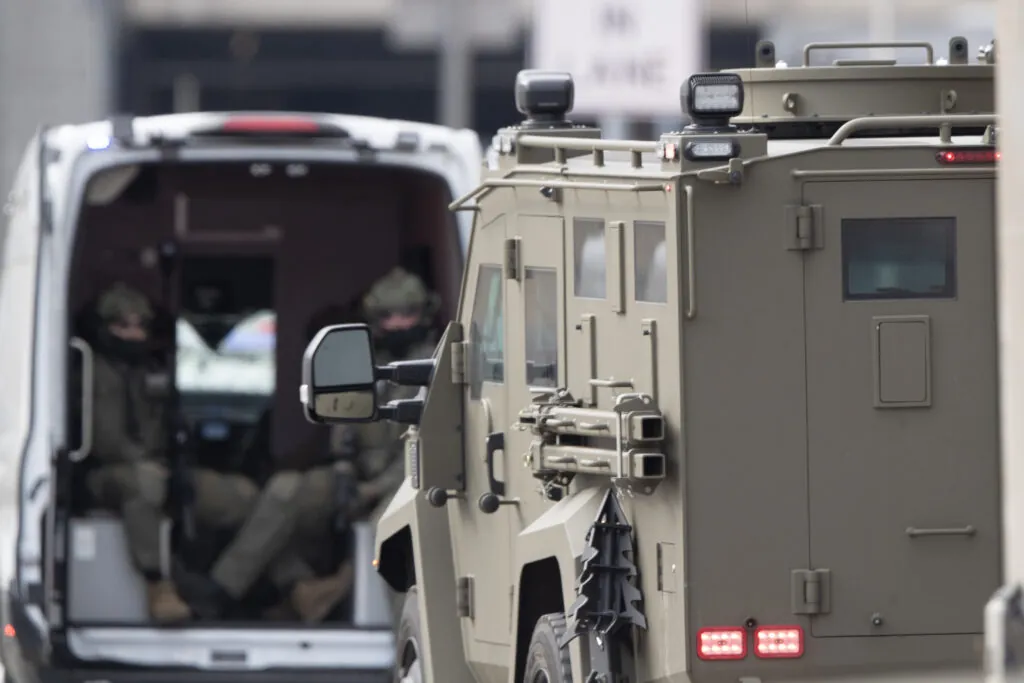
Trump announced the deployment of 800 National Guard members to Washington, D.C., pledging to evict homeless people from the capital and reduce crime rates in the city, despite the city’s mayor arguing that crime rates were low and statistics showing a drop in violent crime. He added that he may deploy other elements of the military “if needed.” Forecast – Political destabilazation scenario
United States/Caribbean
Two anonymous sources told the Reuters news agency that the U.S. Department of Defense will deploy naval and air force assets to the South Caribbean Sea to address threats to national security posed by “narco-terrorist organizations,” including the Sinaloa Cartel. Forecast – Military escalation scenario
Colombia
Colombian senator and presidential candidate for the conservative Centro Democrático party Miguel Uribe Turbay has died two months after being shot during a campaign event in Bogota ahead of 2026 elections. Forecast – Political destabilzation scenario
The Global Connectivity Tracker examines the impact of geopolitical dynamics on key themes like trade, technology, and energy/climate.
1
United States
Electricity
Enhancement Level: Medium
Utilities and developers of renewable energy projects can benefit from rising demand but must invest in capacity, transmission, and storage infrastructure to maintain grid reliability. For natural gas producers, steady industrial and retail demand will help offset reduced use in power generation.
What Happened
The U.S. Energy Information Administration projected that annual U.S. electricity consumption will continue to hit record highs, reaching 4,186 billion kilowatt-hours in 2025 and 4,284 billion kWh in 2026, up from the 2024 record of 4,097 billion kWh.
Significance/Outlook
Energy demand growth is being driven by rising consumption by AI and cryptocurrency data centers, as well as electrification of heating and transportation. The forecast underscores how structural changes in technology and energy use are reshaping U.S. electricity demand. These factors are expected to continue to push greater consumption across the residential, commercial, and industrial sectors. Notably, commercial demand in 2025 is expected to surpass 2024’s record, while residential use will approach historic highs last seen in 2022.
2
Mexico
Oil and Natural Gas
Enhancement Level: Low-Medium
Lower import reliance could strengthen Mexico’s trade balance and hedge against U.S. policy and tariff shifts. However, Mexico’s policy reversal could draw domestic opposition and could be difficult for Pemex to execute, given its high debt load and mixed track record in unconventional projects.
What Happened
Mexico approved a 10-year plan to expand hydraulic fracturing (fracking), reversing a years-long ban on the oil and gas extraction method.
Significance/Outlook
The government and state-controlled Pemex aim to tap the country’s large unconventional reserves to counter declining output from existing oil and gas fields, with initial focus on shale basins such as Burgos. Mexico’s shift marks a significant policy reversal, reflecting mounting pressure to address falling production and reduce dependence on U.S. natural gas imports. For Pemex, fracking offers a pathway to unlock part of Mexico’s 545 trillion cubic feet of technically recoverable shale gas, which is also the sixth-largest reserves globally. The Burgos Basin and other shale regions could bolster domestic supply and enhance energy security.
3
France
Nuclear Energy/ Climate
Disruption level: Low-Medium
Heat waves may bring major disruptions to electricity grids. High river temperatures from a heat wave could diminish French nuclear power output, threatening the power supply and electricity exports to neighboring European countries.
What Happened
According to French government-owned electricity provider Électricité de France, severe heat waves in France caused by climate change-driven warming could diminish the output capacity of the 3.6-gigawatt Bugey nuclear power plant.
Significance/Outlook
Nuclear power plants may face challenges during periods of excessive heat, principally because they depend on water cooling for reactors. Heat waves increase electricity consumption and prices as air conditioning use rises. Demand that exceeds power plant capacity could also trigger blackouts. The heat waves may also raise ambient water temperatures and decrease the availability and effectiveness of cooling water, impairing the ability of nuclear plants to function or even causing them to shut down. The combination of high demand and limited generation increases the risks for grid instability.
4
Israel/Egypt
Natural Gas
Enhancement Level: Low-Medium
While the deal offers long-term economic and energy security benefits for both Egypt and Israel, regional instability carries geopolitical risks that could hamper its implementation.
What Happened
Israel and Egypt have signed a record $35 billion deal under which Israel will supply 130 billion cubic meters (bcm) of natural gas to Egypt through 2040. Deliveries will occur in two phases starting in 2026, with the gas transported via the Arish–Ashkelon pipeline.
Significance/Outlook
The first delivery phase begins in 2026 with 20 bcm, followed by a second phase after the expansion of production in the Leviathan natural gas field and the construction of a new Nitzana pipeline between Israel and Egypt, gradually increasing volumes. This phased rollout means the full economic and energy benefits from the deal will take time to materialize. For Egypt, the deal is both economically vital and politically sensitive. It secures long-term supply to offset falling domestic output and meet surging demand, with Arish-Ashkelon pipeline gas costing about $7.75 per million British thermal unit versus $13.50 for liquefied natural gas. For Egypt, lower costs could ease strain on its national budget reduce LNG imports, and sustain re-exports. For Israel, the deal guarantees a major export market and steady revenue, though political sensitivities, especially amid the Gaza conflict, remain a key risk.
5
Kuwait
Electricity/ Water
Enhancement Level: Medium
The Al-Zour North project is expected to add 2.7 GW of generation capacity, expanding Kuwait’s existing 22 GW of production, which is for the most part fired by fossil fuels, and add 120 million gallons per day of water desalination capacity, a 17.3% increase from the country’s current capacity. This could help ease electricity shortages that have led to disruptions of some industrial and agricultural operations in key areas of the country.
What Happened
The Kuwait Authority for Partnership Projects has signed a contract with Saudi Arabian plant developer ACWA Power and the Gulf Investment Corp. to expand the Al-Zour North power and desalination plant.
Significance/Outlook
The $3.27 billion project will help address electricity shortages in Kuwait. When complete, the expansion will significantly increase the country’s power generation and water desalination capacity. The deal will result in improved energy infrastructure that will help the country manage its ongoing power crisis will be managed. Project funding will come from private sources, while the government will manage the public procurement aspects of the deal.
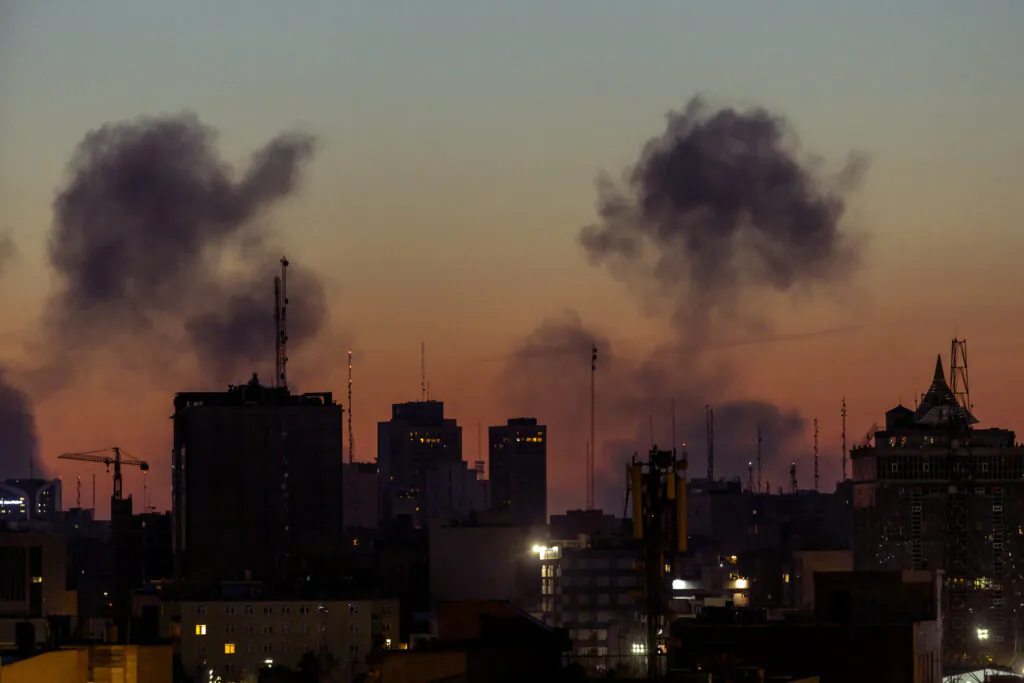
This week, the United States and Israel launched air- and naval-based attacks against Iran, killing Supreme Leader Ayatollah Ali Khamenei. Iran retaliated with strikes against neighboring Gulf states and by closing the Strait of Hormuz. Meanwhile,...