Global Hotspots: Outlook on the U.S.-Iran Ceasefire and Japanese Force Posturing
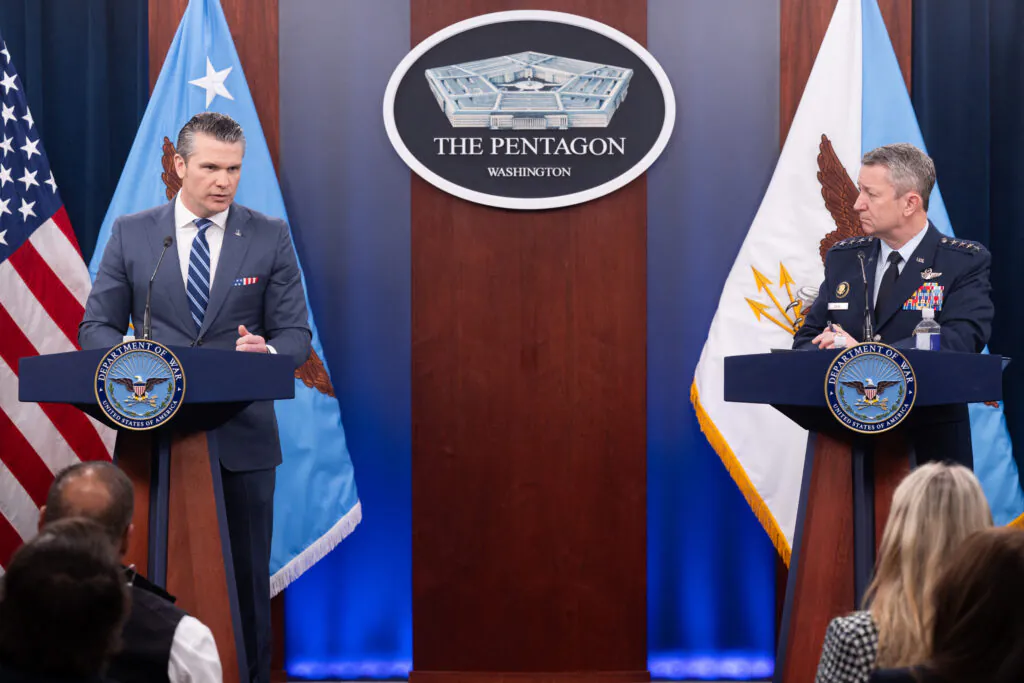
This week, U.S. President Donald Trump extended the ongoing ceasefire with Iran, while Iran rejected negotiations with U.S. Vice President...

This week, several countries, including Canada, India, and other major economies, continued to negotiate with the U.S. ahead of an Aug. 1 deadline to make a trade deal, as the European Union and Asian nations including South Korea reached agreements. In the Indo-Pacific, U.S. Treasury Secretary Scott Bessent met with a Chinese delegation in Stockholm, […]
The Geopolitical Hotspots Monitor examines the outlook for key geopolitical hotspots around the world.
The Russia/Ukraine war trended toward hybrid escalation as Trump shortened the timeline for Russia to agree to a ceasefire with Ukraine, setting an Aug. 8 deadline. U.S. Special Envoy Steve Witkoff is expected to travel to Russia before the deadline, although a meeting agenda has not been confirmed. Kremlin spokesman Dmitry Peskov said talks aimed at normalizing relations between the U.S. and Russia were “going nowhere fast.” In addition to threatening India with 25% tariffs, Trump said he would impose an “unspecified penalty” for its purchases of Russian weapons and energy exports. Meanwhile, the Ukrainian parliament approved legislation to restore the independence of two anti-corruption bodies after severe domestic political backlash. Russian forces reported the capture of the town of Chasiv Yar in Ukraine’s Donetsk region, a claim Ukrainian defense officials refuted. Russia killed dozens of Ukrainians in strikes across the country.
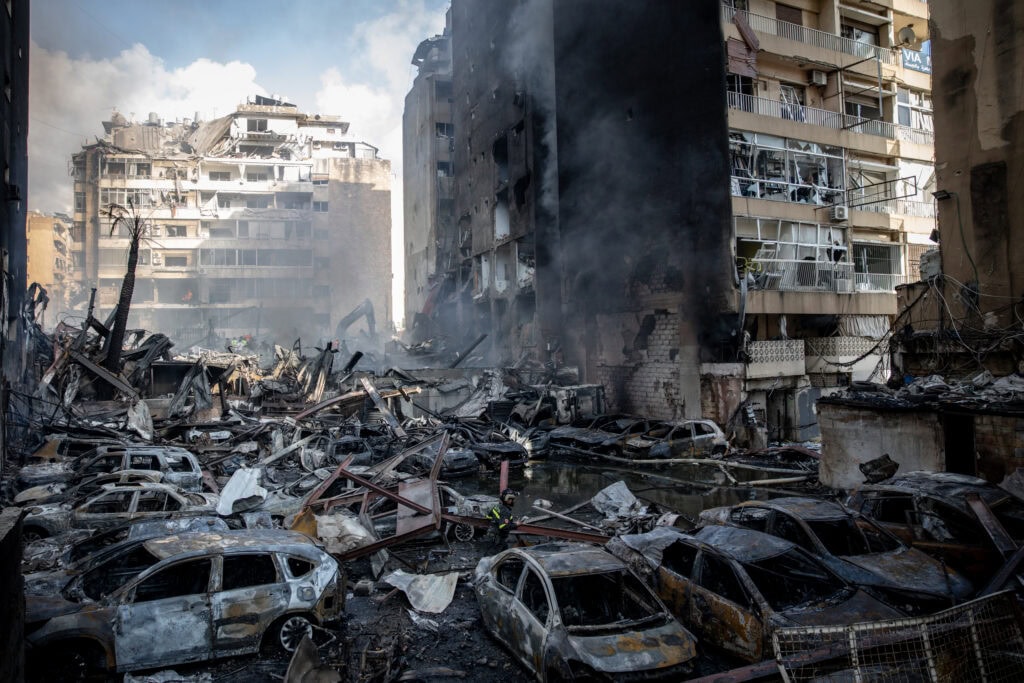
The Middle East trended toward military escalation as Israeli defense officials threatened to annex portions of Gaza if Hamas does not agree to a hostage release deal. The U.N.-led Integrated Food Security Phase Classification initiative warned that “famine is currently playing out in the Gaza Strip.” France and Canda have committed to recognizing a Palestinian state at the next session of the U.N. General Assembly, which is set to start in September. British Prime Minister Keir Starmer said the U.K. will also recognize a Palestinian state at that time unless Israel takes “substantial” steps to end the war in Gaza. Iran agreed to continue consultations with the U.K., France, and Germany over the possibility of returning to negotiations over its nuclear program. The U.S. has enacted sanctions against 115 entities it said are involved in sanctions evasion and energy exports from Iran and Russia to buyers in China. The Trump administration described the targets of the sanctions as a “vast shipping empire” and said the sanctions were the most expansive in terms of size since 2018. Iranian Foreign Ministry spokesman Esmaeil Baqaei said there would be “no discussion” over limiting Iran’s defense capabilities. Hezbollah leader Naim Qassem refused to commit to the group’s disarmament despite ongoing pressure from the U.S. and Lebanese governments.
The Indo-Pacific trended toward diplomatic de-escalation as the Trump administration reached trade deals with South Korea, Cambodia, and Thailand. Bessent met with counterparts from China in Stockholm, where both sides agreed to work on extending the Aug. 12 tariff negotiation deadline. Trump announced the imposition of 25% tariffs on India after voicing his displeasure with India’s trade barriers and trade relations with Russia. China launched a trade investigation into Nvidia’s H20 microchips, citing cybersecurity concerns, despite the company’s recent acceleration of its path toward resuming exports to China. The leaders of Thailand and Cambodia agreed to a ceasefire after five days of fighting, allowing some 300,000 displaced people to start returning.
The U.S. struck a trade deal with the European Union, with imports of European goods now facing a 15% tariff. As part of the deal, trade officials agreed that steel and aluminum trade will go through a quota system with minimal or no tariffs as a way to offer viable alternatives to the heavily subsidized metal exports from China. Forecast – diplomatic de-escalation scenario.
In a social media post, Trump wrote it would be “very hard” to make a trade deal with Canada after Prime Minister Mark Carney announced his country would recognize Palestinian statehood. Forecast – hybrid escalation scenario
More than 1,200 people protesting rising fuel prices were arrested and five were killed in a police crackdown in Luanda after the demonstrations turned violent. Forecast – political destabilization scenario
The Global Connectivity Tracker examines the impact of geopolitical dynamics on key themes like trade, technology, and energy/climate.
Enhancement Level: Medium
The plan offers a comprehensive approach to enhancing U.S. AI leadership through the use of deregulation and investment incentives. While providing a general outline of an AI strategy, many of the specific policy initiatives must still be formulated.
U.S. President Donald Trump has unveiled his administration’s AI Action Plan, a policy framework that outlines 90 positions on the development of the technology under three main pillars meant to speed innovation, build out U.S. AI infrastructure, and make the country a leader shaping international AI standards and security.
The action plan calls for increasing federal funding for AI research and development, promoting public-private collaborations, and commercializing AI technologies. The plan emphasizes creating infrastructure, particularly energy resources, to fuel AI development and implementation by streamlining permitting, upgrading electrical grids, exploring new energy sources, and using AI to increase energy efficiency.
Enhancement Level: Low
Given Venezuela’s constrained output and the lack of infrastructure or immediate investment to significantly expand production, the impact on global markets is expected to be marginal.
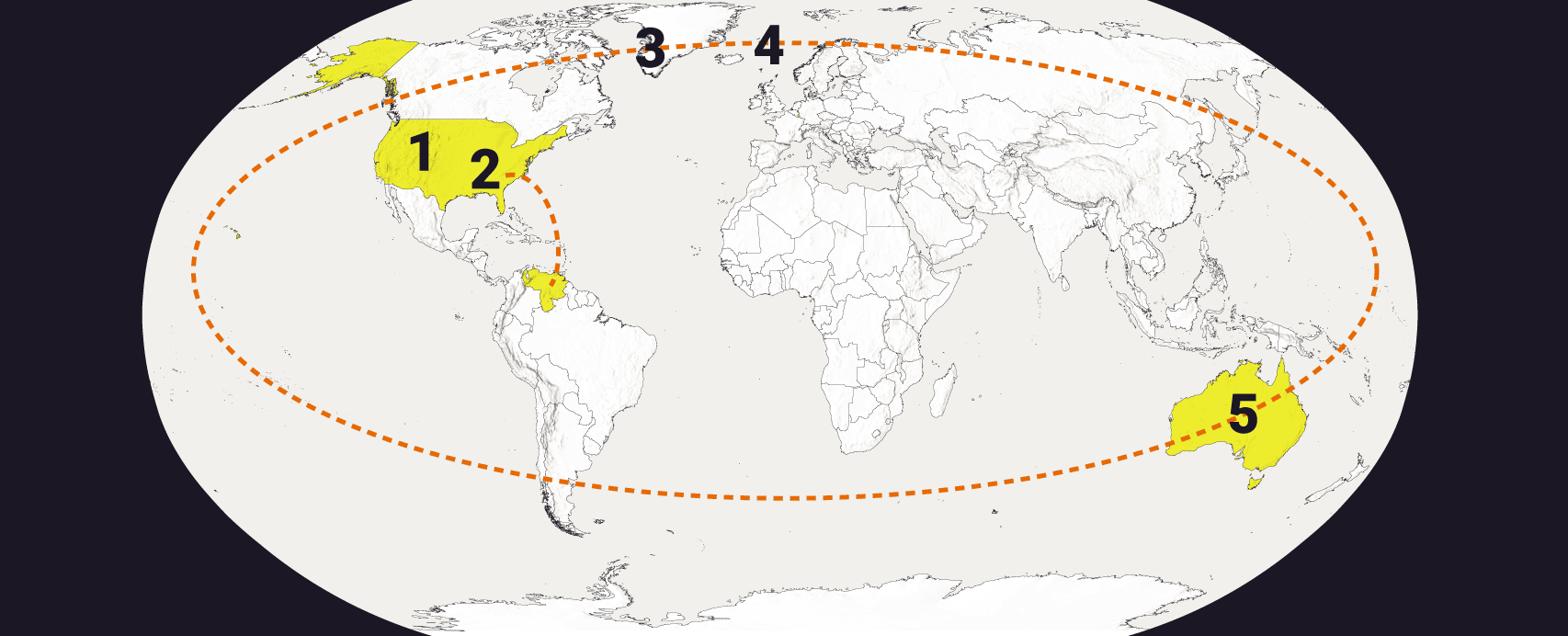
The White House has authorized Chevron to resume oil production operations in Venezuela.
This decision represents a reversal from the Trump administration’s position earlier this year. In February, the president had formally revoked the license that had allowed Chevron to operate in Venezuela, part of his administration’s intensified pressure on the regime of President Nicolas Maduro. The license’s renewal follows a prisoner swap involving all 10 U.S. citizens who had been imprisoned in Venezuela. However, the policy reversal does not signal a full normalization of ties as the terms prohibit any financial benefit to the regime; Chevron will not pay royalties or taxes under the current agreement. While the license allows a modest export boost, Venezuela’s overall output remains constrained at around 900,000 barrels per day.
Enhancement Level: Medium
Although the U.N. reports found favorable progress in adoption of renewable energy, greenhouse gas emissions linked with climate change have continued to rise along with electricity demand. The U.N. cited the growth of artificial intelligence and the power-hungry data centers that support it as a chief driver of increasing power consumption.
Two U.N. reports analyzing the global energy market in 2024 indicate that renewable energy reached an economic tipping point after which the costs of solar, wind, and hydropower infrastructure will continue to drop, promulgating more widespread adoption. Continued momentum for renewables will make fossil fuels relatively more expensive, the reports concluded.
A multiagency U.N. analysis found that renewables accounted for over 90% of all new electric capacity added in in 2024 and that the sector had attracted $2 trillion in global investment. During the same period, there were about $1.2 trillion in fossil fuel investments. The green energy surge was most pronounced in China, India, and Brazil. One of the reports, which examined the cost of renewable energy, found that solar energy is 41% cheaper and wind is 53% cheaper than the equivalent amount of energy generated by fossil fuels.
Disruption level: Medium
The retreat from green hydrogen projects is delaying decarbonization in key sectors and creating investment uncertainty that could hinder broader clean energy transitions.
Major green hydrogen developers, including Iberdrola, EDP, and other firms across Europe, Asia, and Australia, have canceled or delayed projects due to high costs and weak demand.
The retreat in green hydrogen threatens progress toward 2030 and 2050 climate targets. Production costs remain up to three times higher than natural gas, which has significantly weakened demand from potential buyers. Only about one-fifth of EU hydrogen projects are expected to come online by 2030, totaling around 12 gigawatts (GW) of capacity, far below the EU’s 40 GW target. Additionally, demand for green hydrogen from sectors like steel and transport has fallen short of expectations due to high production costs that have made the fuel economically unviable for heavy industry. This has led countries like France, Portugal, and Italy to lower their national targets and scale back investment plans.
Enhancement Level: Medium
Renewable energy and energy storage remain priorities for Australia's energy portfolio to advance decarbonization and strengthen the economy. The Green Bank’s investment is essential to meeting those goals, delivering clean energy to consumers, and providing employment.
Australia’s Green Bank invested $2.29 billion in renewable energy and grid infrastructure projects last year to promote the energy transition.
This investment in renewable energy is significant to Australia’s goals for reducing greenhouse gas emissions and ensuring energy security. Australia’s reliance on coal-fueled electricity generation, which accounts for almost half of total generation, ranks it among the world’s most polluting countries. Australia plans to retire all coal-fired power stations by 2038 and reach 80% renewable energy by 2030. The Green Bank investment in clean energy technologies has doubled for fiscal year 2024-2025 compared to previous year. The fund was used to build renewable energy projects and transmission lines and upgrade grid infrastructure.
This week, U.S. President Donald Trump extended the ongoing ceasefire with Iran, while Iran rejected negotiations with U.S. Vice President...
This week, the United States imposed a blockade of Iranian ports in the Strait of Hormuz during the ongoing two-week...
This week, the U.S. and Iran agreed to a two-week ceasefire following President Donald Trump’s threats of targeting Iran’s power...
This week, the conflict in Iran intensified as the U.S. bombed military facilities on Iran’s Kharg Island and Israel bombed key Iranian energy facilities, with Iran responding...