Global Hotspots: Outlook on the U.S.-Iran Ceasefire and Japanese Force Posturing
This week, U.S. President Donald Trump extended the ongoing ceasefire with Iran, while Iran rejected negotiations with U.S. Vice President...

This week, the U.S. and Ukraine signed a critical minerals deal after months of tense negotiations, while Russia proposed a ceasefire from May 8 to 10. In the Indo-Pacific, effects of the U.S.-China trade dispute are being felt across export sectors, while Pakistan warned of imminent attacks from India following last week’s mass shooting in […]
The Geopolitical Hotspots Monitor examines the outlook for key geopolitical hotspots around the world.
The Russia-Ukraine war trended toward diplomatic de-escalation as U.S. Treasury Secretary Scott Bessent and Ukrainian First Deputy Prime Minister Yulia Svyrydenko signed a critical minerals deal on April 30 in Washington, D.C. The agreement follows months of extensive negotiations and a one-on-one meeting between U.S. President Donald Trump and Ukrainian President Volodymyr Zelenskyy on the sidelines of Pope Francis’ funeral on April 26 at the Vatican. Russian President Vladimir Putin proposed a 72-hour ceasefire from May 8-10. Kyiv rejected the proposal, insisting instead on a ceasefire of 30 days. Putin claimed all remaining Ukrainian soldiers have been pushed out of Kursk, describing the invasion as a “complete failure,” but Zelenskyy claimed fighting is ongoing. North Korea for the first time publicly acknowledged the deployment of its soldiers to Russia, after which Putin expressed his thanks. Meanwhile, Russian drone and missile strikes hit cities across Ukraine.
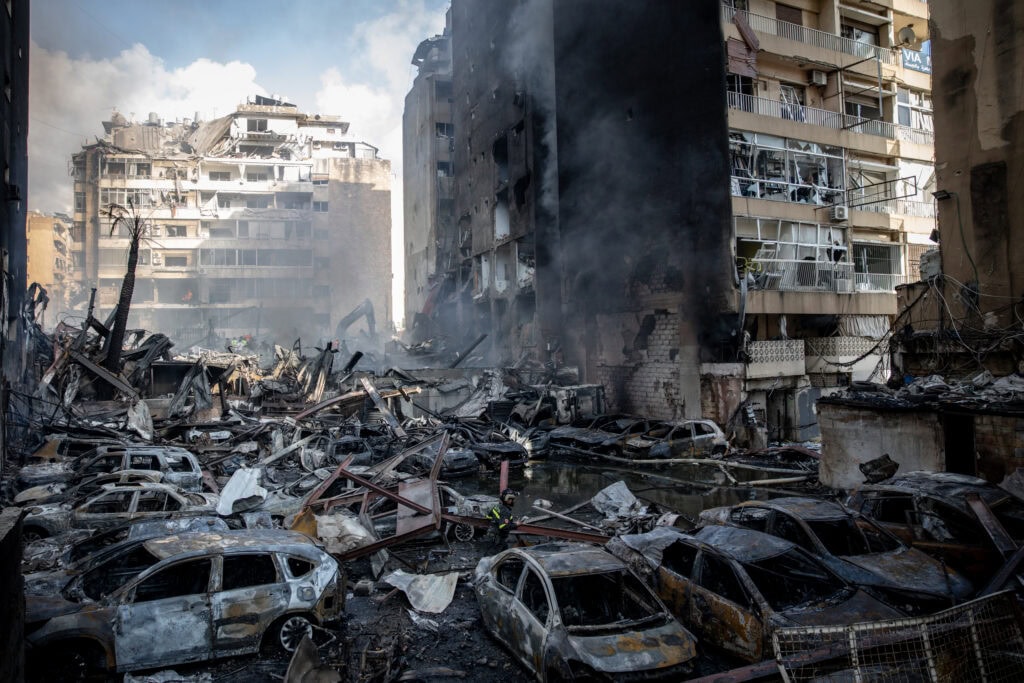
Conflicts in the Middle East trended toward diplomatic de-escalation as both U.S. and Iranian officials expressed commitment to rescheduling nuclear talks postponed by Omani officials, who cited “logistical reasons.” The talks were to take place in Rome on May 3 following recent negotiations in Oman that both sides described as constructive. Iranian diplomats plan to meet with representatives from the U.K., France, and Germany on May 2. Israeli officials announced the country had bombed at least 50 targets in Lebanon throughout April. Israel conducted strikes against Syrian security forces and on a location near the residence of Syrian President Ahmed al-Sharaa and warned the Syrian government to protect the Druze community. Israeli airstrikes killed dozens of Palestinians in Gaza as the Israeli blockade preventing humanitarian aid from entering the strip passed the two-month mark. Meanwhile, the U.S. continued its air campaign against al-Houthi forces in Yemen, with the U.K. participating in at least one attack.
Tensions in the Indo-Pacific trended toward hybrid escalation as tariffs brought on by the U.S.-China trade dispute have forced exporters to seek alternative markets. Both the Chinese and U.S. economies have contracted since the start of trade escalations. Chinese exports of used cooking oil to the U.S. are set to drop, and U.S. exports of soybeans and pork to China fell by 50% and 72% respectively. Chinese state media released statements vowing to “never kneel down” to U.S. pressure but signaling openness to negotiations. A Taiwanese delegation of lawmakers visited Washington, D.C., to facilitate trade discussions, and the Legislative Yuan is reviewing laws for tech export controls, ensuring that the most advanced tech remains in Taiwan. China announced it had seized a disputed island with the Philippines in the South China Sea, a claim Manila later asserted was false. Beijing lifted sanctions against five members of the European Parliament and its subcommittee on human rights as it continues its diplomatic outreach efforts to its trading partners.
The Trump administration has removed Mike Waltz from his role as national security advisor and nominated him as U.S. ambassador to the U.N., while Secretary of State Marco Rubio was nominated as interim national security advisor. Forecast – political destabilization
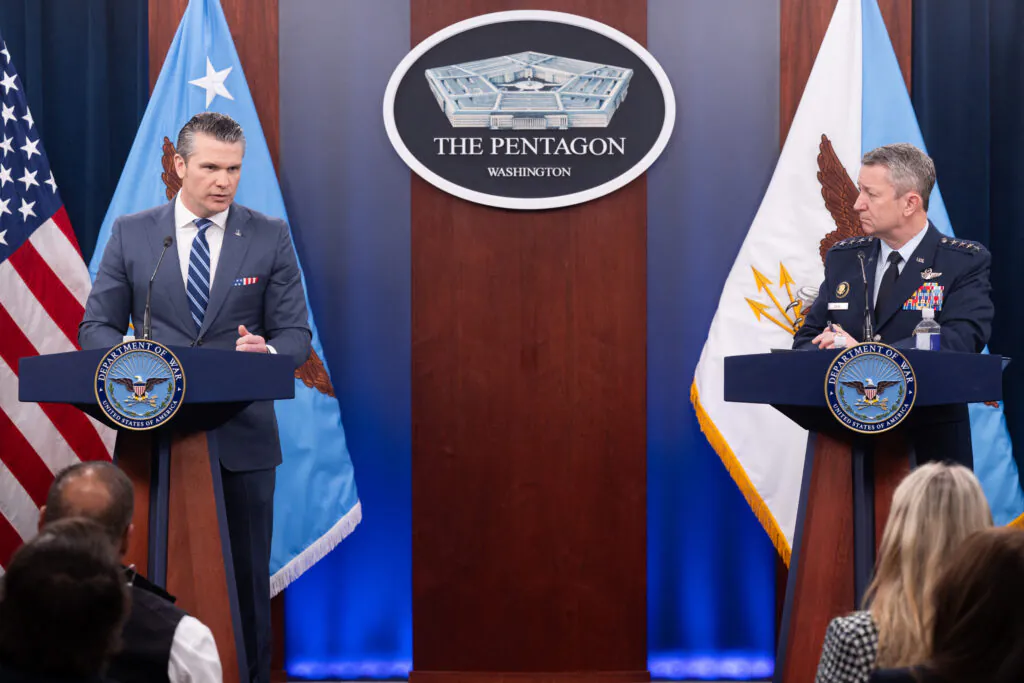
The countries’ militaries exchanged cross-border small-arms fire as tensions escalated after a massacre in Indian-controlled Kashmir that India accused Pakistan of backing. Pakistan’s information minister said Wednesday the country had received intelligence of an imminent large-scale attack from India. Rubio called the leaders of both countries to urge a de-escalation of tensions while expressing support for India’s fight against extremism. Forecast – military escalation scenario
Both countries’ leaders signed an agreement to respect each other’s sovereignty and to draft a peace deal by May 2 during an April 25 visit to Washington. Forecast – diplomatic de-escalation scenario
The Global Connectivity Tracker examines the impact of geopolitical dynamics on key themes like trade, technology, and energy/climate.

Enhancement Level: Low
Disruption level: Low
Deep sea critical minerals are essential for sustainable energy solutions, but harvesting them from the ocean floor threatens biodiversity, habitats, and marine carbon storage.
U.S. President Donald Trump signed an executive order to expand deep-sea mining as a means of increasing U.S. access to nickel, copper, and other critical minerals.
The order instructs the National Oceanic and Atmospheric Administration to expedite permits for mining operations in both U.S. and international waters. This is part of an effort to counteract China’s extensive control over key critical minerals. U.S. waterways hold an estimated 1 billion metric tons of these minerals, including manganese, nickel, and copper. Deep-sea science and technology and seabed mineral resources are vital to U.S. national security and economic interests.
Disruption level: Medium
While the exact cause of the grid failure, the largest in Spanish and Portuguese history, is unknown, Spain’s heavy integration of variable renewables without adequate backup power sources could lead to a repeat if the grid becomes unbalanced.
The failure of the Spanish electrical grid precipitated widespread blackouts on the Iberian Peninsula on Monday afternoon, leaving tens of millions of people without power, stranding commuters, knocking out phone service, shutting down businesses, and causing economic losses that one investment bank estimated could total as much as 4.5 billion euros.
Although authorities ruled out the possibility of a cyberattack, they could not pinpoint the cause of the grid failure and ordered an investigation to be completed within 10 days. Spain’s grid, which feeds Portugal’s, is heavily dependent on solar power and has little battery backup capacity. Additionally, the country’s nuclear power plants were offline at the time of the grid failure. In its annual report published in February, Redeia, the company that owns Spanish electricity provider Red Eléctrica, stated the Spanish grid was vulnerable to “disconnections due to the high penetration of renewables without the technical capacities necessary for an adequate response in the face of disturbances.”
Enhancement Level: Low/Medium
While the deal holds strategic significance, it remains vulnerable to external pressures as well as internal economic, technical, and political limitations, making its practical impact uncertain in the short term.
During a visit to Moscow by Iranian Oil Minister Mohsen Paknejad in April, Russian firms finalized four agreements to develop seven oil fields in Iran with an estimated investment of $4 billion.
This agreement deepens the Russia-Iran energy partnership as both countries face extensive Western sanctions. Critical details, including the timeline, location, and production capacity of the planned oil fields, remain under negotiation. Beyond oil field development, the two sides are exploring potential Russian gas imports into Iran, aimed at enabling future swap operations and regional gas transit. Iran, which holds the world’s second-largest proven natural gas reserves after Russia, has expressed ambitions to position itself as a regional gas hub. If realized with Russian support, such a development could introduce new regional competition in liquefied natural gas markets and shift energy trade dynamics toward Asia. Additionally, both countries announced plans to double their annual bilateral trade to $10 billion. For Iran, these agreements offer vital foreign investment, technical expertise, and new economic opportunities. For Russia, they provide alternative energy outlets and commercial pathways to bypass sanctions.
Enhancement Level: Medium
Completion of the refinery project would boost India’s refining capacity while providing Saudi Arabia with stable long-term crude export outlets to one of the world’s fastest-growing energy markets.
India and Saudi Arabia have signed multiple agreements to deepen cooperation in energy and climate policy.
One major outcome of the agreements is the expansion of joint plans to build oil refineries in India. Initially announced in 2018, the agreement centered on the $44 billion West Coast refinery project in Roha, Maharashtra state. The 2025 agreements revive this project and expand it to include a second refinery, the location of which has not yet been disclosed. The new agreements also broaden cooperation in petrochemicals, electricity, renewable energy, and climate initiatives, signaling strategic energy ties beyond oil. More broadly, the agreements reflect Saudi Arabia’s strategic effort to deepen ties with Asian economies as part of its “Look East” policy aimed at diversifying its economic partnerships beyond traditional Western allies.
Enhancement Level: Low/Medium
Nuclear power expansion will boost China's energy security, grid stability, and global climate change mitigation, but the new reactors represent only a moderate increase in the share of nuclear power compared to fossil fuel and renewables. The amount of electricity generated by nuclear power has been gradually increasing, but it constitutes a lower portion of China's clean energy mix compared to solar and wind.
China’s State Council has authorized the construction of 10 new nuclear reactors spread over five locations, further enhancing the country’s fast-growing nuclear power industry.
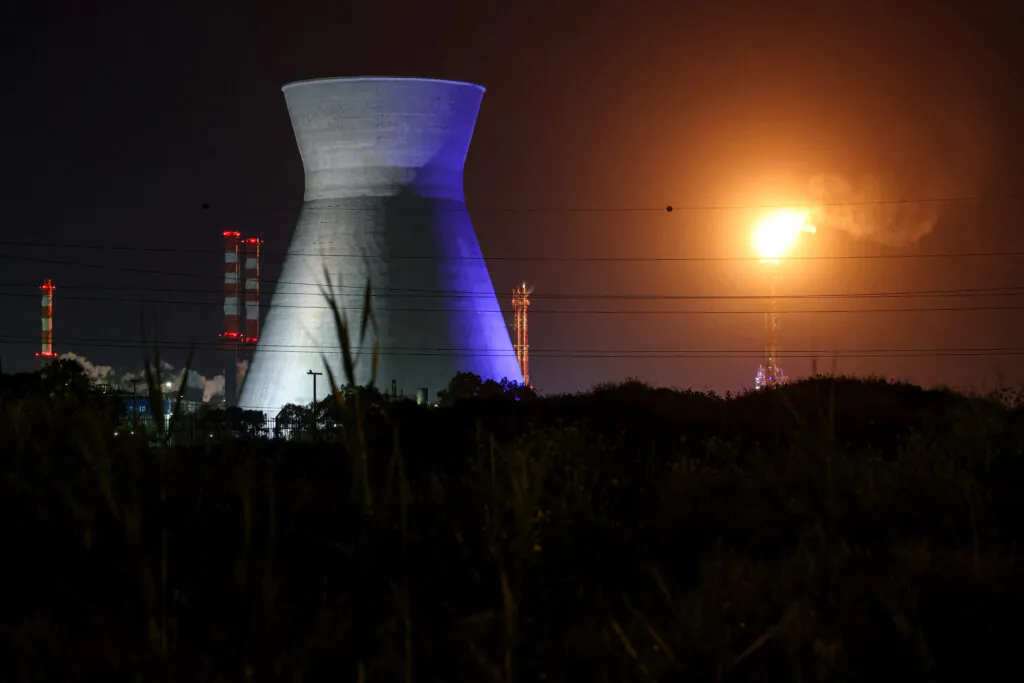
The nuclear power industry in China is undergoing a period of rapid expansion and growth, with a $27.4 billion investment in the construction of these reactors, which will have a total generation capacity of 12 gigawatts (GW). China currently has 102 nuclear reactors either operational or under construction, with a combined capacity of 113 GW. Because China continues to be the globe’s largest consumer of coal-fired electricity and its largest emitter of greenhouse gases, the effort to expand nuclear power aligns with its goal to attain carbon neutrality by 2060.
This week, U.S. President Donald Trump extended the ongoing ceasefire with Iran, while Iran rejected negotiations with U.S. Vice President...
This week, the United States imposed a blockade of Iranian ports in the Strait of Hormuz during the ongoing two-week...
This week, the U.S. and Iran agreed to a two-week ceasefire following President Donald Trump’s threats of targeting Iran’s power...
This week, the conflict in Iran intensified as the U.S. bombed military facilities on Iran’s Kharg Island and Israel bombed key Iranian energy facilities, with Iran responding...