Global Hotspots: Outlook on the U.S.-Iran Ceasefire and Japanese Force Posturing
This week, U.S. President Donald Trump extended the ongoing ceasefire with Iran, while Iran rejected negotiations with U.S. Vice President...

This week, the U.S. submitted a proposal to end the war in Ukraine that was swiftly rejected by Kyiv, and the Russian military continued its bombardment of Ukrainian cities. In the Indo-Pacific, Beijing denied assertions by the Trump administration that trade negotiations were ongoing, calling for the U.S. to remove its tariffs first, while South […]
The Geopolitical Hotspots Monitor examines the outlook for key geopolitical hotspots around the world.
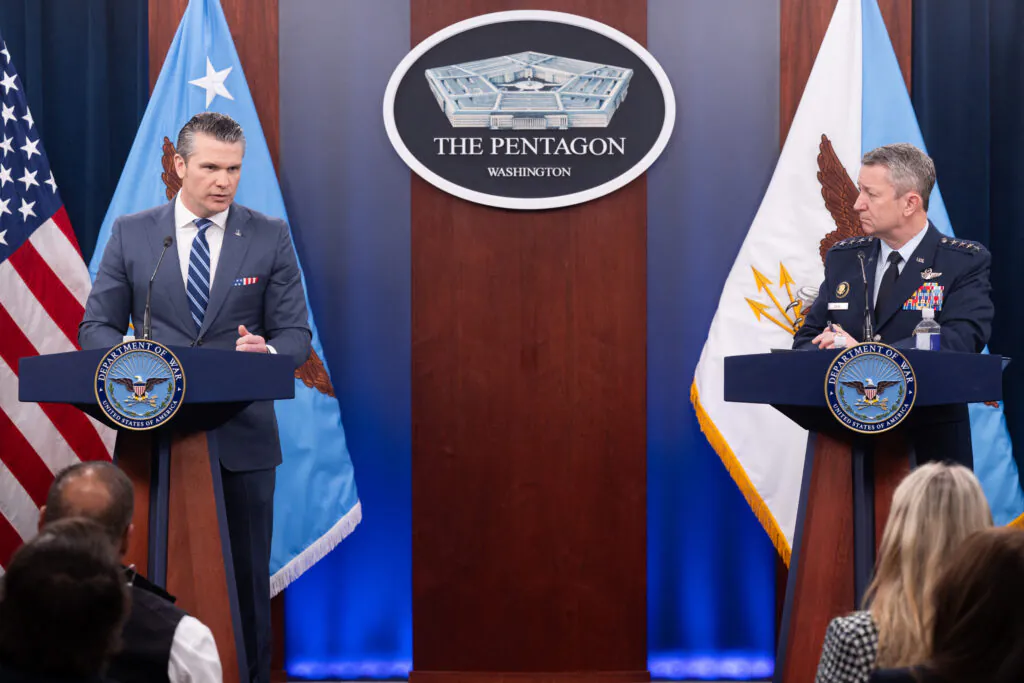
The Russia-Ukraine war trended toward military escalation as Ukraine resisted a U.S. proposal to end the war with Russia, while Russian airstrikes killed civilians across Ukrainian cities. Washington’s proposed terms would grant Russia permanent control over much of the Ukrainian territory it currently occupies, force Ukraine to renounce NATO aspirations, and would see the U.S. recognize Crimea as Russian territory. After Ukrainian President Volodymyr Zelenskyy quickly rejected the deal, U.S. President Donald Trump and Vice President JD Vance repeated recent threats that the U.S. would abandon its peace efforts if a deal was not made shortly, with Trump accusing Zelenskyy of prolonging the war. Mayor of Kyiv Vitali Klitschko said Ukraine may “need to give up” some territory to achieve peace. High-level peace talks between the U.S., Ukraine, and key European allies that were to be hosted in London were downgraded to lower-level technical talks after U.S. Secretary of State Marco Rubio declined to participate, citing a “scheduling conflict.” Russian President Vladimir Putin offered to halt the war along current lines during a meeting with U.S. Special Envoy Steve Witkoff in St. Petersburg on April 11. Witkoff met with Putin again on April 25 in Moscow to discuss peace efforts, and the same day, Russian Lt. Gen. Yaroslav Moskalik was killed by a car bomb in Moscow. Ukrainian Prime Minister Denys Shmyhal announced after a meeting with U.S. Treasury Secretary Scott Bessent that the U.S. and Ukraine are negotiating a free trade zone as another round of negotiations over a minerals deal began April 24.
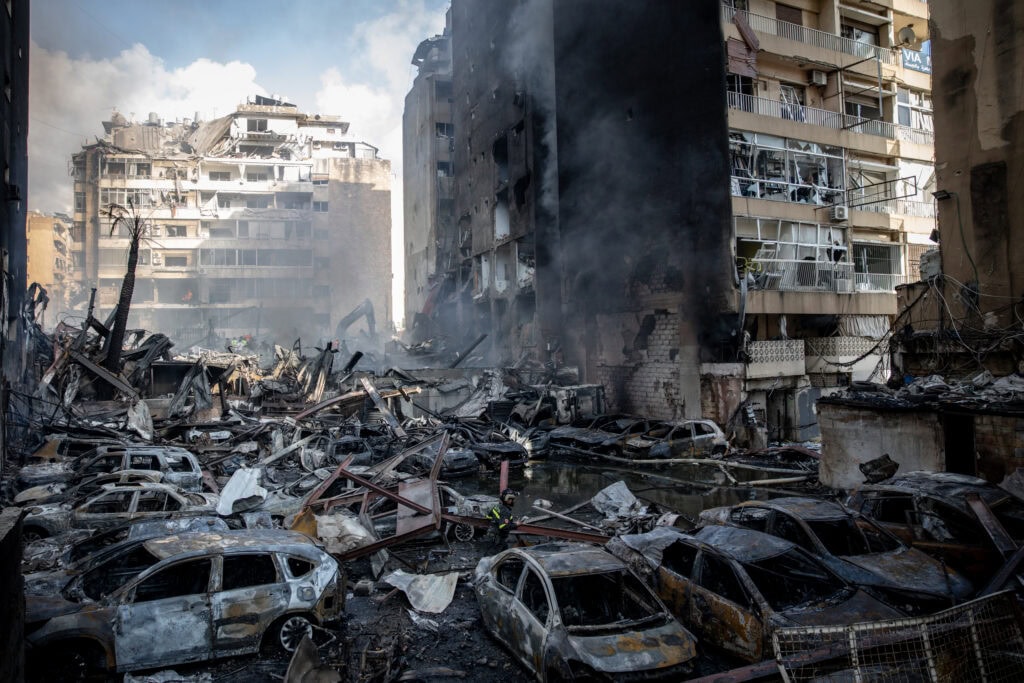
Conflicts in the Middle East trended toward diplomatic de-escalation as the U.S. and Iran are scheduled to host senior-level talks and separate technical-level talks in Oman on April 26. The meetings were scheduled after U.S. and Iranian officials agreed to work toward a new nuclear deal, following indirect meetings between Witkoff and Iranian Minister of Foreign Affairs Abbas Araghchi in Rome on April 19. Trump stated he is willing to meet directly with Iranian leaders but that the U.S. may join Israel in striking Iran if a deal is not reached. Meanwhile, Syrian President Ahmed al-Sharaa stated that Syria is willing to normalize relations with Israel and join the Abraham Accords under the “right conditions.” Israeli Prime Minister Benjamin Netanyahu is scheduled to meet with Azerbaijani President Ilham Aliyev in May to discuss possible Azerbaijani inclusion in the Abraham Accords, as well as security issues concerning Syria and Turkey. The U.S. continued its air campaign against al-Houthi militants in Yemen, and the militants fired a missile at northern Israel for the first time. Israeli airstrikes killed dozens of Palestinians in Gaza, and Israeli Finance Minister Bezalel Smotrich called for Israel to occupy and militarily govern the entire territory. Egyptian and Qatari mediators presented an Israeli delegation in Cairo with a proposal entailing a five- to seven-year truce, hostage/prisoner exchanges, and a complete Israeli withdrawal from Gaza. Netanyahu did not comment on the proposal but renewed his vow to continue the war until Hamas was destroyed. Jordan banned the Muslim Brotherhood after Jordanian officials accused the organization of planning an attack inside Jordan using drones and high explosives.
Tensions in the Indo-Pacific trended toward hybrid escalation as China announced it would carve out exemptions to its tariffs on imported U.S. semiconductors, though it denied claims made by the Trump administration that trade negotiations were ongoing. Trump stated he would be “very nice” to China in future negotiations. Chinese state-backed companies have cut private equity investments in the U.S., and Beijing imposed further sanctions on U.S. officials. Beijing formally requested South Korean companies to limit their exports of products containing Chinese rare earth minerals to U.S. defense firms, while South Korean officials met with U.S. officials for a first round of trade negotiations. Japanese officials stated they would push back against U.S. pressure to form a trade bloc against China. U.S. tariffs against Southeast Asian solar imports went into effect following a year-long anti-subsidy investigation, and a U.S.-based producer of rare earth metals stopped its shipments to China for refinement.
India announced new measures to reduce relations with Pakistan – including suspending water-sharing treaties, closing key land borders, and restricting visas for Pakistani citizens – after a suspected militant group opened fire at a tourist destination in Kashmir, killing 26 people. Pakistan in turn closed off its airspace for Indian airlines and called any attempt by India to divert or halt water flowing to Pakistan as “an act of war,” while India started its manhunt for members of the group in India-administered Kashmir. Forecast – military escalation scenario
Armenia’s Ministry of Defense called for Azerbaijan to investigate reports of Azerbaijani armed forces opening fire on a residential building in the Armenian border town of Khoznavar. Forecast – military escalation scenario
Benin – Coordinated raids by the al Qaeda-affiliated militant group Jama’at Nusrat al-Islam wal Muslimeen killed 54 soldiers at two military posts, the deadliest attack committed by the group in a decade. Forecast – security destabilization scenario
The government and Rwandan-backed M23 rebels have agreed to a temporary ceasefire while peace negotiations are ongoing in Doha. Forecast – diplomatic de-escalation scenario
The Global Connectivity Tracker examines the impact of geopolitical dynamics on key themes like trade, technology, and energy/climate.
Disruption level: Medium
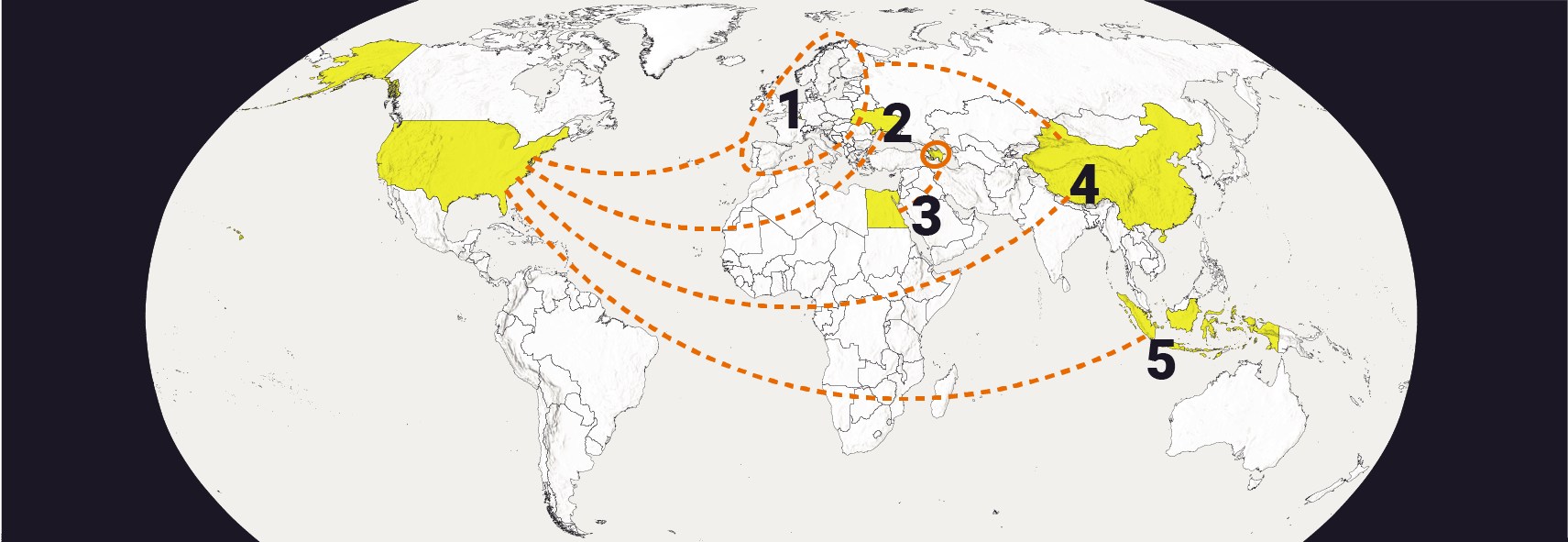
Alternative markets can only absorb a portion of U.S. LNG exports that China is expected to forgo in 2025, increasing domestic inventories and depressing prices. Chinese buyers, meanwhile, will likely see LNG costs increase as sellers charge more to swap destination markets and increase premiums for those sales.
The U.S.-China trade war is shaking up the market for liquefied natural gas (LNG), with high U.S. tariffs prompting Chinese buyers to look to Middle Eastern suppliers to meet their needs. Meanwhile, with U.S. LNG exporters planning to shift some exports to European markets, the European Union is reviewing its methane emissions regulations with an eye toward making technical adjustments that would facilitate more imports from U.S. hubs.
U.S. LNG exports to China could fall by as much as 200,000 barrels per day in the coming six to nine months, creating a domestic supply bubble that will put downward pressure on prices. That would give buyers in other Asian markets the opportunity to purchase U.S. LNG at a discount. Typically, U.S. exports of liquefied ethane and propane to China total more than 550,000 bpd. Another possible outlet for excess U.S. LNG production could be the European Union, which already receives most of its LNG exports from the United States, or Indo-Pacific trade partners like Taiwan and Indonesia. However, the EU’s regulations surrounding methane, a powerful greenhouse gas, could represent a roadblock for ramping up U.S. imports. Reuters has reported that the European Commission is studying ways to facilitate increased LNG volumes from U.S. exporters, which may have difficulty complying with those regulations because of the structure of the U.S. gas production market.
Enhancement Level: Medium
The potential deal would show that the U.S. is financially committed to Ukraine and would put pressure on Russia to reach a peace agreement. It also would lessen U.S. dependence on China for critical minerals.
New critical minerals negotiations between the U.S. and Ukraine began in Washington on April 24.
The negotiations are set to focus on resolving technical issues and establish a long-term economic partnership, including the creation of a joint investment fund to help rebuild Ukraine after the war.
Enhancement Level: Medium
While still at the discussion stage, the alignment with Egypt’s active licensing round and SOCAR’s expansion strategy suggests strong potential for near-term collaboration if talks progress.
Senior officials from Egypt and Azerbaijan held talks in Cairo to explore a strategic partnership in the oil and gas sector, focusing on technical exchange and investment in oil and gas exploration.
The talks involved Egypt’s Ministry of Petroleum, the Egyptian General Petroleum Corporation, and Azerbaijan’s state oil company SOCAR. The meeting coincides with Egypt’s launch of a new licensing round covering 13 offshore and onshore oil and gas blocks, part of a broader push to increase hydrocarbon production and attract international exploration and development partners. The collaboration supports Egypt’s ambition to position itself as a regional energy hub by attracting international expertise and investment to accelerate upstream development. It enables Egypt to benefit from SOCAR’s technical capabilities and regional experience while providing SOCAR with access to promising exploration blocks and a strategically located Mediterranean market.
Enhancement Level: Medium
Selling rare earth ore to China at high tariffs is not economically viable. The U.S. is taking steps to increase local critical mineral output and reduce imports. MP can export rare earth ore to Japan and South Korea or treat and store the mined material while developing its processing capacity.
A major Chinese rare earth refiner and importer, Shenghe Resources Holding, said its U.S. business partner, MP Materials, has temporarily stopped shipments of rare earth ore concentrates to China due to the higher tariffs.
Rare earth element supply chains may be disrupted because of this decision, depending on the amount imported from MP Materials and the degree to which it relies on U.S. supplies. MP Materials reported that Shenghe was its principal materials segment customer in 2024, accounting for 80% of consolidated revenue. According to Shenghe, the company has already diversified its raw rare earth material supply routes by developing and investing in ores from Sichuan province and overseas mines. This decision emphasizes the ongoing tensions between the U.S. and China over rare earths, which are essential elements for electric vehicles and other high-tech devices. In retaliation, China may restrict the export of other essential materials, which might affect U.S. critical businesses.
Enhancement Level: Low
This move strengthens Indonesia’s ties with the U.S., creates opportunities for expanded trade and investment, and diversifies its supplier base. However, U.S. crude oil is generally more expensive for Asian buyers due to higher shipping costs and greater pricing volatility compared to Middle Eastern supplies.
Indonesia announced plans to increase imports of U.S. energy and agricultural products by $19 billion, following high-level negotiations in Washington.
The move is a response to the 32% export tariffs recently announced by the Trump administration on Indonesian goods. The agreement includes approximately $10 billion in energy imports, primarily crude oil and liquefied petroleum gas (LPG), and around $9 billion in agricultural goods such as wheat and soybeans. In 2024, Indonesia imported around 124,000 barrels of LPG and 13,000 barrels of crude oil per day from the United States, a relatively small share compared to its larger, longstanding imports from Middle Eastern suppliers. To accommodate this increase, Indonesia likely will reduce its Middle Eastern imports by 20% to 30%. This direction signals a potential shift in Indonesia’s energy security strategy as it reduces dependence on traditional Middle Eastern suppliers while deepening political and economic alignment with Washington.
This week, U.S. President Donald Trump extended the ongoing ceasefire with Iran, while Iran rejected negotiations with U.S. Vice President...
This week, the United States imposed a blockade of Iranian ports in the Strait of Hormuz during the ongoing two-week...
This week, the U.S. and Iran agreed to a two-week ceasefire following President Donald Trump’s threats of targeting Iran’s power...
This week, the conflict in Iran intensified as the U.S. bombed military facilities on Iran’s Kharg Island and Israel bombed key Iranian energy facilities, with Iran responding...