Global Hotspots Outlook: U.S./Iran War Disrupts Global Energy Markets
Register your interest to gain access to the latest Geopolitical Forecast Report and information on the forecasting and risk management platform...

This week, the U.S. floated the conditions for a peace agreement between Russia and Ukraine as President Donald Trump held phone calls with both Russian President Vladimir Putin and Ukrainian President Volodymyr Zelenskyy. In the Middle East, Hamas kept to its original plan to release three hostages on Saturday, despite threats from Trump demanding that […]
The Geopolitical Hotspots Monitor examines the outlook for key geopolitical hotspots around the world.
The Russia/Ukraine war trended toward diplomatic de-escalation as Trump spoke with Putin and Zelenskyy in separate phone calls and U.S. Secretary of Defense Pete Hegseth stated a return to Ukraine’s pre-2014 borders was unrealistic and that the U.S. does not support Ukrainian membership in NATO. Trump said he and Putin will “probably” meet in Riyadh at a yet-to-be-determined date before meetings in both Moscow and Washington. Russia released U.S. citizen Marc Fogel from a Russian prison, while Washington committed to the release of imprisoned Russian citizen Alexander Vinnik in exchange. The U.S. State Department confirmed that Special Envoy to Ukraine and Russia Keith Kellogg will visit Kyiv during a Feb. 13-22 diplomatic tour of European capitals. U.S. Vice President J.D. Vance threatened Russia with the possibility of increased sanctions and direct military force from the U.S. if the Kremlin fails to negotiate an end to the war that respects the independence of Ukraine. Meanwhile, Estonian intelligence claimed Russia is smuggling sanctioned drone components through China.
Conflict in the Middle East trended toward diplomatic de-escalation and military escalation scenarios as Hamas and Israel conducted a hostage/prisoner exchange on Feb. 8 and Israeli forces withdrew from the Netzarim Corridor in central Gaza. Hamas agreed to follow through with a planned hostage/prisoner exchange with Israel on Feb. 15 after emergency mediations with Qatari and Egyptian officials salvaged the deal. Israel mobilized reservists and threated to resume offensive operations in Gaza if the exchange does not take place as scheduled, while Trump said “let hell break out” if Hamas failed to release all remaining hostages by the deadline. Trump separately threatened to cut off aid to Egypt and Jordan if they did not agree to comply with his proposal to permanently displace the Palestinian population of Gaza.
Tensions in the Indo-Pacific trended toward hybrid escalation, as Trump announced he will impose global 25% tariffs on all U.S. steel and aluminum imports, drawing strong reactions from Asian countries. China’s reciprocal tariffs against the U.S. 10% tariffs announced last week went into effect. Trump met with the Japanese and Indian prime ministers in separate meetings in Washington to discuss their respective bilateral relations. Taiwanese President Lai Ching-te pledged to increase the island’s defense spending to 3% and to boost investment in the U.S. Chinese Foreign Minister Wang Yi arrived in the U.K. to meet with British Foreign Secretary David Lammy.
Trump stated he would be imposing “reciprocal” tariffs on all countries that have levies in place on U.S. imports. This sparked strong reactions globally, notably from the European Union, which stated it was ready to counter any coercive actions by the United States. Forecast – hybrid escalation scenario
Fighting has resumed in the Democratic Republic of the Congo after the Rwandan-backed M23 rebel group attacked Congolese troops in the South Kivu Province. Forecast – military escalation scenario
The Armenian Parliament approved the first reading of a bill that would start the process of EU accession. Forecast – diplomatic de-escalation scenario
The Global Connectivity Tracker examines the impact of geopolitical dynamics on key themes like trade, technology, and energy/climate.
Disruption level: Medium
Trump made his disdain for EVs clear on the campaign trail, and the move to halt progress on national charging infrastructure fits in with that view. Some states could have the resources to continue with the infrastructure buildout without federal money.
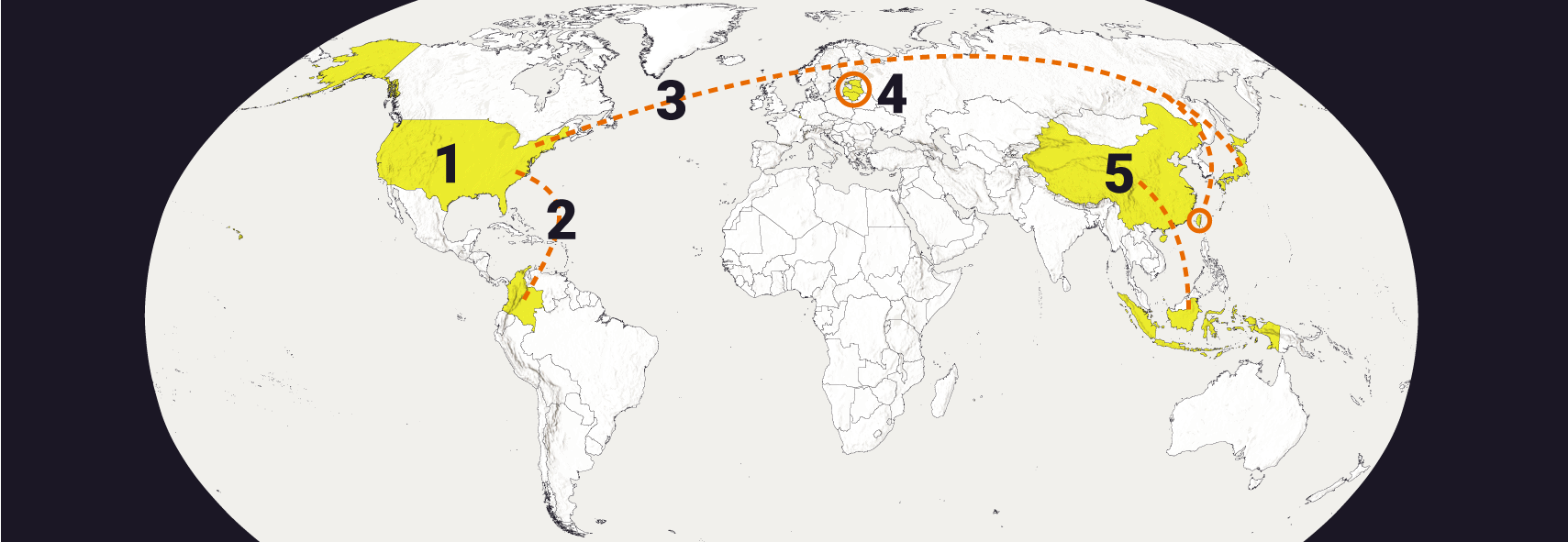
The Trump administration has told states not to spend any further funds that had been allocated under President Joe Biden to build a network of electric vehicle charging stations.
The change in direction by the Department of Transportation aligns with Trump’s review of environmental programs authorized under Biden. Some $5 billion had been allocated for the national electric vehicle infrastructure program (NEVI), which would have reimbursed states up to 80 percent of the costs of deploying EV chargers. Former Transportation Department official Andrew Rogers said the memo instructing states not to spend any further money on NEVI appears to violate a 1974 law that prohibits a president from withholding congressionally approved funding.
Enhancement Level: Medium
Colombia must speed its energy transformation to fulfill emission targets, requiring significant investment in renewable energy capacity and infrastructure. Clean energy investments are crucial for Colombia’s energy security, economic growth, and green job opportunities.
Colombian President Gustavo Petro has ended the partnership between state-owned oil and gas company Ecopetrol and U.S. firm Occidental Petroleum over concerns about the environmental consequences of hydraulic fracturing.
Petro opposed the recent expansion of the joint venture between Ecopetrol and Occidental Petroleum because it required the use of fracking. The fluids used to fracture rock formations contain toxic substances that could harm humans and the environment, especially if they infiltrate drinking water supplies. Other issues involve wastewater-recovered chemicals. The use of hydraulic fracturing for oil projects contradicts the aims of Petro’s energy program, which is focused on switching from hydrocarbons to renewable and clean energy technologies. Colombia has significant renewable energy potential with abundant hydropower, solar, wind, and biomass resources.
Enhancement Level: Medium
Boosting U.S. LNG exports to Taiwan and Japan would enhance the energy security and economies of both countries. LNG is not only used as an electricity generation fuel, but also as a feedstock for chemical and fertilizer production. It is also burned to provide industrial heat and used to produce low-carbon fuels like hydrogen and ammonia.
Taiwan and Japan are looking at options to increase imports of liquefied natural gas from the United States, with Japan considering an investment in the $44 billion Alaska Gasline Development Corporation LNG pipeline project.
Taiwan’s possible purchase of Alaskan LNG comes amid concerns that countries with a trade surplus with the United States may become a target of future U.S. tariffs. Japan’s motivation in possibly boosting U.S. LNG imports includes diversification of its energy portfolio. East Asian countries would benefit from increased access to LNG sourced from the United States, which will help improve their energy security. Replacing coal, which constitutes a significant share of both Taiwan’s and Japan’s electricity generation fuel, with natural gas would reduce both nations’ carbon footprint. In 2023, 43% of Taiwanese electricity and 32% of Japanese electricity was generated using coal.
Disruption level: Low
Russia has been accused of pursuing a campaign of sabotage in the Baltic Sea, where 11 instances of power cable cuts have been recorded in the past 18 months. The Baltics’ grid switch could inspire further acts of sabotage, but with a NATO operation in the Baltic Sea specifically guarding against such incidents, Russia may judge it too risky to attempt more.
Estonia, Latvia, and Lithuania have decoupled their electricity grids from the one that serves Russia and Belarus and joined the European Union’s grid.
The long-anticipated move culminates a yearslong process ending the Baltic states’ connection to Russian electricity flows, which left them vulnerable to possible disruptions. The Baltic states, which had been connected to the Russian grid since the Soviet era, had not actually bought electricity from Russia since 2022, but its ability to affect their power supplies became a concern. Many of the Baltic countries’ electricity interconnections with the EU are through cables running under the Baltic Sea, which have experienced a recent series of disruptions that have been blamed on the Russian “shadow fleet” in the waters. During a ceremony commemorating the switch, European Commission President Ursula von der Leyen warned of potential Russian retaliation for the switch.
Disruption level: Medium/High
China’s dominance of global nickel refining capacity puts U.S. and European automakers at a competitive disadvantage. This is especially relevant as China imposes increasingly stringent trade restrictions on critical minerals.
A report from the U.S.-based Center for Advanced Defense Studies indicates that Chinese companies control 75% of the nickel refining capacity in Indonesia, the world’s biggest supplier of refined nickel, raising worries about the stability of the battery supply chain.
Nickel is a significant component of electric vehicle batteries. Indonesia’s share of the global refined nickel market rose from 23% to 27% from 2020 to 2023, and it is expected to be responsible for about 44% of all nickel production by 2030. Chinese companies control three-quarters of the country’s total production capacity of about 8 million metric tons as of 2023. China’s dominance of this essential metal could give it the ability to influence global supply chains.
Register your interest to gain access to the latest Geopolitical Forecast Report and information on the forecasting and risk management platform...
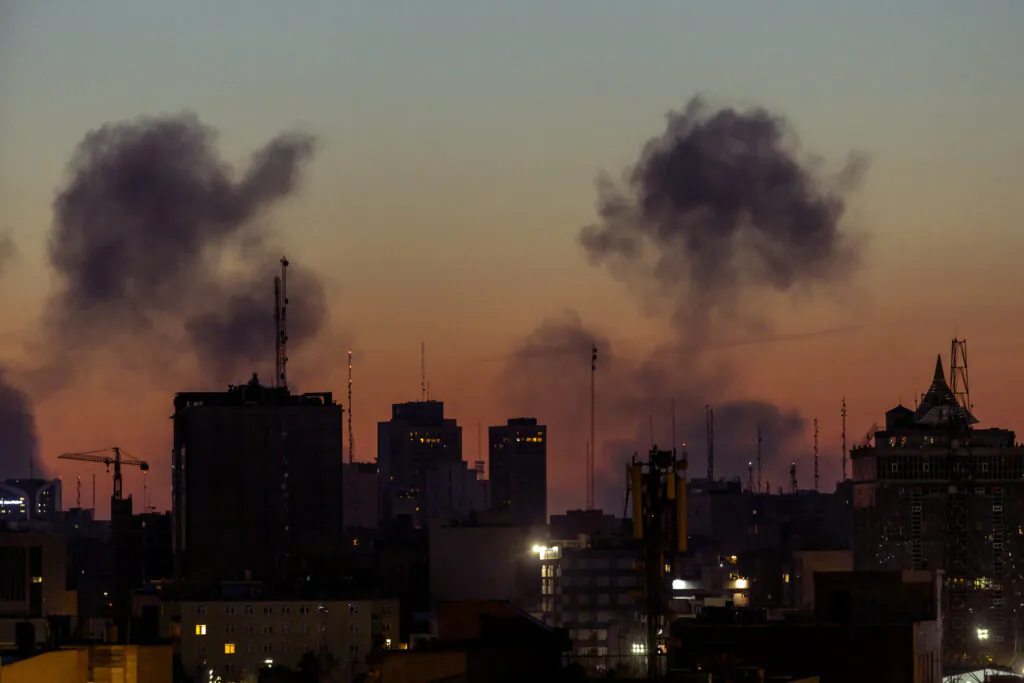
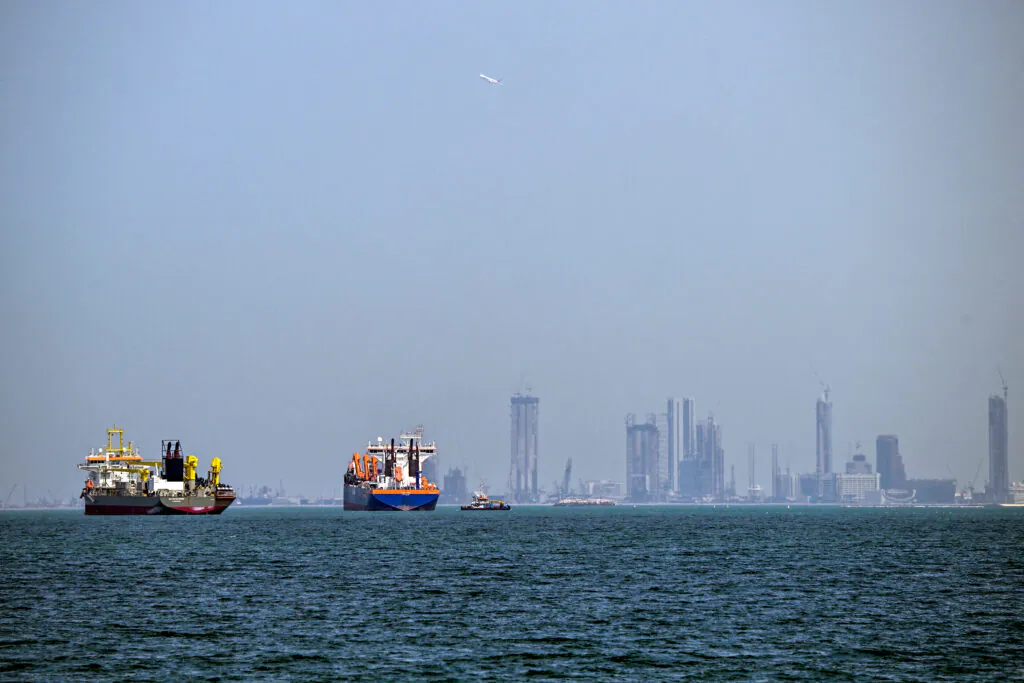
This week, the United States and Israel launched air- and naval-based attacks against Iran, killing Supreme Leader Ayatollah Ali Khamenei. Iran retaliated with strikes against neighboring Gulf states and by closing the Strait of Hormuz. Meanwhile,...
This week, the United States conducted a major military operation against Venezuela resulting in the capture of President Nicolas Maduro...
A global adaptation to a new strategic environment will define 2026, driven by the White House’s approach to international relations....