Global Hotspots: Outlook on the U.S.-Iran Ceasefire and Japanese Force Posturing
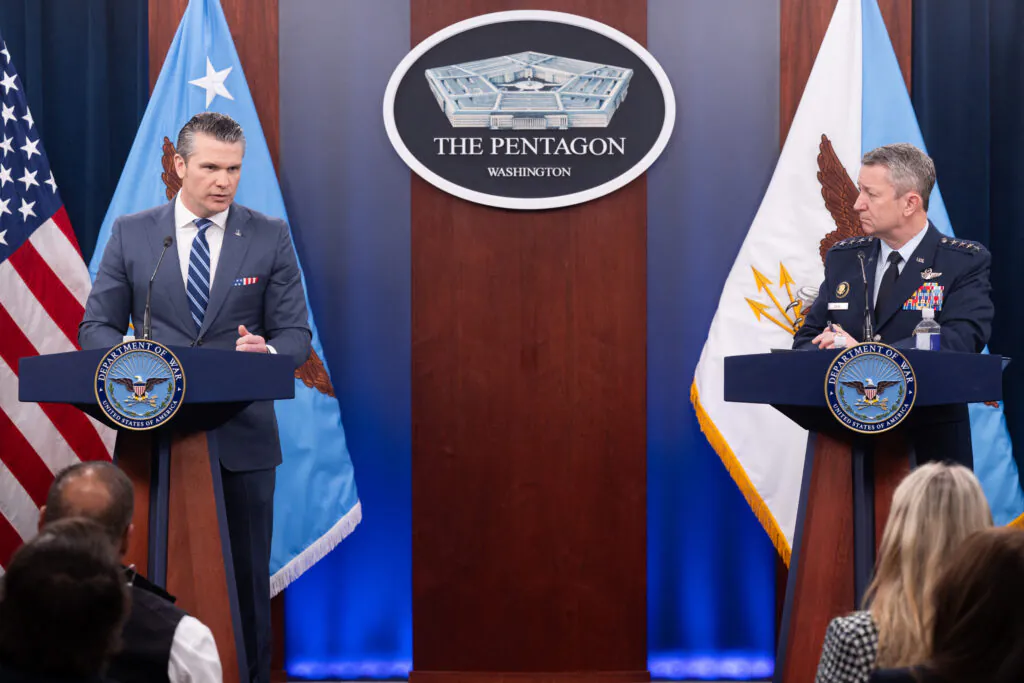
This week, U.S. President Donald Trump extended the ongoing ceasefire with Iran, while Iran rejected negotiations with U.S. Vice President...

This week, Ukraine intensified its attacks on Russian territory, launching its largest drone attack thus far in and around Moscow, as the White House considered lifting restrictions on use of long-range U.S.-supplied weapons against Russian targets. In the Middle East, Iran faced Western sanctions for supplying Russia with ballistic missiles, while Israel conducted more strikes […]
The Geopolitical Hotspots Monitor examines the outlook for key geopolitical hotspots around the world.
The Russia/Ukraine conflict trended toward military and hybrid escalation scenarios as Iran transferred ballistic missiles to Russia, Ukraine conducted a large-scale drone attack in and around Moscow, and the U.S. signaled openness to authorizing Ukraine to use NATO-supplied weapons to strike deep inside Russia. Russia continued its advance in Donetsk oblast, conducted cyber attacks against Poland, and expelled British diplomats.
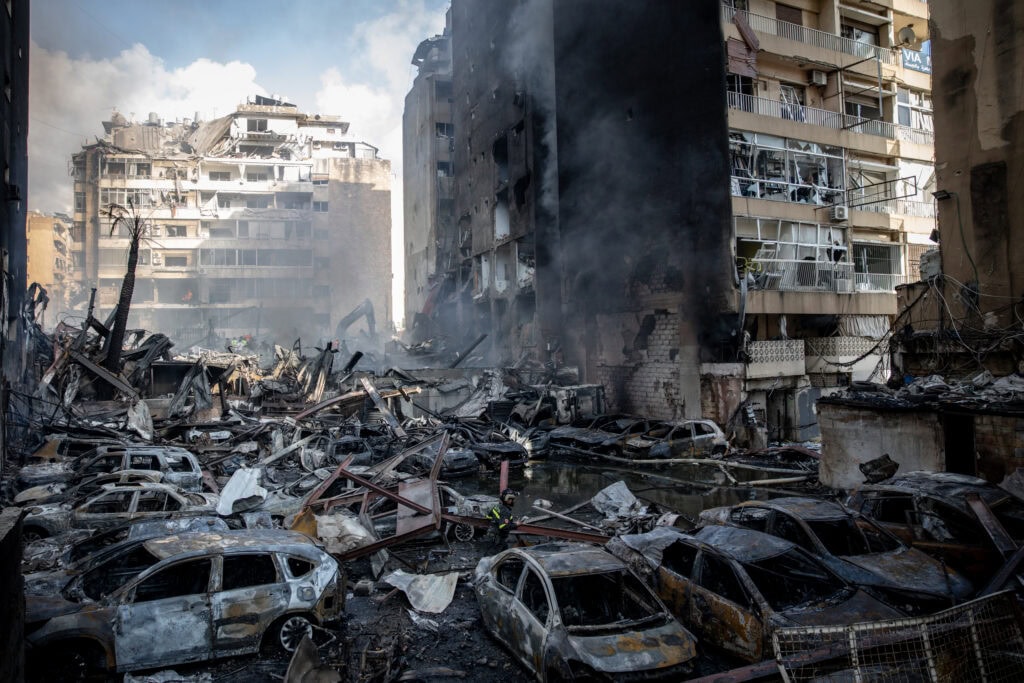
Tensions in the Middle East trended toward a military escalation scenario as Israel resumed its security operations in the West Bank, conducted a raid in Syria, and exchanged cross-border fire with Hezbollah. Israeli and U.S. officials expressed strong doubt over the prospects of Israel and Hamas reaching a cease-fire/hostage release deal.
Tensions in the Indo-Pacific trended toward a military escalation scenario as China and Russia held new joint military exercises. Trade tensions between China and Canada ramped up as both implemented new restrictions. The U.S. House of Representatives passed several bills aimed at curbing China’s influence both domestically and in the Indo-Pacific.
‘The Global Connectivity Tracker examines the impact of geopolitical dynamics on key themes like trade, technology, and energy/climate.
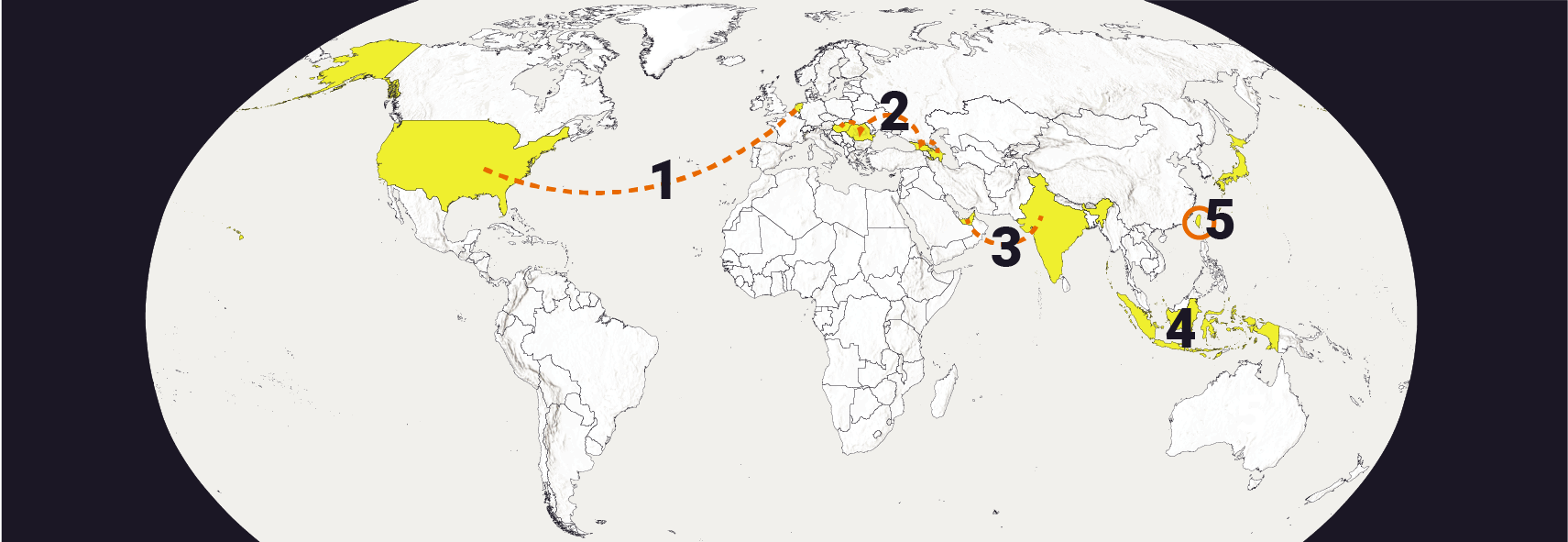
Disruption level: Low/medium
There has been a notable escalation in export restrictions of advanced technologies on both the U.S.’s and China’s parts. These latest developments are an expansion of existing measures. However, China may take retaliatory measures as the U.S. presidential election draws nearer.
The United States and the Netherlands have expanded their restrictions on exports of chipmaking equipment.
The U.S. now will require export licenses for quantum computing items, advanced chipmaking tools, extreme ultraviolet lithography machines, and gate all-around field-effect transistor technology currently used by TSMC and Samsung. The Netherlands added to restrictions put in place last year on two additional deep ultraviolet systems developed by ASML, effectively taking control of restrictions on its equipment from the U.S. While the Netherlands did not specify that these restrictions were aimed at any particular country, it did say they were added to bolster national security. Additionally, they fall in line with U.S. demands to limit Chinese technological advances. While China has expressed discontent, these restrictions come after China itself threatened to increase its own export restrictions to Japan.
Enhancement Level: Medium/high
Connecting Azerbaijani generation sources with Eastern European consumers will help drive further development of its renewable energy sector, which has significant potential to grow.
Hungary, Romania, Georgia, and Azerbaijan have launched a joint venture to build transmission lines under the Black Sea that would send renewable electricity from the Caucasus to the European Union.
The power cables would dispatch electricity generated by wind farms off the Caspian Sea coast of Azerbaijan via Georgia and the Black Sea to Romania and Hungary, helping the EU members diversify their power supply and further lessen their dependence on Russian energy. The continued development of renewable generation projects in Azerbaijan will help the country meet its goal of generating 30% of its domestic electricity supply with green sources. Shifting away from gas-fired generation will, in turn, allow it to generate additional revenue through increased exports of natural gas. Having a direct transmission line connection to Europe could spur more investment in wind and solar power projects in Azerbaijan. On the other side of the Black Sea, officials in Romania and Hungary have noted the need to diversify their energy sources.
Enhancement Level: Medium
The MOU signals expanding ties between the countries beyond oil, building on their 2022 free trade agreement. Both will benefit from mutual investment and capacity-building in the nuclear sector, further strengthening their partnership.
For the first time, India and the United Arab Emirates have signed a memorandum of understanding to collaborate on civil nuclear energy.
The Nuclear Power Corporation of India Ltd. (NPCIL) and the Emirates Nuclear Energy Company (ENEC) signed a deal during a visit by Mohamed bin Zayed Al Nahyan, the crown prince of Abu Dhabi, to India that will focus on cooperation in the peaceful use of nuclear energy. The agreement covers the operation and maintenance of the Barakah Nuclear Power Plant, the supply of associated technology from India, and mutual investment opportunities. Nuclear energy is central to the UAE’s strategy to reduce its dependence on oil and achieve net-zero goals by 2050, with plans to increase nuclear power’s share of the country’s electricity generation from the current 3% to 6% by then. This partnership will not only support the UAE’s nuclear expansion but also will provide India with new opportunities for technological collaboration and export growth in the energy sector.
Enhancement Level: Medium
If Indonesia successfully secures the necessary financing to transition away from coal, it will significantly increase the country’s renewable energy generation, especially considering its heavy reliance on coal in its current energy mix.
Indonesia, the largest economy in Southeast Asia, is seeking financial support to aid its transition away from coal-fired power generation, which holds a 62 percent share of the country’s electricity portfolio.
In 2022, Indonesia signed a Just Energy Transition Partnership (JETP) with the U.S., Japan, the U.K., and several EU countries, aimed at reducing its reliance on coal for power production and reducing power sector emissions by 2030. To achieve that, the government plans to raise an initial $20 billion in public and private funding over a three- to-five-year period by leveraging a combination of grants, low-interest and market-rate loans, guarantees, and private-sector investment. The funding will be used to boost the country’s renewable energy generation enough to supply to 34% of total demand by 2030 and accelerate its transition to net-zero emissions. The country’s minister of mining reiterated that financing from G7 countries is crucial for Indonesia’s energy transition, particularly in reducing its reliance on coal.
Disruption level: Low/medium
Nuclear power supplied 52.4% of the island's electricity in the mid-1980s, but the decision to phase out nuclear power in the wake of Japan’s Fukushima nuclear power disaster has made Taiwan more dependent on imported fuel.
CPC Corp., Taiwan’s state-owned oil and gas company, anticipates an increase in liquified natural gas imports as the country completes its phaseout of nuclear power generation in 2025.
Once Taiwan takes its last nuclear power plants offline, annual LNG imports are expected to rise. To make up for the loss of nuclear generation, Taiwan plans to add more gas power plants and boost renewable energy production. Taiwan relies on coal and natural gas imports to supply its electrical energy demand. Taiwan’s growing reliance on seaborne imports (oil, coal, and LNG) increases concerns that those supplies could be disrupted and put Taiwan’s security at risk. However, it is also seeking to develop more renewable sources in an effort to establish carbon neutrality and shore up its energy security.
This week, U.S. President Donald Trump extended the ongoing ceasefire with Iran, while Iran rejected negotiations with U.S. Vice President...
This week, the United States imposed a blockade of Iranian ports in the Strait of Hormuz during the ongoing two-week...
This week, the U.S. and Iran agreed to a two-week ceasefire following President Donald Trump’s threats of targeting Iran’s power...
This week, the conflict in Iran intensified as the U.S. bombed military facilities on Iran’s Kharg Island and Israel bombed key Iranian energy facilities, with Iran responding...